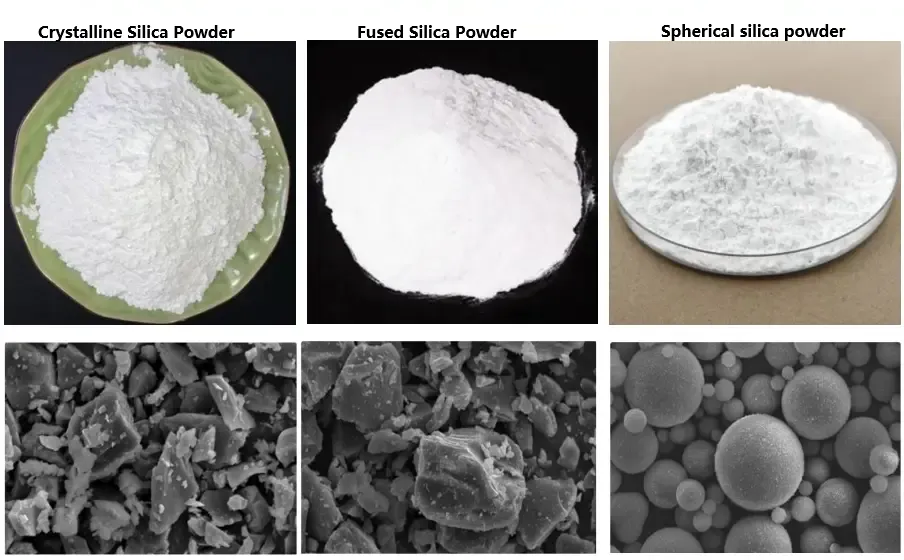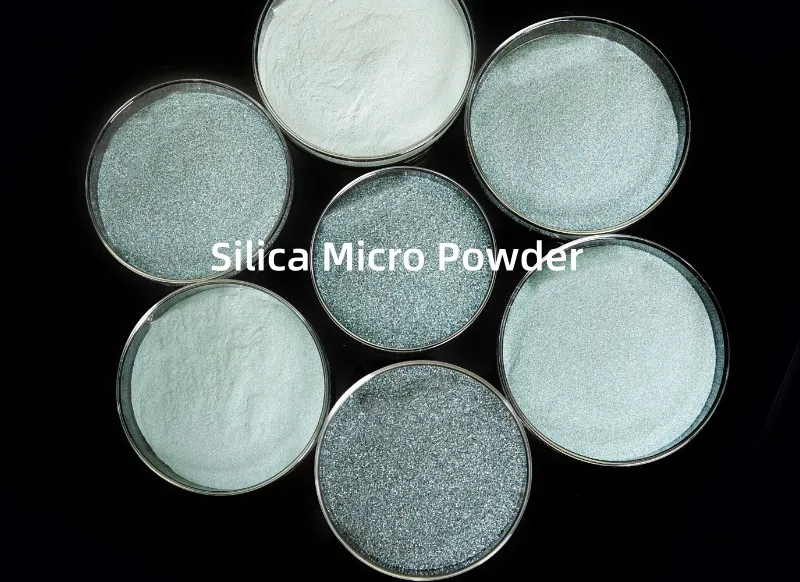
Quartz is one of the most abundant and versatile minerals on Earth. From the glass in our windows to the high-purity silicon in our semiconductors, its applications are vast. However, transitioning from raw quartz ore to the fine, uniform powder required by industry is a complex engineering challenge. Selecting the right quartz powder grinding mill is not just a matter of “crushing rocks”—it is a strategic decision that affects product purity, particle size distribution (PSD), and operational costs.
In this comprehensive guide, we will explore the characteristics of quartz, the leading technologies for its pulverization, and how to choose the optimal grinding mill for your specific industrial application.
Understanding the Nature of Quartz
Before selecting a mill, one must understand the “adversary.” Quartz (SiO₂) is characterized by:
- High Hardness: With a Mohs hardness of 7, it is highly abrasive, leading to rapid wear on standard metal components.
- High Purity Requirements: Many applications, particularly in electronics and solar energy, require iron levels below 10 ppm.
- Thermal Stability: It is chemically inert and highly resistant to heat, which is why it is favored in refractory materials.
The goal of grinding is to achieve a specific D50 (median diameter) and D97 (top cut) while minimizing contamination and energy consumption.
Top Grinding Mill Technologies for Quartz Powder
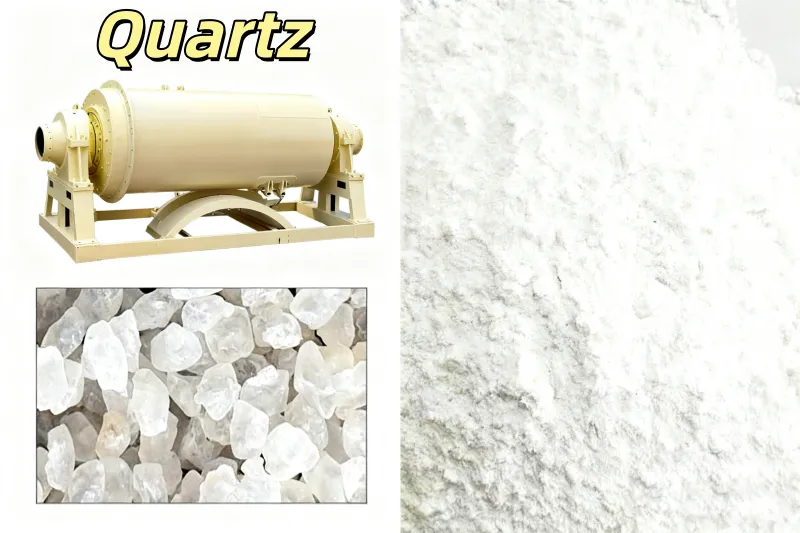
A. Ball Mill + Air Classifier System (The Industry Workhorse)
For large-scale production of quartz powder (ranging from 200 mesh to 3,000 mesh), the ball mill combined with a vertical turbine air classifier is the most common solution.
- Mechanism: The ball mill uses a rotating cylinder filled with grinding media (balls). As the cylinder turns, the balls are lifted and then fall, crushing the quartz through impact and attrition.
- Contamination Control: To ensure high purity, the ball mill is lined with alumina ceramic or silica bricks, and the grinding media are alumina balls. This prevents iron pick-up.
- Advantages: Stable operation, large capacity, and the ability to produce a wide range of fineness by adjusting the classifier speed.
B. Air Jet Mill (For Ultrafine and High-Purity Quartz)
When the application requires a D50 in the 1–10μm range or extreme purity, the jet mill is the preferred choice.
- Mechanism: High-speed compressed air or superheated steam is injected into a grinding chamber through specialized nozzles. The quartz particles collide with each other at supersonic speeds, breaking down through inter-particle collision.
- Key Benefit: There is no mechanical grinding media, meaning there is virtually zero contamination from the machine itself.
- Application: High-purity quartz for semiconductors, optical glass, and specialized fillers.
C. MJW Series Air Classifier Mill (Impact Mill)
For softer quartz varieties or when a cost-effective solution is needed for medium-fineness powder, a classifier mill is often utilized.
- Mechanism: A high-speed rotor with hammers or blades strikes the material against a static liner. An integrated classifier wheel ensures that only particles of the correct size exit the system.
- Advantages: Compact footprint, integrated grinding and classification, and lower capital investment compared to a full ball mill line.
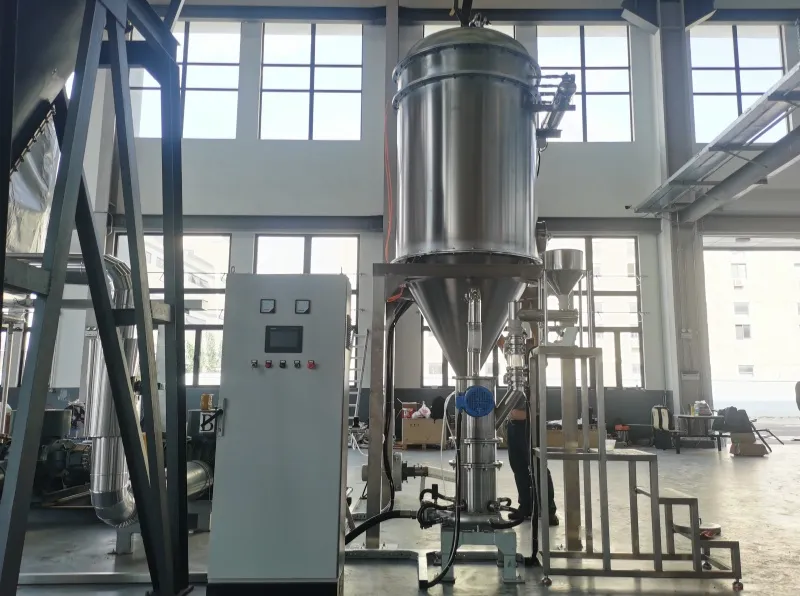
Comparing the Performance: Ball Mill vs. Jet Mill
| Feature | Ball Mill + Classifier | Air Jet Mill |
| Output Size | 5μm – 75μm (D97) | 1μm – 20μm (D97) |
| Capacity | High (Up to 20t/h) | Low to Medium (0.5 – 3t/h) |
| Purity | High (with ceramic lining) | Highest (no media) |
| Energy Cost | Lower per ton | Higher due to compressed air |
Critical Factors in Quartz Powder Grinding Mill Selection
When designing a quartz processing line, consider the following four pillars:
I. Target Particle Size Distribution (PSD)
Are you producing 325 mesh filler for the paint industry, or 2μm powder for electronic potting compounds? A ball mill is excellent for the former, while a jet mill or a specialized stirred mill is better for the latter.
II. Iron Contamination Limits
Iron is the enemy of quartz quality.
- Industrial Grade: Standard steel liners may be acceptable for construction-grade sand.
- Electronic Grade: Requires a metal-free environment. This involves ceramic linings, polyurethane-coated pipes, and tungsten carbide components at high-wear points.
III. Energy Efficiency
Grinding is energy-intensive. Systems that utilize closed-circuit grinding (where the classifier returns oversized material to the mill) are significantly more efficient than open-circuit systems.
IV. Dust Control and Environment
Quartz dust contains crystalline silica, which is a health hazard (silicosis). Modern grinding lines must be fully enclosed and operate under negative pressure to ensure zero dust leakage into the factory environment.
Frequently Asked Questions (FAQ)
Q1: Why is a “Ball Mill + Air Classifier” combination better than a ball mill alone for quartz?
A ball mill alone typically operates in “open circuit,” where the material passes through once. This often results in “over-grinding,” where energy is wasted turning already-fine powder into useless dust.
By adding an Air Classifier, the system becomes a “closed circuit.” The classifier identifies particles that have already reached the target size and removes them immediately. The “oversize” material is sent back to the ball mill. This increases the total capacity by up to 30-50% and ensures a much tighter particle size distribution, which is critical for high-end industrial fillers.
Q2: How can I reduce the wear and tear when grinding quartz, given its high hardness?
Because quartz is a Mohs 7 material, wear is inevitable, but it can be managed.
- Material Science: Use 92% or 95% alumina ceramic linings for the internal walls of the mill and the classifier.
- Feeding Size: Ensure the feed material is already pre-crushed to an optimal size (usually <10mm). Feeding large chunks into a fine-grinding mill causes unnecessary impact wear.
- Variable Frequency Control: Using a VFD on the mill allows you to optimize the rotation speed, ensuring the grinding media “cascades” rather than “falls,” which balances grinding efficiency with liner longevity.
The Future of Quartz Processing: Surface Modification
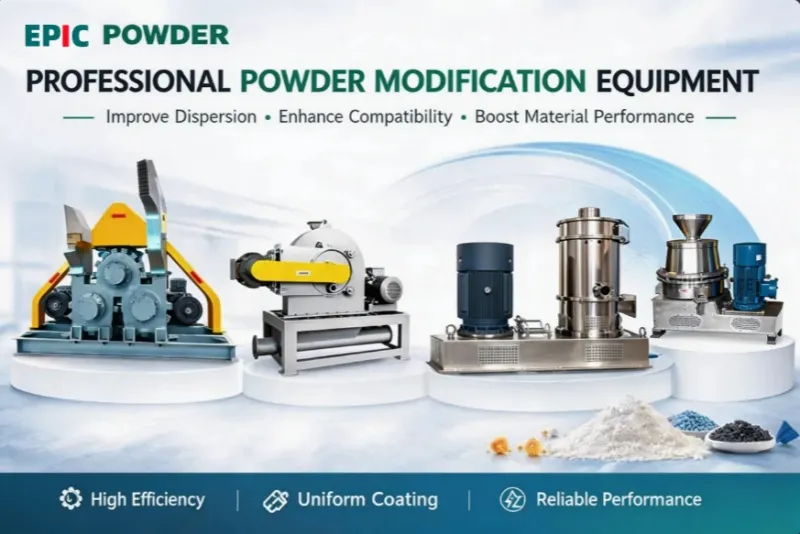
In many modern industries, simply grinding quartz into powder isn’t enough. To be used in plastic polymers, rubber, or artificial stone, the quartz powder must be “hydrophobic” (water-repelling).
This is achieved through Surface Modification. Specialized machines, such as the three-roller coating machine or high-speed pin mills, are used to coat the quartz particles with silane coupling agents. This process happens immediately after the grinding stage, often integrated into the same production line.
Conclusion
Selecting the suitable grinding mill for quartz powder is a balance of science and economics. For high-volume, cost-effective production, the Ball Mill and Air Classifier system remains the gold standard. For specialized, ultra-fine, and ultra-pure applications, the Air Jet Mill is indispensable.
As the demand for high-purity quartz continues to grow—driven by the global transition to renewable energy and advanced electronics—the focus is shifting toward “intelligent” grinding systems. These systems use real-time PSD sensors and automated feed controls to maintain peak efficiency 24/7.
By understanding the specific needs of your end product and the physical limits of the machinery, you can build a quartz processing line that is both profitable and sustainable.

“Thanks for reading. I hope my article helps. Please leave a comment down below. You may also contact Zelda online customer representative for any further inquiries.”
— Posted by Emily Chen