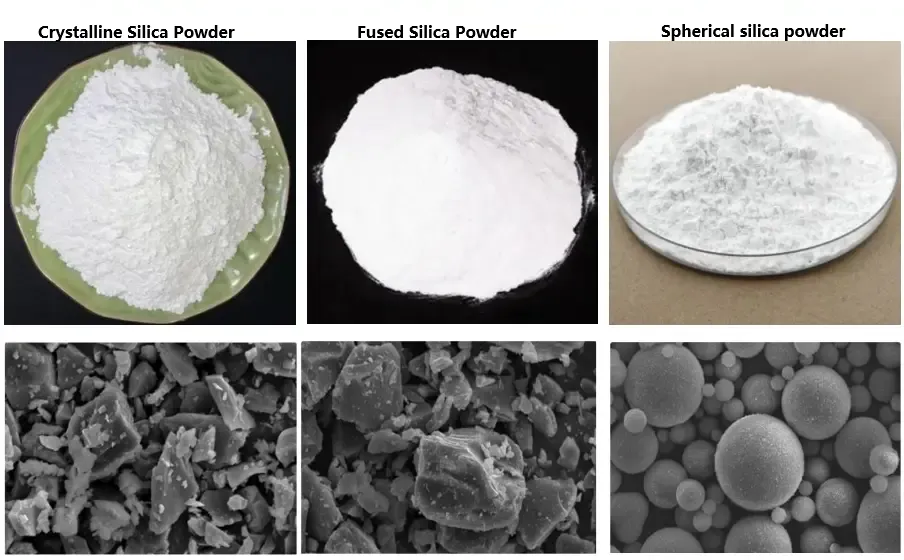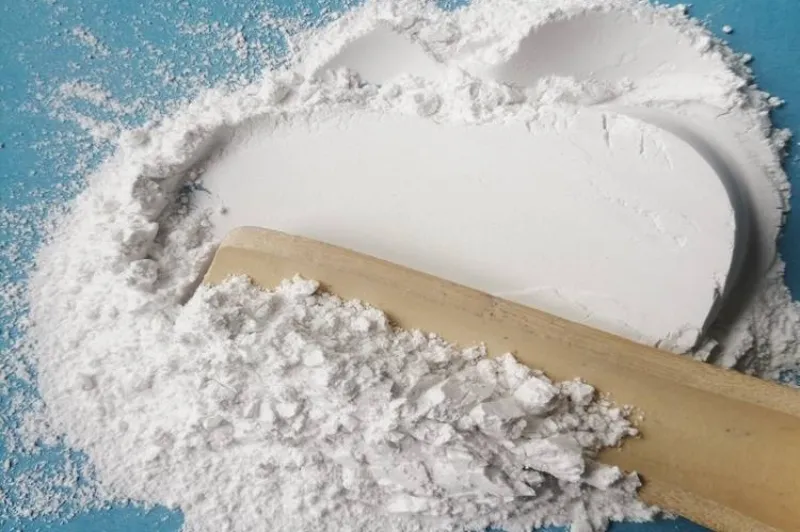
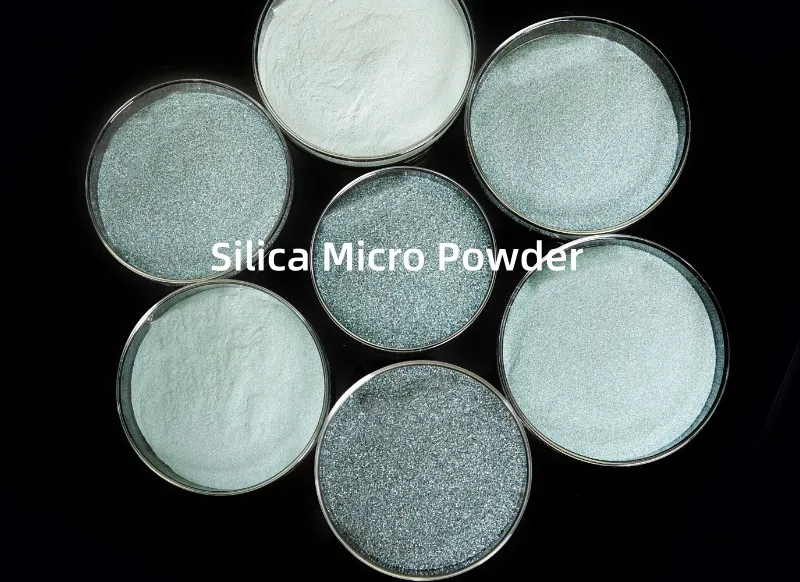
Silica micro powder is a high-performance inorganic non-metallic functional material. It comes mainly from natural quartz or fused quartz. It undergoes precision processes. These include crushing, classification, grinding, magnetic separation, flotation, and acid washing. The result is a fine, high-purity powder.
It has small particle size and stable chemical properties. It offers excellent dielectric performance. It features large specific surface area and good dispersibility. It also provides high thermal conductivity. Silica micro powder is widely used. Applications include electronics, chemicals, medicine, precision casting, and advanced ceramics.
It may seem ordinary. Yet in recent years, it has become key in aerospace and large-scale IC packaging. It earns the title “blood of chips.”
Breaking Stereotypes
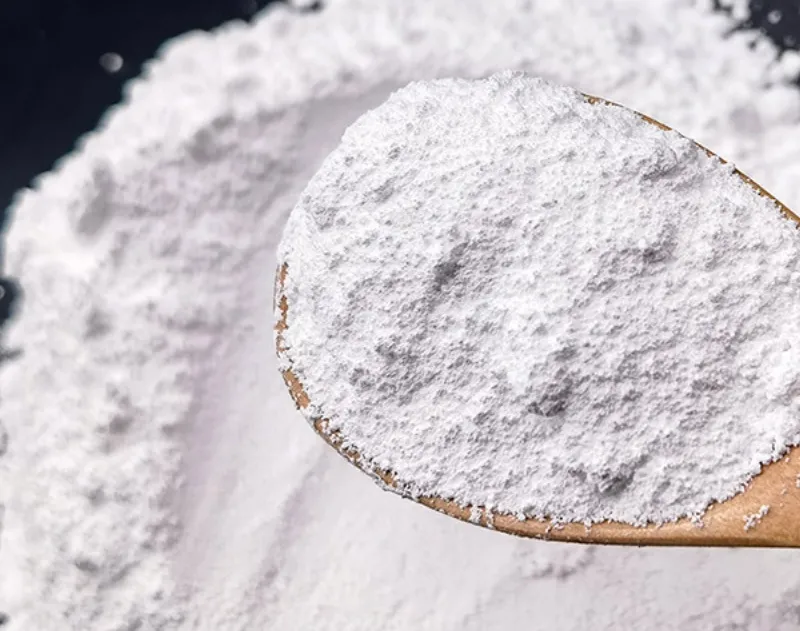
Traditionally, silica micro powder was regarded as an “industrial MSG,” commonly used in coatings, fillers, and ceramics to improve viscosity, strength, and wear resistance. It is derived from natural or fused quartz through grinding and purification, with particle sizes measured in micrometers (μm) or even nanometers (nm).
However, this seemingly “ordinary” material has undergone a stunning transformation in the electronics industry — particularly in chip packaging — evolving from a supporting role to a core foundation.
Chip packaging is a critical process that protects the fragile chip core and establishes electrical connections with the external environment. The heart of this process lies in a composite material known as epoxy molding compound (EMC). Silica micro powder serves as the main filler, accounting for 80%–90% of the compound.
In fact, the black outer casing of most chips that we see is mostly composed of silica micro powder.
Three Core Functions
Heat Dissipation Agent”: Regulating the Chip’s “Body Temperature”
Modern GPUs such as NVIDIA’s H100 and B200 adopt CoWoS packaging technology, which stacks and integrates multiple chips in a single package to greatly improve performance and energy efficiency. However, this structure generates tremendous heat due to high power density.
If the heat is not effectively dissipated, chips can experience thermal throttling or even burnout. Pure epoxy resin, being a poor thermal conductor, acts like an insulating blanket. By adding high-purity silica micro powder, efficient heat conduction pathways are formed, rapidly transferring heat from the chip core to the exterior shell. This ensures that the chip operates efficiently at a safe temperature.
Stabilizer”: Resisting Stress from Thermal Expansion and Contraction
Chips are composed of diverse materials — silicon, metals, and polymers — each with different coefficients of thermal expansion. During power cycling or temperature changes, mismatched expansion and contraction can generate internal stresses strong enough to fracture the chip’s fine metal interconnects, which are hundreds of times thinner than a hair.
The addition of silica micro powder to epoxy molding compounds offers remarkable advantages. Its high purity and low radioactivity help reduce the material’s linear expansion coefficient and curing shrinkage, while improving mechanical strength and insulation performance.
By lowering the overall coefficient of thermal expansion, silica micro powder ensures better compatibility with silicon dies and lead frames. Acting like a “buffer,” it absorbs and disperses stress, maintaining structural integrity and long-term reliability even under harsh thermal conditions.
“Reinforcing Skeleton”: Enhancing Mechanical Strength of the Package
Unfilled epoxy resin is relatively soft and easily deformed. Silica micro powder, accounting for over 90% of total filler content, serves as the primary functional filler in epoxy molding compounds.
Its inclusion significantly enhances hardness, strength, and modulus, reducing curing shrinkage and improving the package’s mechanical robustness. The result is a durable “armor” that protects the chip from external impact, vibration, and pressure.
Blood” Comes in Different Grades
Not all silica micro powder qualifies as the “blood of chips.” Ordinary industrial-grade silica contains metal impurities that severely affect electrical performance. High-end silica micro powder used in semiconductor packaging must meet extremely stringent standards:
- Ultra-high purity: Metal impurities must be controlled at the ppm (parts per million) or even ppb (parts per billion) level.
- Precise particle size distribution: Spherical silica with uniform particle size ensures optimal packing density and flowability.
- Perfect sphericity: Spherical silica particles exhibit lower stress, better flow, and higher filling rates than angular powders, making them indispensable for advanced chip packaging.
Conclusion
As chips advance toward 5 nm, 3 nm, and smaller process nodes, their power density and heat generation rise dramatically, placing unprecedented demands on the thermal management capabilities of packaging materials.
This has driven continuous innovation in silica micro powder technology — from higher-purity synthetic spherical silica, to functional surface modification, and low-loss fillers for specific frequency ranges.
Silica micro powder is no longer a passive filler. It has become an active, performance-defining functional material, determining the thermal stability, reliability, and ultimate performance ceiling of next-generation chips.
In essence, silica micro powder is not just the foundation of modern semiconductor packaging — it truly is the lifeblood of the chip industry.