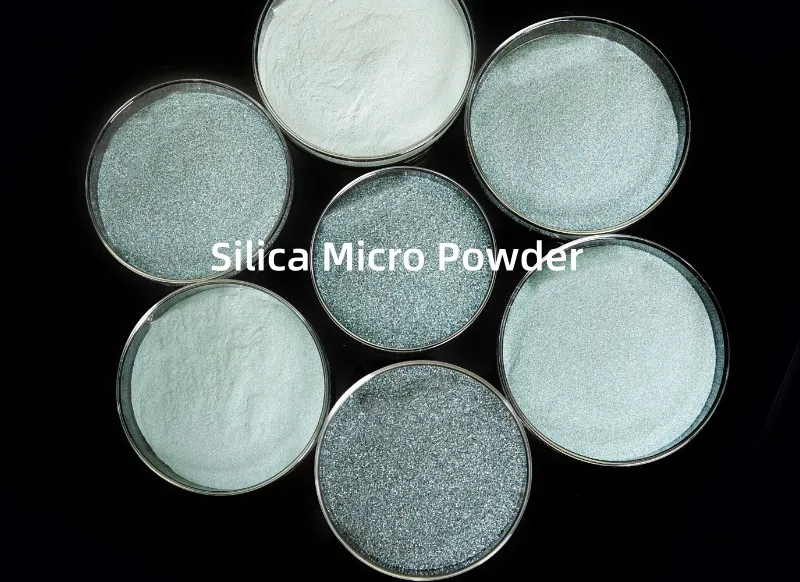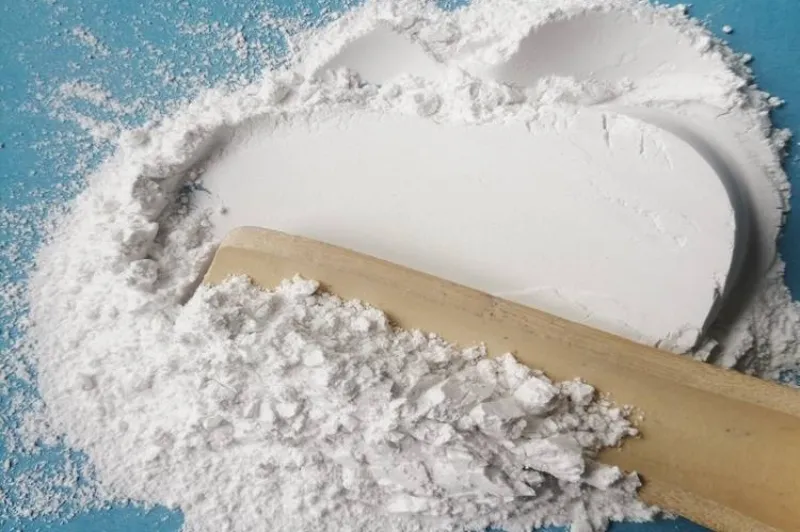
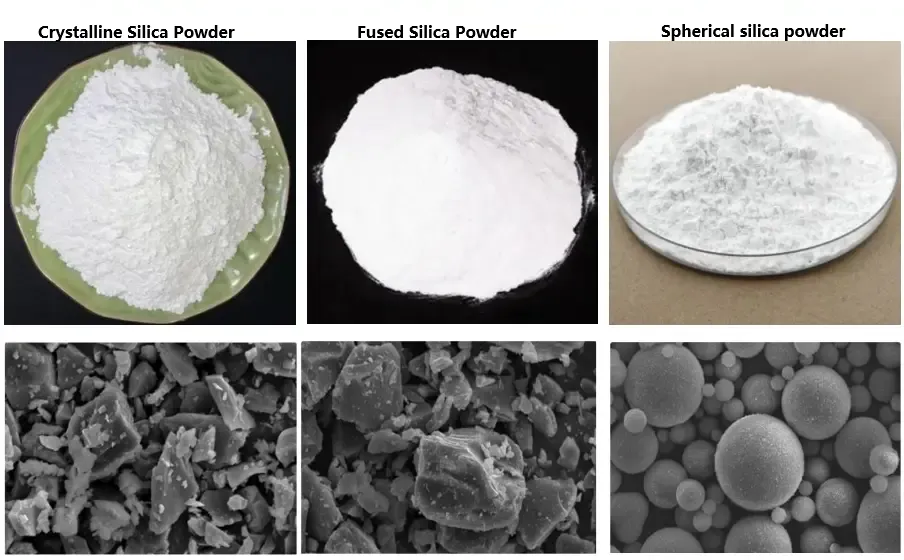
Silica powder is primarily made from natural quartz or fused quartz. It undergoes a series of meticulous processes, including crushing, grading, grinding, magnetic separation, flotation, and pickling. With the rapid development of high-tech industries such as electronics, 5G, semiconductors, and photovoltaics, the demand for silica powder is growing. High-purity ultrafine silica powder, due to its small particle size, large specific surface area, high chemical purity, and excellent filling properties, exhibits outstanding stability, reinforcement, and thixotropy. It can significantly improve the mechanical properties of composite materials. Therefore, ultrafine and high-purity production of silica powder has become the leading trend in the industry. As electronic products continue to become thinner and smaller, silica fillers used in copper-clad laminates also require finer and more uniform particle sizes.
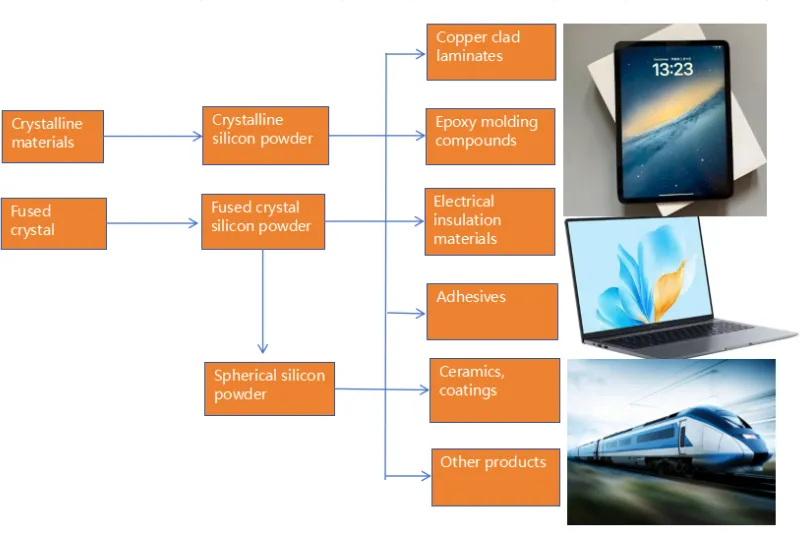
Silicon micropowder industry chain
Ultrafine Silica Powder Production Process
Silica powder production is mainly based on physical grinding, which can be divided into dry and wet processes.
- Dry process flow: Feeding → Grinding → Classification → Collection → Packaging
- Wet process flow: Feeding → Grinding → Drying → Deagglomeration → Classification → Collection → Packaging
The dry process is simple, with lower production costs, and is widely adopted by most silica powder manufacturers. The wet process, on the other hand, involves drying and deagglomeration steps, making it more complex and costly. Thus, fewer companies adopt it. However, for ultrafine products with a cut point below 5 μm and those requiring surface treatment, the wet process is more suitable, as it achieves finer control and better dispersion performance.
Silica Powder Grinding and Classification Equipment
In the dry process, grinding and classification equipment are the key components that determine product quality and efficiency.
Grinding Equipment
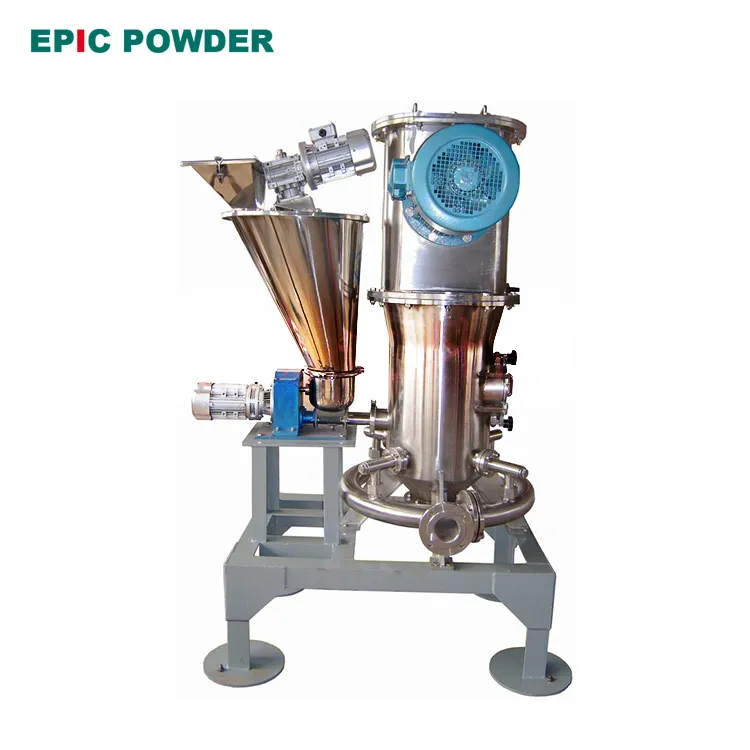
Ultrafine silica powder grinding typically employs a ball mill as the main device. The ball mill offers lower energy consumption and higher throughput, making it suitable for mass production of medium- to high-fineness silica powder.
However, due to the high hardness and strong toughness of quartz, traditional mechanical grinding often results in high energy consumption, low efficiency, and metal contamination problems.
In contrast, Jet Mill Technology has become the preferred method for producing high-purity silica powder thanks to its unique working principle. It uses high-speed airflow to induce particle-to-particle collisions, achieving self-grinding while minimizing metallic contamination. This process produces silica powder with a uniform particle size distribution, high purity, and low temperature rise, which helps maintain product stability and purity.
Moreover, jet milling enhances the dispersion and reactivity of silica powder, making it ideal for producing high-purity grades used in electronic packaging materials and thermal conductive fillers.
Classification Equipment
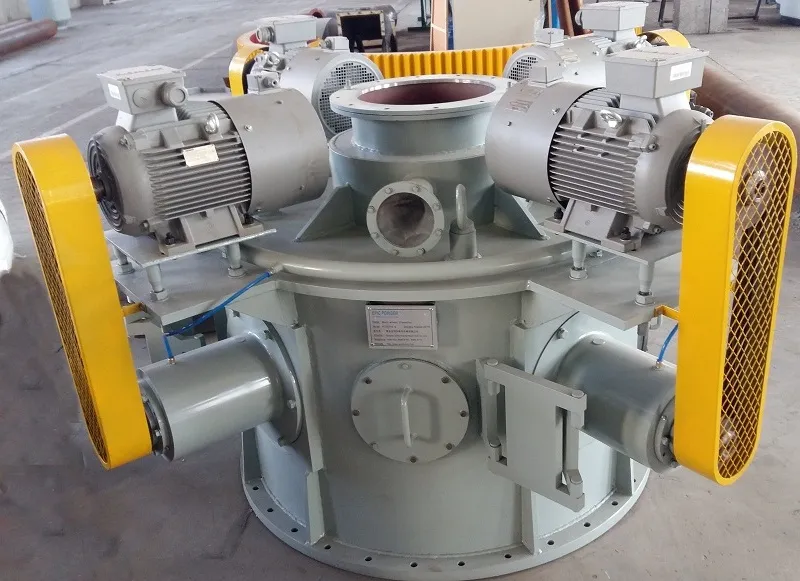
Silica powder classification typically uses an air classifier, which directly determines the product’s cut point (coarse particle cut-off) and affects both grinding efficiency and energy consumption.
During grinding, only part of the powder reaches the target particle size. If these fine particles are not separated promptly, they may undergo further unnecessary grinding, leading to over-pulverization and re-agglomeration. This not only increases energy consumption but also reduces overall production efficiency.
To produce fine silica powder with low cut points, the equipment must meet higher performance standards:
- The grinding system must generate sufficient impact energy to produce fine particles.
- The classifier must have high precision and strong classification capability to ensure that qualified fine powder is efficiently separated from coarse material.
Conclusion
With the continuous growth of high-end electronic materials, semiconductor packaging, and new energy industries, ultrafine and high-purity silica powder production is inevitable. Future production lines will focus on low energy consumption. They will emphasize high precision, automation, and intelligent control. This ensures more stable and cleaner products.
EPIC POWDER has over 20 years of experience in ultrafine powder technology. It has provided clients with integrated solutions. These include ultrafine grinding, precise classification, surface modification, and system integration. The company’s Jet Mill + Air Classifier system enables controllable particle size. It ensures narrow size distribution, high purity, and excellent product stability in silica powder processing. The Ball Mill Classification production line also supports these outcomes.