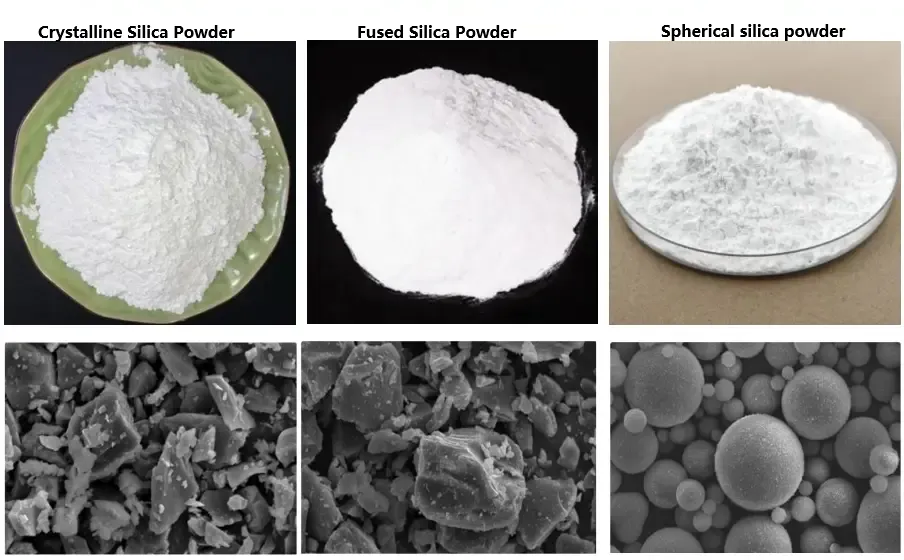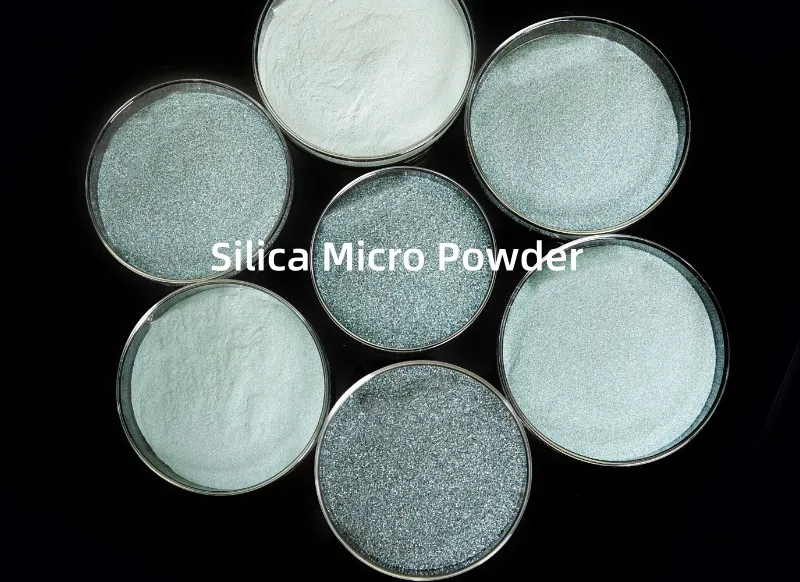
Q1: What is Quartz, and why is it so important?
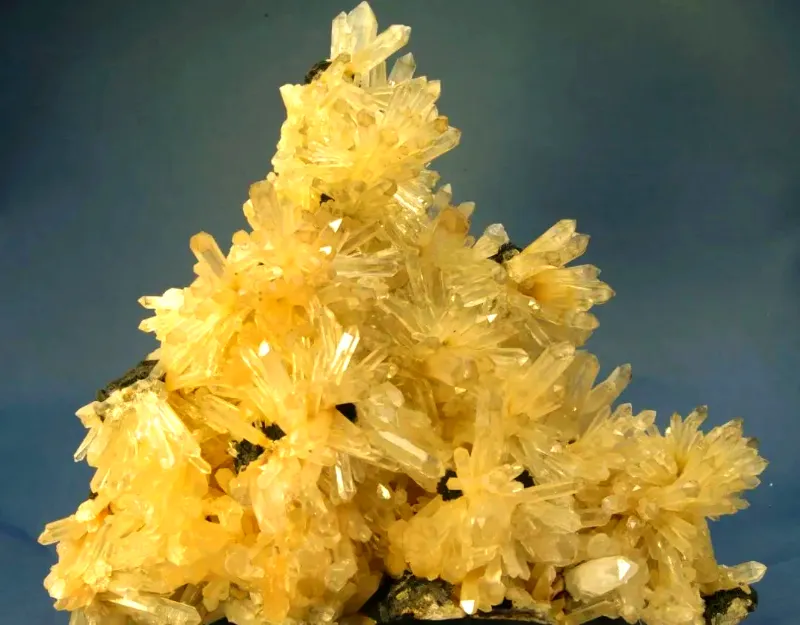
A: Quartz (SiO₂) is one of the most abundant and stable minerals in the Earth’s crust.
It has high hardness (Mohs hardness of 7), excellent chemical stability, and outstanding optical properties. Due to these characteristics, quartz is widely used in electronics, glass, coatings, ceramics, and construction materials. In modern industry, ultrafine quartz powder plays an increasingly important role as a functional filler and performance-enhancing material.
Q2: How is Quartz Powder produced?
A: The production of quartz powder typically involves the following steps:
- Crushing: The raw ore is crushed into smaller particles using jaw crushers or impact crushers.
- Grinding: The crushed quartz is finely ground using ball mills or air classifier mills.
- Classification: An air classifier mill is used to precisely separate particles based on their size, ensuring uniform particle distribution.
- Surface Modification (optional): Quartz powder used for plastics or coatings may undergo surface treatment to improve dispersion and compatibility.
Q3: Why is the demand for ultrafine quartz powder continuously increasing?
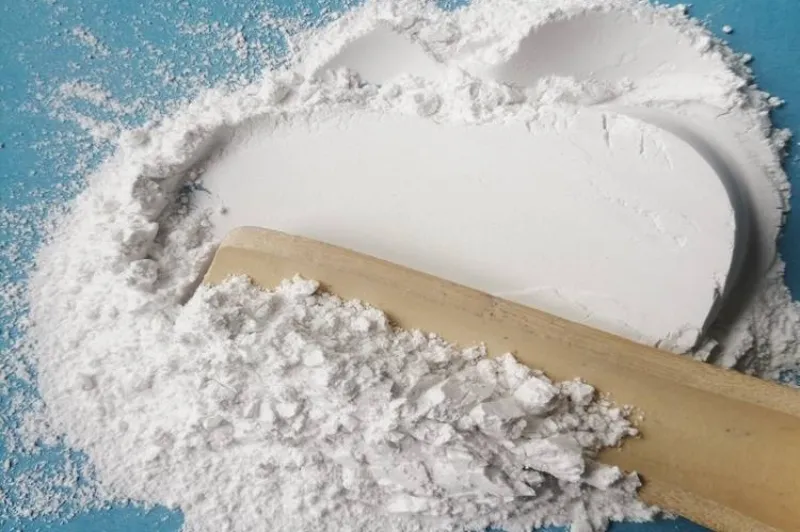
A: As technology advances, industries are raising their demands for the fineness and purity of quartz powder. Ultrafine quartz powder (D50 < 5 μm) can significantly enhance materials’ thermal stability, dielectric strength, and transparency.
In the electronics industry, it is used to improve insulation properties;
in coatings, it improves hardness and wear resistance;
in plastics, it enhances strength and improves dimensional stability.
Q4: What are the main challenges in grinding quartz powder?
A: Quartz grinding is challenging due to its high hardness and abrasive nature.
Traditional grinding methods often suffer from issues such as excessive wear, contamination, and low efficiency.
Additionally, preventing overheating during the grinding process and maintaining uniform particle size are key challenges.
As a result, modern industry increasingly turns to air classifier mills.
This system utilizes controlled energy input, built-in cooling, and real-time classification to reduce contamination and energy consumption effectively.
Q5: How do Air Jet Mills or Ball Mills Improve Quartz Powder Grinding Efficiency?
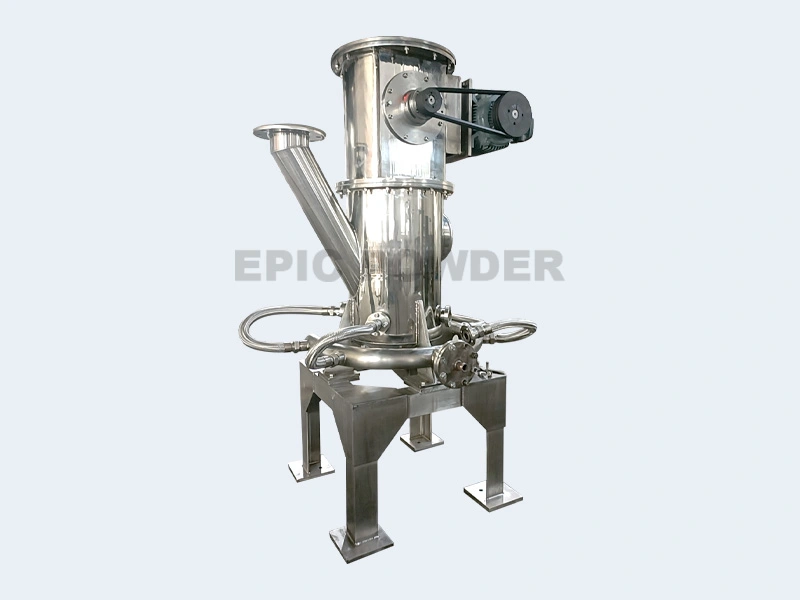
A: Air jet mills use high-speed air flow to cause quartz particles to collide with each other, achieving high-energy grinding. Throughout the process, no grinding media are involved, avoiding contamination.
Air jet mills are suitable for producing high-purity, ultrafine quartz powder, achieving D97 < 10 μm with a narrow particle size distribution.
At the same time, as the material is ground quickly, energy consumption is reduced by about 30%, and heat damage is minimized.
Ball mills, on the other hand, use grinding media to impact and grind quartz particles.
By optimizing the rotor speed and ball-to-material ratio, the grinding efficiency is significantly improved. With a precise classification system, uniform particle size and high purity products can be obtained. This method is simple, highly adaptable, and widely used for producing medium-to-fine quartz powder.
Whether using an air jet mill or ball mill, both can operate in a fully enclosed system to prevent dust leakage. The purity of the product can reach over 99.9%, meeting the demands of the electronics, optical, and high-end materials industries.
Q6: What are the typical applications of quartz powder?
A:
| Application Area | Typical Particle Size (μm) | Functional Advantages |
|---|---|---|
| Electronics & Semiconductors | D50 < 3 | High insulation properties, low dielectric loss |
| Coatings & Paints | D50 5–10 | Increased hardness, improved gloss and wear resistance |
| Plastics & Rubber | D50 5–15 | Enhanced strength, improved dimensional stability |
| Glass & Ceramics | D50 10–50 | Increased transparency and thermal stability |
| Construction Materials & Adhesives | D50 < 20 | Enhanced strength, excellent filling properties |
Q7: What are the future trends in quartz powder processing?
A: The future development of quartz powder will focus on high purity, nano-sized particles, and functionalization. Automation, online monitoring, and intelligent control will further enhance production stability.
Air classifier mills will play a core role in this. They enable cleaner, safer, and more energy-efficient production, meeting the strict standards of the electronics and new materials industries.
Q8: What solutions does Epic Powder provide?
A: Epic Powder introduces a dedicated airflow mill system for quartz, with a single-line capacity of 0.5–15 t/h and a D97 stability of 2–10 μm. It integrates online particle size monitoring and intelligent control. It has already helped numerous companies upgrade from coarse powder to ultrafine high-purity quartz powder. Consult Epic Powder to unlock new value from quartz!