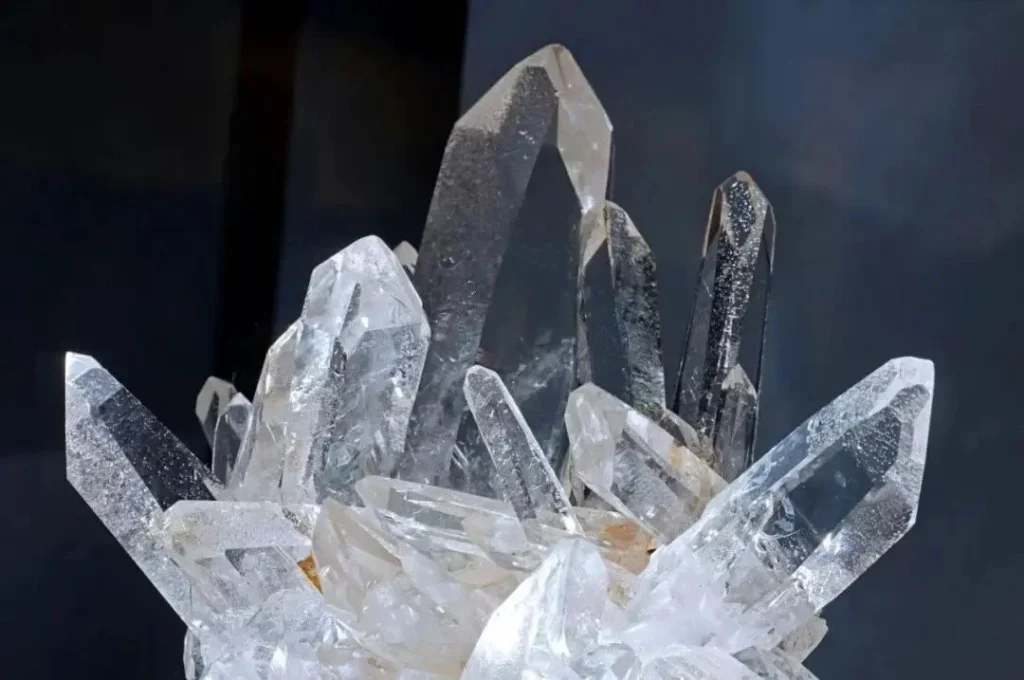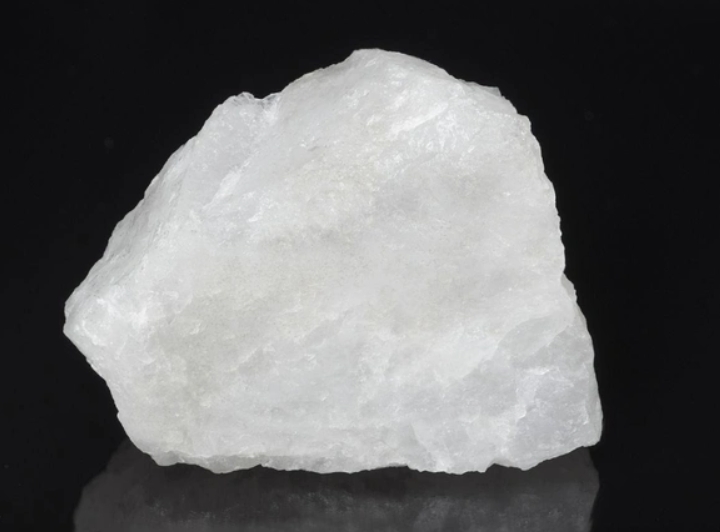
Silica (SiO₂), particularly in forms such as quartz powder, fused silica, or precipitated silica, serves as a critical raw material in numerous high-tech industries. These include semiconductors, photovoltaic solar panels, advanced coatings, functional fillers in composites, precision ceramics, and high-performance rubber/plastics. In these applications, the performance of silica powder is heavily influenced by its particle size characteristics—especially the particle size distribution (PSD). To achieve the rigorous consistency required by these sectors, silica powder air classification has emerged as the most effective technology for precisely separating sub-micron fractions and eliminating undesirable oversized particles, ensuring the final product meets the highest industrial standards.
A narrow PSD means a tight range between the finest and coarsest particles. This is often quantified using parameters like:
- D10 — particle size below which 10% of the material lies (indicating the fine tail)
- D50 — median particle size
- D90 or D97 — particle size below which 90% or 97% of the material lies (indicating the coarse tail)
The ratio D90/D10 (or sometimes D97/D10) serves as a direct measure of distribution width. A ratio close to 1 indicates an extremely uniform, narrow PSD, while higher values reflect broader distributions with more fines or coarse fractions.
For many premium silica applications, manufacturers target D90/D10 < 2–3 (or even tighter), with D97 precisely controlled (e.g., D97 < 10 µm or < 5 µm for ultra-fine grades) and minimal oversize particles.
Why Narrow PSD Matters for Silica
- Semiconductors / Photovoltaics — Extremely low levels of coarse particles (>D97 control) prevent defects in thin films, coatings, or encapsulants. Uniform particle packing improves slurry stability and film uniformity.
- Functional fillers — Narrow PSD enhances dispersion, reduces viscosity in high-loading compounds, and improves mechanical/optical properties.
- Coatings & Inks — Prevents nozzle clogging, ensures consistent gloss/transparency, and avoids settling.
- Ceramics — Improves green body density and sintering uniformity.
Broad PSD, by contrast, leads to poor processability, inconsistent product performance, and higher reject rates.
Limitations of Traditional Classification Methods
Traditional sieving or mechanical classification struggles below ~20–50 µm due to agglomeration, low efficiency, and contamination risks (especially problematic for high-purity silica). This is where advanced silica powder air classification technology becomes essential.
Core Principles of Modern Air Classifiers
Air classifiers separate particles using aerodynamic forces in a gas (usually air) stream. Key forces include:
- Centrifugal force (from rotating classifier wheel or vortex)
- Drag force (from airflow)
- Gravity (in some designs)
Particles are fed into a classification zone where finer particles follow the airflow to the fine product outlet, while coarser particles are rejected and returned (or discharged separately).
Advanced designs achieve narrow cuts through:
- High-efficiency classifier wheels — Multi-wheel, high-speed rotors with optimized blade geometry
- Precise secondary air injection — Adjustable secondary airflow to sharpen the classification edge
- Dynamic/variable speed control — Real-time adjustment of rotor speed and airflow for exact cut points
- Minimized turbulence & recirculation — Advanced housing and vortex optimization to reduce bypass and improve sharpness
- Low-wear / contamination-free construction — Ceramic lining, polymer coatings, or special alloys for high-purity silica processing
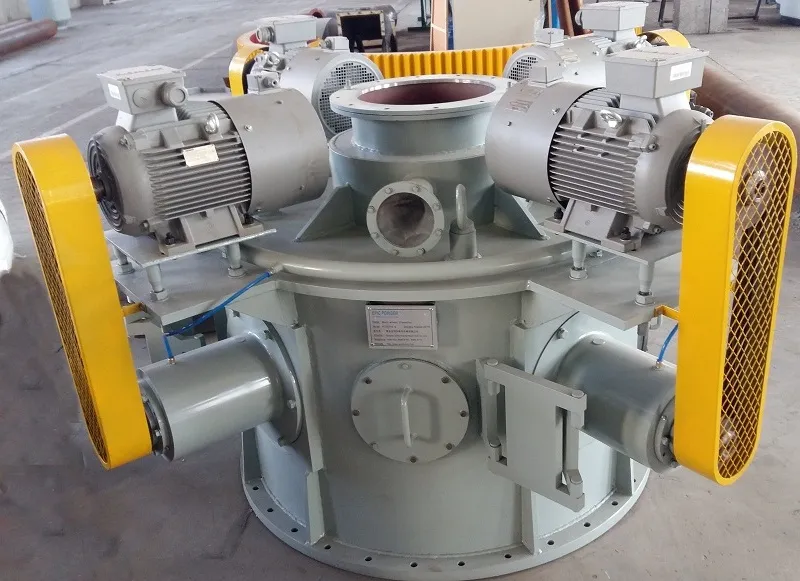
Silica Powder Air Classification Technologies
| Technology Type | Typical Fineness (D97) | PSD Sharpness (D90/D10) | Typical Silica Applications | Representative Features |
|---|---|---|---|---|
| Horizontal multi-wheel(e.g., HTS serious) | 2–10 µm | 1.5–2.5 | Ultra-high purity quartz for semiconductors | High classification efficiency, low energy use |
| Vertical forced vortex (e.g., ITC serious) | 3–15 µm | 1.8–3.0 | Photovoltaic-grade silica, coatings | Good for abrasive materials, easy adjustment |
| Integrated jet mill + classifier | 1–8 µm | 1.4–2.2 | Electronic-grade, ultra-fine silica | No media contamination, precise top-cut control |
| Dynamic air classifier | 5–20 µm | 2.0–3.5 | Functional fillers, rubber/plastics | Combined grinding & classification in one unit |
| Centrifugal air classifier(e.g., CTC serious) | 10–50 µm | 2.5–4.0 | Industrial-grade precipitated silica | High throughput, robust for coarser fractions |
Achieving Narrow PSD in Silica Processing
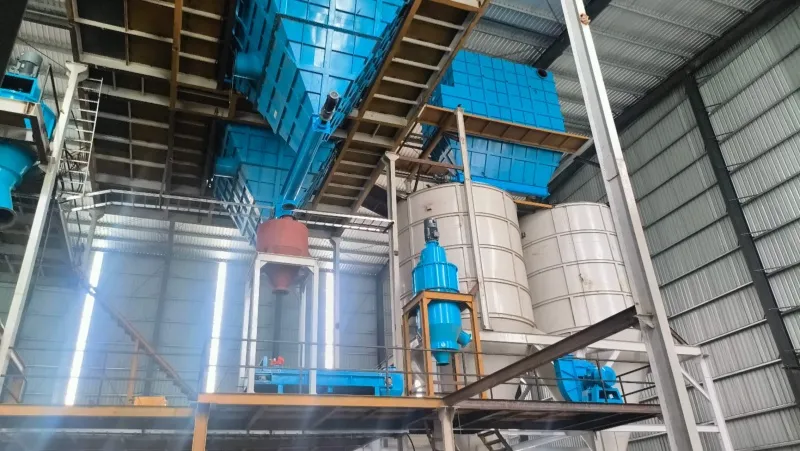
In modern production lines for high-end silica, the most common and effective configuration is:
Fluidized Bed Jet Mill + Independent High-Efficiency Air Classifier
- Jet mill provides contamination-free ultrafine grinding (via particle-to-particle collision)
- Independent classifier allows precise, sharp cut (independent of grinding parameters)
- Closed-loop system with precise airflow, rotor speed, and secondary air control
- Online PSD monitoring (laser diffraction) + automatic feedback control
This setup routinely achieves D97 = 2–5 µm with D90/D10 < 2.0–2.5, and very low oversize content (<0.1% > 2×D97).
Future Trends
- AI/ML-assisted control — Real-time adjustment based on incoming feed variability
- Multi-stage classification — Sequential fine/coarse cuts for ultra-narrow distributions
- Energy-efficient designs — Lower pressure drop, optimized aerodynamics
- Dry processing for sustainability — Replacing wet classification to reduce water usage and wastewater
Conclusion
Advanced air classifier technology has become indispensable for producing high-performance silica powders with narrow particle size distributions. By precisely controlling the coarse tail (D90/D97) while minimizing fines variation, these systems enable silica to meet the stringent requirements of next-generation electronics, photovoltaics, and advanced materials. As demands for tighter PSDs (e.g., D90/D10 approaching 1.3–1.8) continue to rise, innovations in classifier wheel design, airflow management, and intelligent control will remain at the forefront of silica powder engineering.

“Thanks for reading. I hope my article helps. Please leave a comment down below. You may also contact Zelda online customer representative for any further inquiries.”
— Posted by Emily Chen