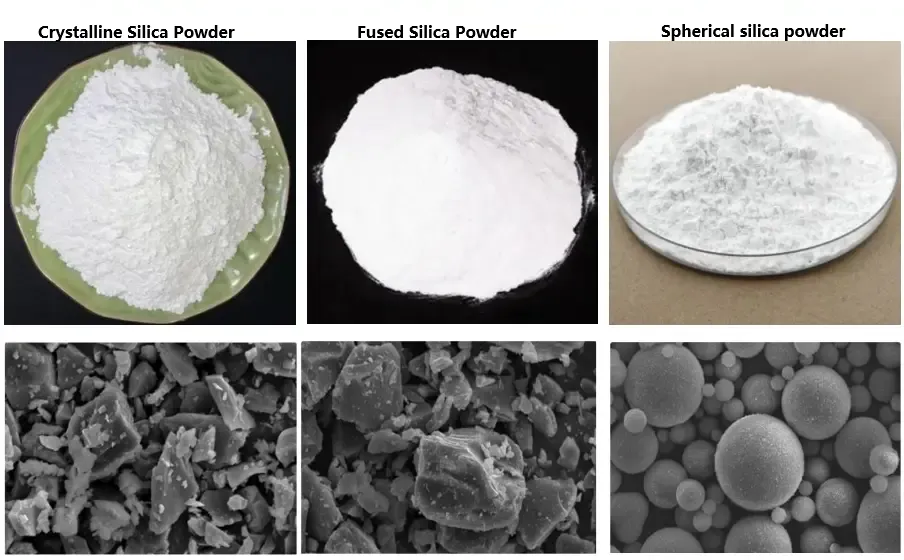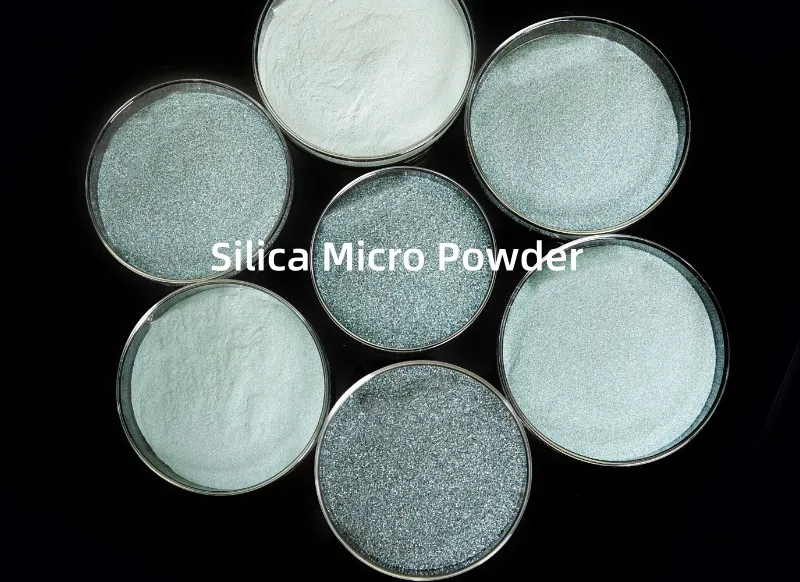
Glass powder, as an inorganic filler, is widely used in coatings, plastics, rubber, adhesives, and many other industrial fields. Its advantages are reflected in performance enhancement, cost optimization, process compatibility, and environmental sustainability. The following is a comprehensive analysis of the advantages of glass powder as a filler.
Core Performance Advantages
1. Significant Improvement in Physical Properties
Enhanced Hardness and Wear Resistance
The main component of glass powder is silicon dioxide (SiO₂), with a Mohs hardness of 6–7, which is much higher than that of common fillers such as calcium carbonate (Mohs hardness ~3) and talc (1–2.5). After incorporation, glass powder forms a rigid skeletal structure within the matrix, effectively resisting abrasion and scratching.
- Application example:
In furniture coatings, adding 10% glass powder increases film hardness from 2H to 4H–6H, while wear resistance improves by more than three times. - Test data:
For epoxy coatings containing glass powder, Taber abrasion tests show a 75% reduction in wear loss.
Improved Corrosion Resistance
Glass powder exhibits excellent chemical stability and strong resistance to acids, alkalis, and salts. It forms a dense barrier that prevents corrosive media from penetrating the coating.
- Application scenario:
In marine coatings, glass powder enhances resistance to seawater (chloride ions) and marine biofouling, extending corrosion protection cycles to over 10 years. - Case comparison:
Chemical storage tank coatings with 15% glass powder showed no corrosion after one year of immersion in 5% hydrochloric acid, whereas unfilled coatings failed within three months.
Outstanding High-Temperature Resistance
With a softening point of 600–800 °C, glass powder remains solid or partially molten at high temperatures and can chemically bond with the matrix, improving adhesion.
- Typical application:
Automotive exhaust system coatings containing glass powder can withstand temperatures up to 800 °C without peeling or oxidation. - Thermal shock test:
After 50 cycles at 800 °C, coatings with glass powder retained 95% integrity, compared with only 10% for conventional coatings.
2. Improved Chemical Stability
Enhanced Weather Resistance
Glass powder weakly absorbs UV radiation but reflects infrared light, reducing thermal expansion stress. Its chemical inertness also resists oxidation by oxygen and ozone.
- Building coatings:
After five years of outdoor exposure, acrylic coatings containing glass powder showed a color difference (ΔE) < 1.5, compared to 4.2 for conventional coatings. - Automotive coatings:
Gloss retention exceeded 80% after three years, while traditional coatings dropped below 50%.

Chemical Resistance
Glass powder does not participate in oxidation reactions, significantly extending coating service life. In powder coatings, outdoor durability can be increased from 5 years to more than 10 years.
Cost and Process Advantages
1. Outstanding Cost Efficiency
Low Raw Material Cost
Glass powder is produced mainly from waste glass or quartz sand, making it far more economical than nanomaterials (e.g., nano-silica) or specialty resins (e.g., fluoropolymers).
- Cost comparison:To achieve similar hardness or abrasion resistance, glass powder costs only 30–50% of comparable nanomaterials.
Reduced Processing Costs
Glass powder can be used directly without complex surface pretreatments, unlike fillers such as carbon fibers that require modification or pre-dispersion.
2. Strong Process Compatibility
Rheology and Thixotropy Control
Particle shape and size distribution significantly affect viscosity. Spherical glass powder improves flowability, while irregular particles enhance thixotropy and prevent sagging.
- Application example:
In water-based wood coatings, spherical glass powder (1–5 μm) improves atomization and film uniformity. - Data support:
With 5% spherical glass powder, viscosity dropped from 1200 mPa·s to 800 mPa·s, increasing spray efficiency by 30%.
Reduced Shrinkage and Cracking
As an inert filler, glass powder does not shrink during drying and helps offset resin shrinkage stress.
- Thick-coating applications:
In fireproof coatings, drying shrinkage was reduced from 8% to 3%, preventing cracking. - Repair materials:
Bridge crack repair mortars with 15% glass powder remained crack-free after three years, while conventional mortars developed visible cracks.
Environmental and Sustainability Advantages
1. Green and Eco-Friendly Properties
Low VOC Emissions
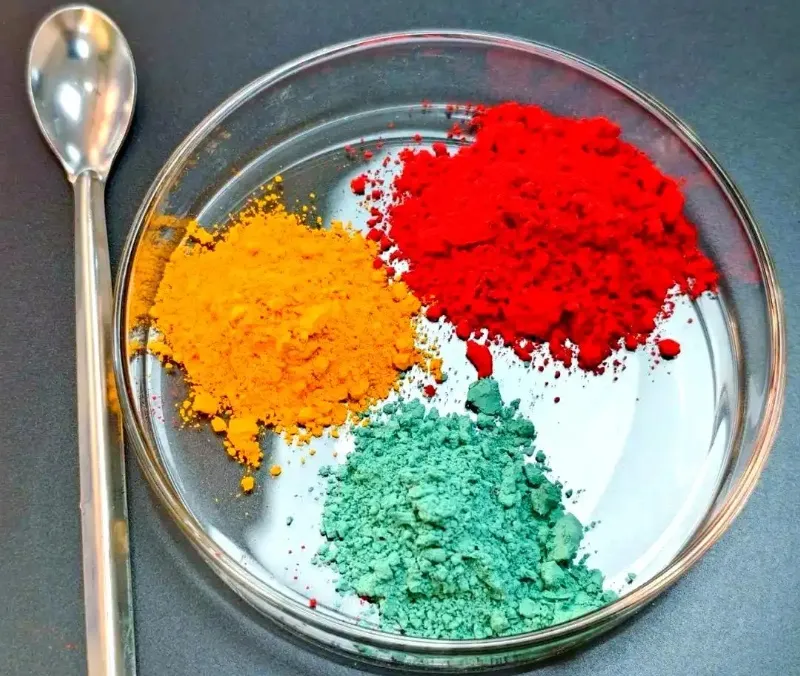
Glass powder is inorganic and contains no volatile organic compounds (VOC), supporting low-VOC coating formulations.
- Comparison: Solvent-based coatings may reach 500 g/L VOC, while water-based coatings with glass powder can be reduced to below 50 g/L.
Recyclability
Glass powder can be produced from recycled glass, reducing waste and reliance on natural quartz resources. One ton of waste glass can yield approximately 0.9 tons of glass powder.
2. Compliance with Safety Standards
Food Contact Safety
High-purity glass powder meets FDA and EU food-contact standards and can be used in food packaging coatings.
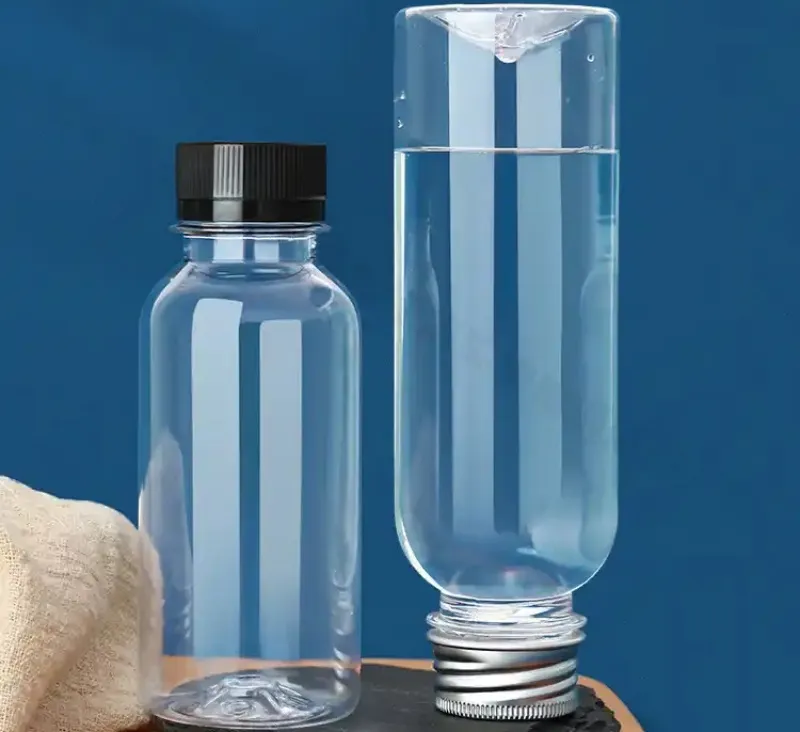
- Application example: Inner coatings of beverage bottles maintain over 90% light transmittance with no harmful substance migration.
Non-Toxic and Harmless
Glass powder is chemically stable and safe for use in children’s products and medical devices.
Functional Expansion Advantages
1. Transparency Enhancement in Clear Coatings
Refractive Index Matching
When the refractive index of glass powder (1.45–1.55) closely matches that of resins (1.5–1.6), light scattering is minimized.
- Optical application: Camera lens coatings with glass powder increased transmittance from 85% to 92%, while achieving 6H hardness.
2. Conductive and Anti-Static Functions
Doped Conductive Glass Powder
By doping glass powder with tin oxide or antimony oxide, conductive networks can be formed.
- Electronics industry:
Anti-static floor coatings using conductive glass powder achieve surface resistances of 10⁶–10⁹ Ω. - 5G applications:
Glass powder–silver composite fillers provide electromagnetic shielding effectiveness up to 60 dB (1–18 GHz).
Grinding and Preparation Processes of Glass Powder
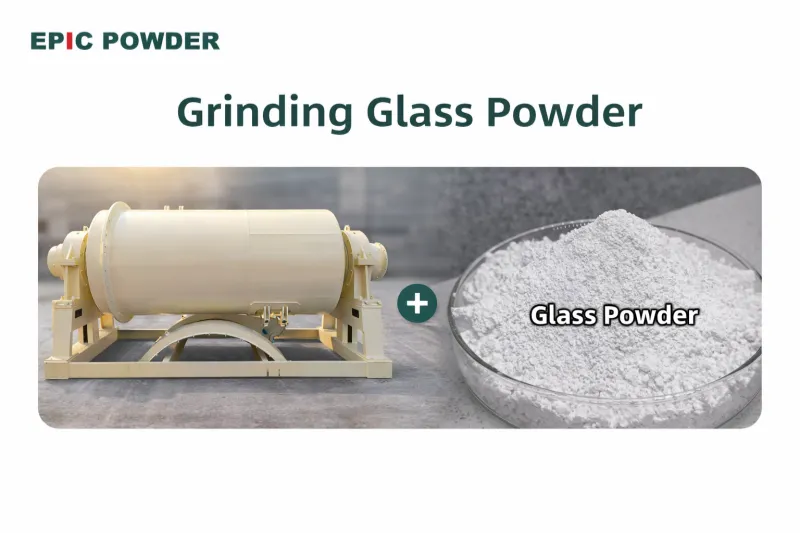
Glass powder used as a high-performance filler requires strict control of particle size distribution, purity (especially low iron content), particle morphology, and surface activity. Industrial production mainly follows two routes: primary melting (for high-end electronic and optical grades) and recycled glass processing (mainstream industrial fillers).
Typical Production Process (Filler-Grade Glass Powder)
- Raw Material Preparation
- Primary route: High-purity SiO₂, Al₂O₃, CaO, Na₂O, B₂O₃
- Recycling route: Waste glass → sorting → cleaning → drying
- Coarse Crushing
Jaw crusher or hammer crusher to 5–50 mm cullet. - Pre-Grinding
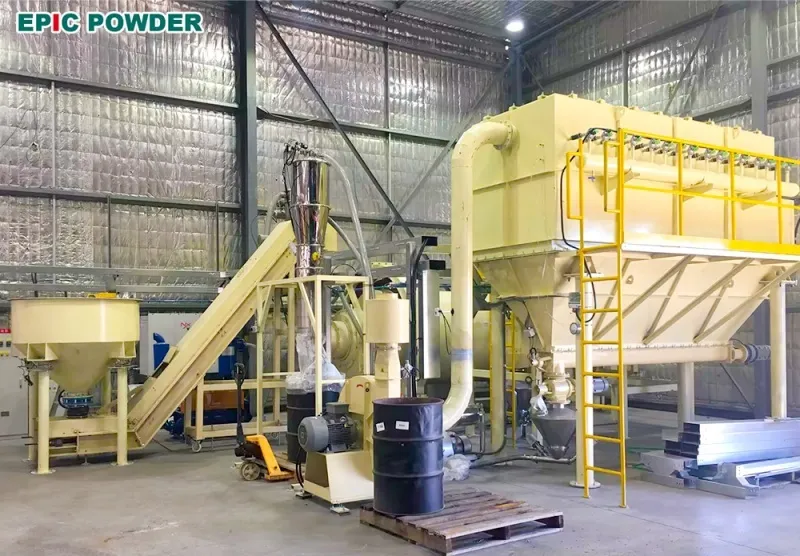
Raymond mills, roller presses, or hammer mills to 100–500 μm. - Ultrafine Grinding (Key Step)
Equipment selection depends on target fineness and purity:
| Equipment Type | Typical Fineness (D97) | Particle Morphology | Metal Contamination Control | Energy Consumption & Throughput | Application Scenarios (as Filler) | Remarks |
| Ball Mill (Dry/Wet, Ceramic/Alumina Lined) | 5 – 75μm | Polygonal, irregular | Controllable (with ceramic lining) | Medium to High | Mid-to-low end industrial fillers; cost-effective | Most traditional; long grinding times may introduce impurities. |
| Jet Mill (Fluidized Bed/Spiral) | 3 – 45μm | Near-spherical, rounded edges | Extremely Low | Medium-High to High | First choice for high-end transparent coatings & plastic fillers | Best particle shape; narrow distribution; minimal contamination. |
| Air Classifier Mill (Vertical/Horizontal Turbine) | 5- 300μm | Flaky/Highly polygonal | Medium | High (Increases with fineness) | Large-scale production where morphology is not critical | Suitable for high-volume production of medium-fine powders. |
| Pin Mill (Special Wear-Resistant Type) | 5 – 150μm | Near-equiaxed, polygonal | Controllable | Relatively Low | Fillers requiring decent morphology but not extreme fineness | Low energy consumption, but highly sensitive to material hardness. |
Conclusion
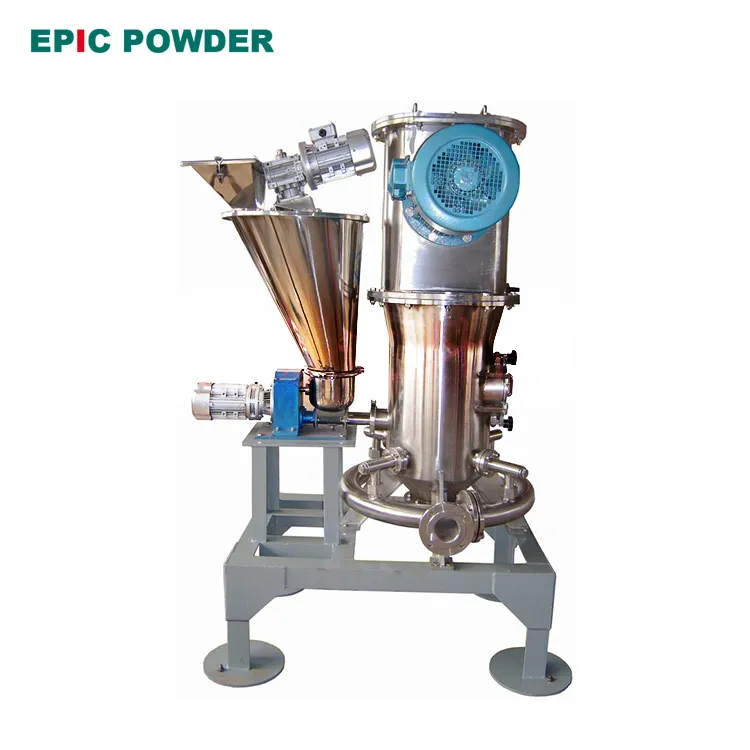
As the demand for high-performance and sustainable filler continues to grow, glass powder is becoming an increasingly important material across coatings, plastics, and advanced industrial applications. Epic Powder, with over 20 years of experience in ultrafine grinding and classification technologies, provides customized solutions for glass powder production, including air jet mills, classifier mills, and surface modification systems. By combining precise particle size control, low contamination design, and high production efficiency, Epic Powder helps customers produce premium glass powder fillers that meet both performance and environmental requirements in global markets.

“Thanks for reading. I hope my article helps. Please leave a comment down below. You may also contact Zelda online customer representative for any further inquiries.”
— Posted by Emily Chen