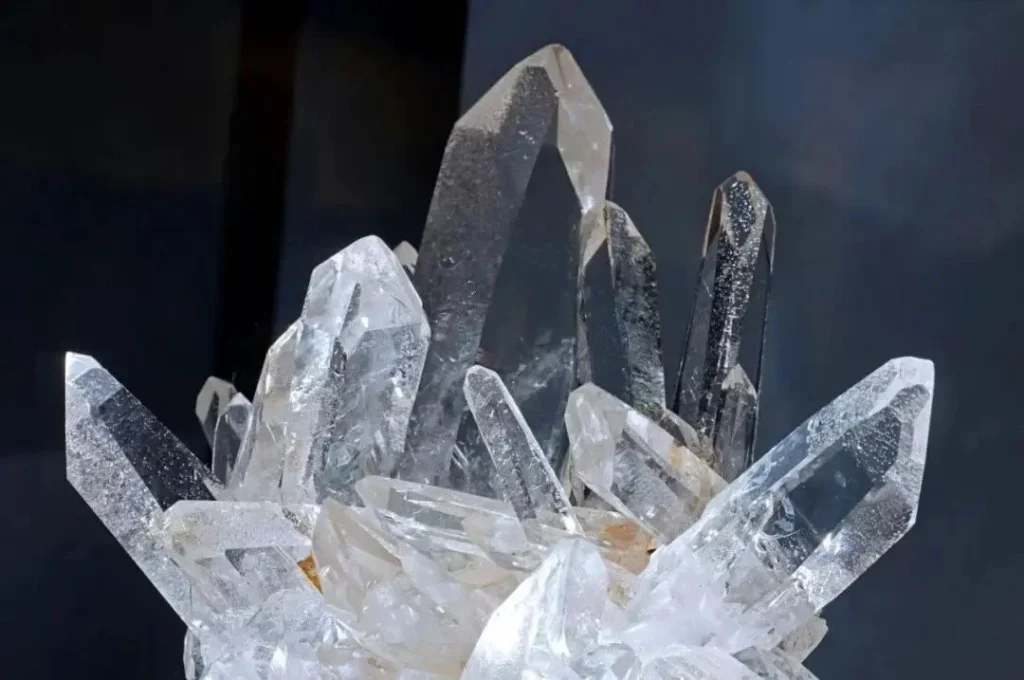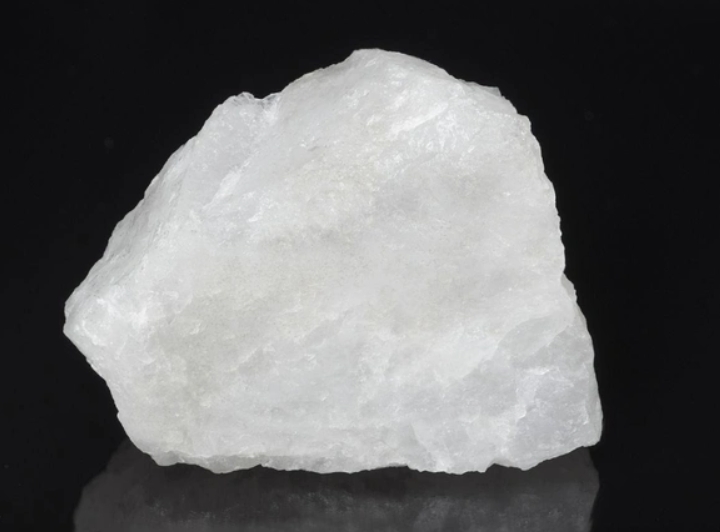
High-purity quartz is an important raw material for the production of quartz glass, integrated circuit substrates, and other products. It holds enormous value and an irreplaceable position in high-tech industries. As natural crystal resources continue to diminish, research into high-purity synthetic quartz has increasingly attracted attention.
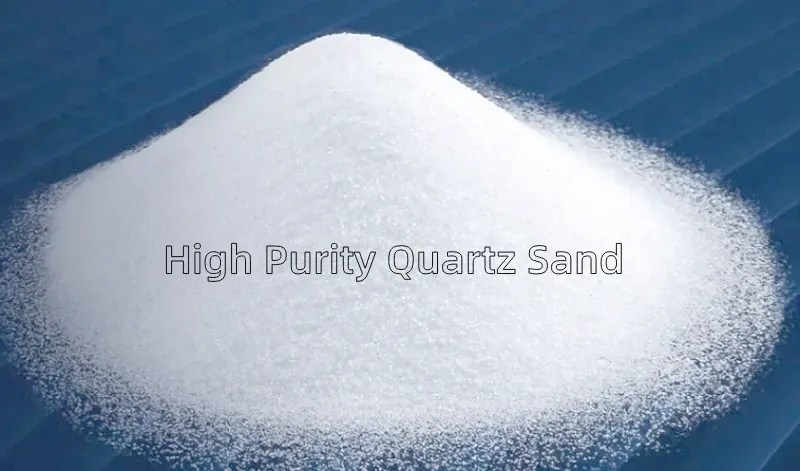
Overview of High-Purity Synthetic Sand Production Methods
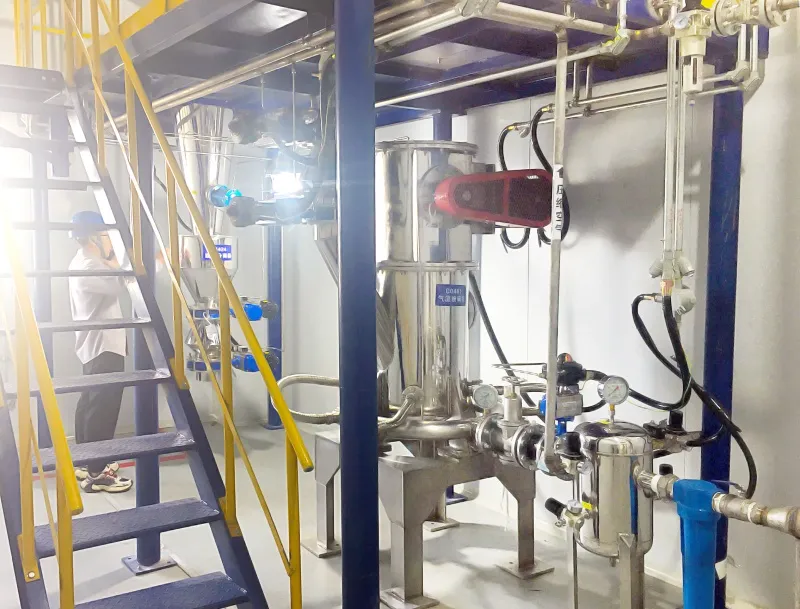
High-purity synthetic sand can be produced via vapor-phase synthesis, chemical precipitation, sol-gel, liquid-phase hydrolysis, microemulsion, and fluosilicic acid extraction. Each method has unique characteristics. However, regardless of the process, the final product often suffers from agglomeration and uneven particle size distribution, which directly affects downstream melting, filling, or optical properties. Therefore, ultrafine pulverization equipment (especially jet mills, fluidized bed ultrafine mills, and air classifier mills) has become an indispensable post-processing step in high-purity quartz production. These devices can achieve ultrafine particle sizes (D50 controllable from 1–50 μm), narrow distributions (span <1.5), and maintain high purity (>99.99%) without introducing metallic impurities.
Vapor-Phase Synthesis Method
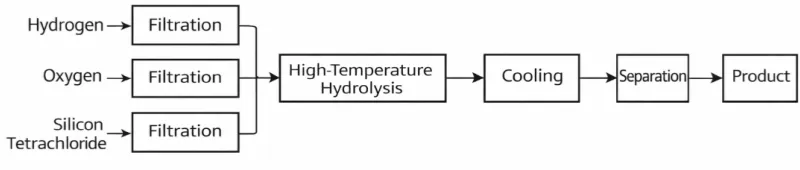
The vapor-phase synthesis, also called flame hydrolysis, uses silicon or organosilicon chlorides (e.g., SiCl4, CH3SiCl3) as raw materials. These are vaporized and mixed with hydrogen, oxygen, or oxidizers. Hydrolysis occurs at high temperature, forming SiO2 mist. After cooling, separation, and acid removal, quartz sand powder is obtained via gas-solid separation.
This method is easy to control and fast, suitable for large-scale production. However, by-product HCl can corrode equipment, requiring high-quality materials. The synthesized powder tends to agglomerate and must immediately enter ultrafine pulverization for dispersion.
Chemical Precipitation Method
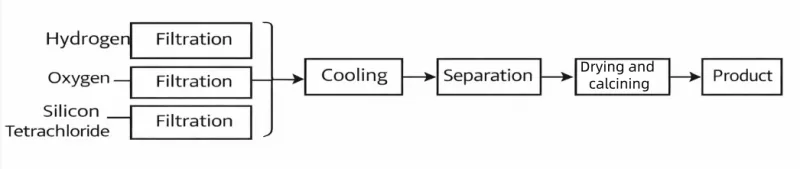
This method uses sodium or potassium silicate with CO2 or acidic solutions (HCl, H2SO4, or HNO3) as raw materials. Under controlled synthesis temperature and with surfactants, silicic acid precipitates form, which are filtered, washed, dried, and calcined to obtain SiO2.
This process is simple, with readily available raw materials. However, due to low reactant concentration and rapid precipitation, particle size is difficult to control. Impurities such as Fe3+, Al3+, and Ca2+ also limit achievable purity. After calcination, severe agglomeration occurs. Using a fluidized bed ultrafine mill can break these agglomerates and precisely control particle size.
Sol-Gel Method
Using inorganic salts or organosilanes as raw materials and alcohol as a co-solvent, an acid or base catalyst initiates hydrolysis and condensation to form a silica gel. The gel undergoes aging, dehydration, drying, and calcination to yield synthetic quartz sand.
This method is simple and does not require special equipment materials. The produced SiO2 has high purity and uniformity. However, it is costly, time-consuming, and involves many variable factors, making precise control difficult. Calcined gel blocks require ultrafine pulverization to meet semiconductor-grade particle requirements.
Liquid-Phase Hydrolysis Method
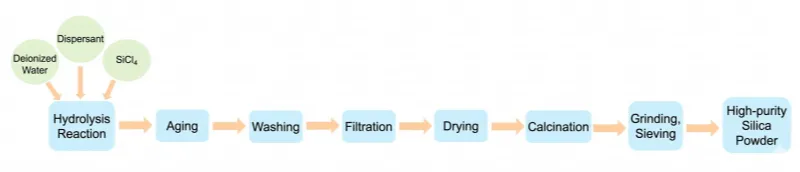
Tetrachlorosilane reacts with water through hydrolysis and condensation. The product is washed, filtered, dried, calcined, and sieved to produce synthetic quartz sand.
Due to the violent reaction of tetrachlorosilane with water, the intermediate is difficult to control, and the product tends to agglomerate. Traditional screening cannot resolve agglomeration or broad particle size distribution. Ultrafine pulverization becomes critical, enabling solvent-free, low-temperature grinding and avoiding secondary contamination.
Microemulsion Method
Water and non-polar solvents like alkanes are mixed to form W/O or O/W emulsions with the help of emulsifiers and stabilizers. Suitable organosilane precursors hydrolyze and condense in droplets to form SiO2 particles. After washing, drying, and calcination, synthetic quartz sand powder is obtained.
This method can produce nano-sized particles, but calcined products still require ultrafine pulverization and classification to optimize distribution and prevent agglomeration that affects optical or electronic performance.
Fluosilicic Acid Extraction Method
Fluosilicic acid, a by-product of phosphate and anhydrous hydrofluoric acid production, can be used to extract SiO2 in various ways:
- Fluosilicate Method: Purified fluosilicic acid reacts with NaCl to generate sodium fluosilicate and dilute HCl. Sodium fluosilicate is washed and reacted with NaOH to produce NaF and SiO2.
- Ammonia Fluorosilicate Method: Fluorosilicic acid reacts with ammonia to form ammonium fluoride and SiO2.
- Concentrated Sulfuric Acid Method: Concentrated H2SO4 removes water from fluosilicic acid, releasing SiF4 and HF. SiF4 absorbs water to form silicic acid and SiO2.
SiO2 precipitates from these methods require ultrafine pulverization for final powder production.
Core Role and Advantages of Ultrafine Pulverization in High-Purity Quartz
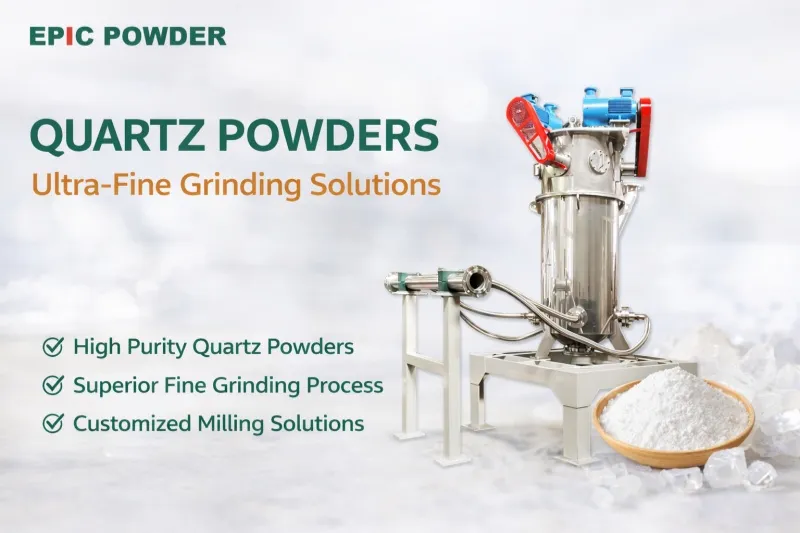
Traditional mechanical mills (ball mills, rod mills) can introduce Fe, Al, and other impurities, lowering purity and failing to meet 5N (99.999%) standards. Ultrafine pulverization equipment (mainly fluidized bed jet mills and ACMs) uses high-speed airflow collisions or impacts with dynamic classification:
- Grinding without media at low temperature (<100°C), preventing thermal damage or phase changes;
- Built-in classifier wheels or cyclones enable real-time online separation: coarse particles return for re-grinding, fine particles are precisely collected;
- Median particle size (D50) controllable from 1–50 μm, span reduced to 1.2–1.5;
- Entirely airflow-driven, avoiding contact contamination and maintaining >99.99% purity, especially suitable for high-hardness quartz (Mohs hardness 7).
Compared with traditional mills, ultrafine equipment can precisely control <10 μm ultrafine powder proportions, preventing bubbles or optical defects during downstream melting. Powder flowability improves (repose angle reduced by over 10°), facilitating quartz glass melting or electronic filling. Industrially, switching to fluidized bed air jet mills increases yield by 15–25%, lowers Fe2O3 contamination to <0.5 ppm.
Applications and Performance Requirements of High-Purity Quartz
High-purity quartz features excellent thermal resistance, high insulation, and radiation resistance. It is widely used in high-tech industries, including optical fibers, single-crystal silicon, and polycrystalline silicon in electronics and photovoltaics.
In terminal applications, semiconductor, optical fiber, optics, photovoltaics, and electro-optical industries account for 65%, 14%, 10%, 7%, and 4% respectively. Optical fiber, photovoltaics, and semiconductors are the fastest-growing sectors.
Particle size requirements vary:
- Semiconductor crucibles require uniform 0.125–0.180 mm sand, achievable with precise classification;
- Optical fiber preforms require submicron powders, with ACMs ensuring narrow distributions;
- Photovoltaic quartz demands low bubble content and high transparency, and ultrafine processing significantly improves melting performance.
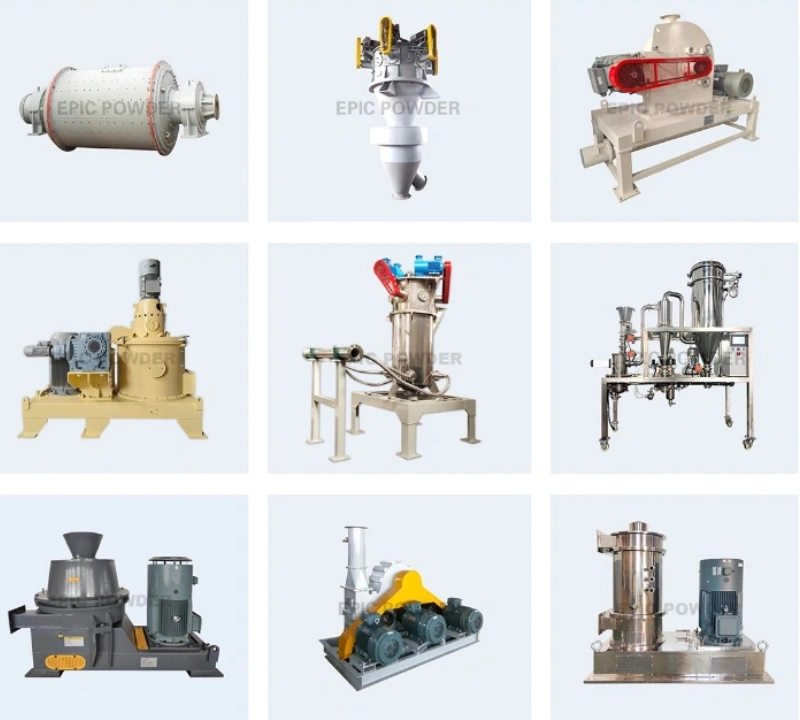
Conclusion: Ultrafine Pulverization Drives High-Purity Synthetic Quartz Industry Upgrades
Given high-purity synthetic quartz’s value and broad applications, its technological development and industrialization are key industry focuses. Rapid growth in semiconductors, fiber-optic communication, and photovoltaics makes high-purity synthetic quartz a critical foundational material.
Natural crystal depletion and foreign monopoly over high-end production technologies make domestic R&D and industrialization urgent. Ultrafine pulverization equipment is not merely a finishing step but a core quality control stage. It transforms agglomerates into high-purity, narrow-distribution powders, directly determining optical, electrical, and thermal properties.
Companies can monitor PSD with laser particle size analyzers and optimize parameters via DOE (classifier wheel speed, airflow, feeding rate) to move from “coarse synthesis” to “precise powder production.”
Future integration of intelligent online particle size monitoring and automatic feedback will further help domestic high-purity quartz reach 5N–6N levels, supporting self-reliance in semiconductors, fiber optics, and photovoltaics.
Selecting the right air classifier mill or fluidized bed ultrafine mill, combined with scientific process control, allows the production of high-purity, high-performance synthetic quartz sand, reducing costs and increasing competitiveness. Small-scale trials are recommended for capacity and purity verification to quickly implement optimized solutions.
The high-purity quartz quality revolution starts with precise ultrafine pulverization and classification control!

“Thanks for reading. I hope my article helps. Please leave a comment down below. You may also contact Zelda online customer representative for any further inquiries.”
— Posted by Emily Chen