In today’s world of 5G communication, artificial intelligence, and high-performance computing, electronic components are moving toward miniaturization, integration, and high power density. As the core substrate of Printed Circuit Boards (PCBs), the performance of Copper Clad Laminates (CCL) directly determines the stability of electronic terminals. To meet the requirements of high glass transition temperature (Tg), low coefficient of thermal expansion (CTE), and excellent dielectric properties (low Dk/Df), the choice of filler has become critical. Among many fillers, silica powder (SiO2) stands out due to its excellent physical and chemical characteristics. However, the performance of silica powder depends on more than just its chemical composition. It also depends on particle size distribution, morphology control, and surface activity. This article will explore the application of silica powder in CCL. It will focus on the core driving role of ultra-fine grinding equipment in optimizing silica powder performance.
CCL and Silica Powder: Deep Performance Coupling
CCL is a board-like material made by impregnating a reinforcing material (such as glass fiber cloth) with resin (such as epoxy resin). It is then covered with copper foil on one or both sides and hot-pressed.
- Substrate Composition: The substrate acts as an insulating layer. It consists of high-molecular synthetic resin, reinforcing materials, and inorganic fillers.
- Role of Fillers: Inorganic fillers occupy a large volume ratio of the substrate. Their core task is to reduce the CTE of the resin. This ensures the resin matches the copper foil to prevent delamination or warping when heated.
- Unique Advantages of Silica: Compared to talc or aluminum hydroxide, silica powder has a lower dielectric constant and higher thermal stability. This makes it the preferred choice for high-frequency and high-speed transmission.
Raw Materials and Classification: From Ore to Micro-powder
The quality of silica powder begins with the ore and is finalized through processing.
- Raw Material Security:
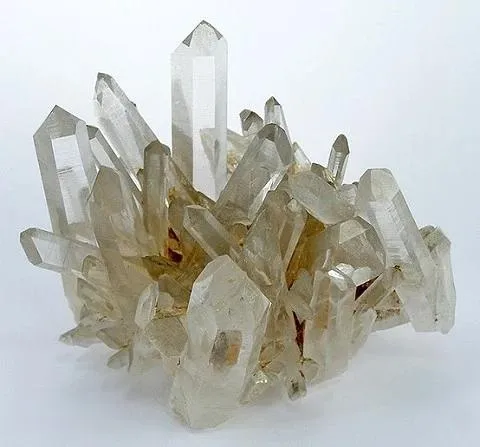
- Vein Quartz: Since its SiO2 content is often greater than 99.9%, it is the ideal raw material for crystalline and high-purity silica powder.
- Quartzite and Quartz Conglomerate: These are pure in texture and easy to process mechanically. They serve as important supplements for low-cost, large-scale production.
- Core Types:
- Crystalline Silica: It maintains the original crystal structure of quartz. It features high hardness and low cost.
- Fused (Amorphous) Silica: It is melted at high temperatures and then quenched. The molecular arrangement changes from ordered to disordered, resulting in an extremely low CTE .
- Spherical Silica: This is currently the high-end mainstream choice. It has excellent fluidity, allowing for a filling volume of over 70%.
- Active Silica: It is surface-modified with silane coupling agents. This solves the “incompatibility” between inorganic fillers and organic resins.
Ultra-fine Grinding Equipment: The “Scalpel” for Optimizing Performance
Regardless of the preparation path, ultra-fine grinding is an indispensable process in silica powder production. For CCL applications, ultra-fine grinding equipment must do more than just “crush.” It must “optimize.”
1. Jet Mill: The Standard for High Purity and Fine Classification
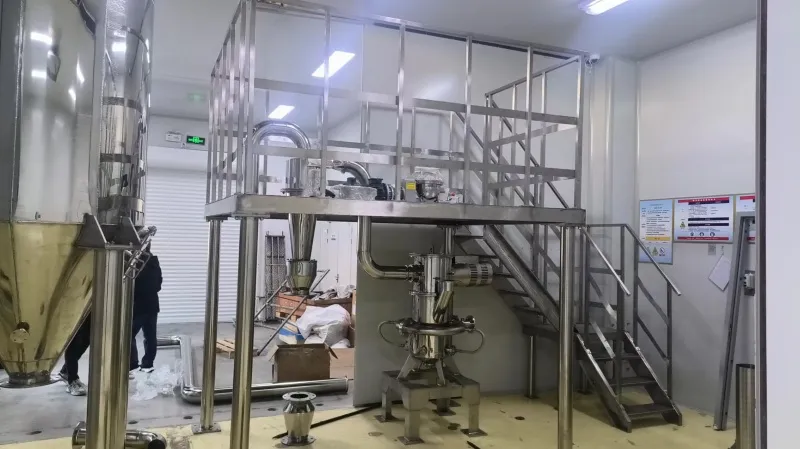
The jet mill uses high-speed compressed air to cause material particles to collide at supersonic speeds.
- Iron Contamination Control: Particles crush each other through self-impact. Combined with ceramic linings (such as alumina or silicon carbide), this ensures magnetic content is kept to a minimum. This meets the strict electrical requirements of integrated circuits.
- Narrow Particle Size Distribution: The built-in high-speed classifier can remove coarse particles in real-time. This keeps D50 stable between 0.5 μm and 5μm. It effectively prevents filler sedimentation in the resin.
2. Mechanical Impact Mill: The Balance of Efficiency and Grading
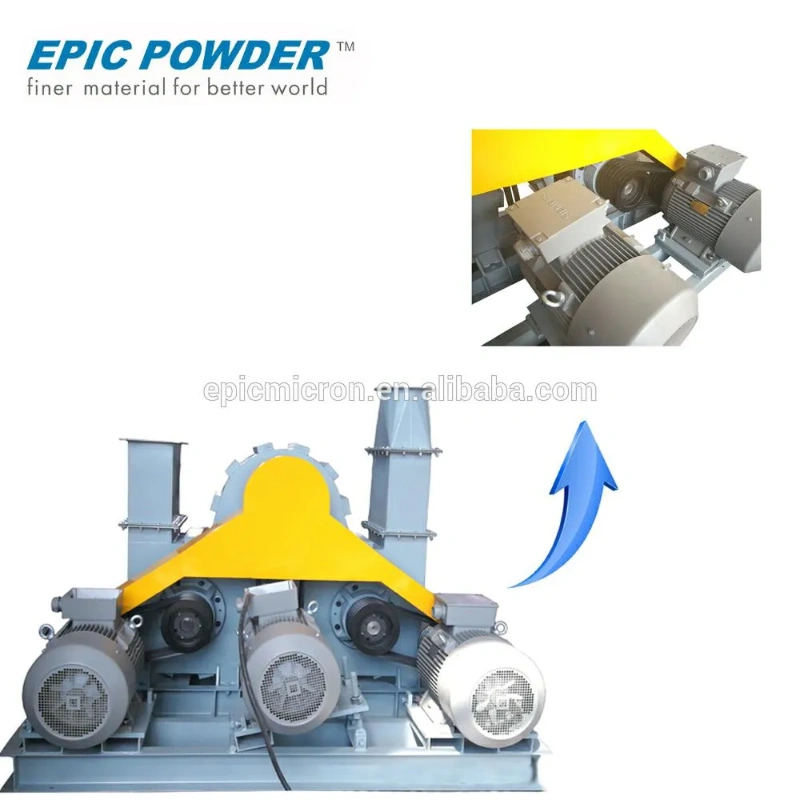
For low-end or mid-range CCL, mechanical mills offer significant energy efficiency advantages.
- Grading Adjustment: By adjusting the rotor speed, manufacturers can flexibly produce powder with specific particle size distributions. In CCL, a reasonable grading (mixing large and small particles) significantly increases packing density. This further reduces the CTE.
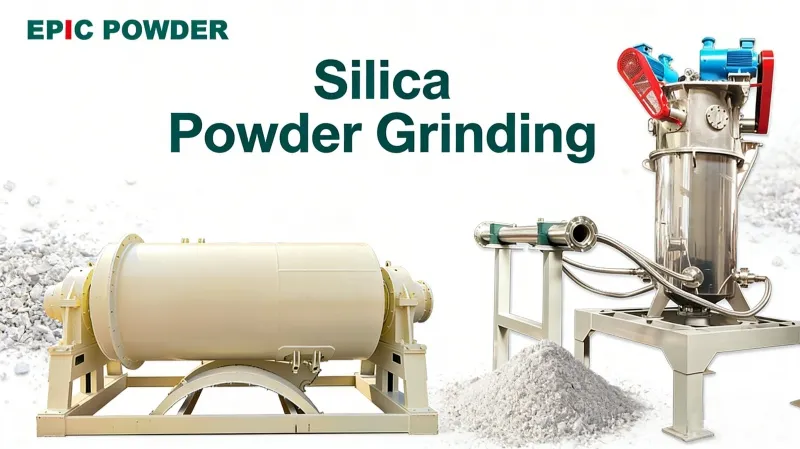
3. Ball Mill + Classifier System: The Foundation of Large-scale Production
In the large-scale production of crystalline silica powder, a ball mill combined with a multi-stage air classifier is the mainstream configuration.
- Continuous Production: This setup can run stably 24 hours a day. The resulting angular powder is the main filler for current low-to-mid-end CCL.
IV. The Rise of Spherical Silica and Preparation Challenges
Sphericalization is the advanced form of silica powder. Spherical silica powder offers clear advantages in CCL:
- High Loading Volume: Spheres have the smallest specific surface area. This means lower viscosity is needed for resin coating. It allows more filler to be added to the resin.
- Reduced Mold Wear: Because there are no sharp edges, the wear on drill bits during PCB processing is greatly reduced.
Optimization of Preparation Processes:
- Physical Methods (Flame Melting / Plasma):The core lies in the preparation of the precursor powder. Before entering the flame, the quartz sand must be processed into a fine powder using ultra-fine grinding equipment. The powder must be uniform and free of impurities. If the precursor particles are too large, they will not melt completely in the flame. This results in “pseudo-spheres.” If the distribution is too wide, the sphericity of the final product will be inconsistent.
- Chemical Synthesis (Sol-Gel / Spray Method):While the purity is extremely high, the products are prone to soft agglomeration. In these cases, gentle deagglomeration equipment (such as a modifier or air-jet deagglomerator) is required. This restores the particles to a single-body state without destroying the spherical shape.
V. Deep Optimization: Synergy of Silica Powder Ultra-fine Grinding and Surface Modification
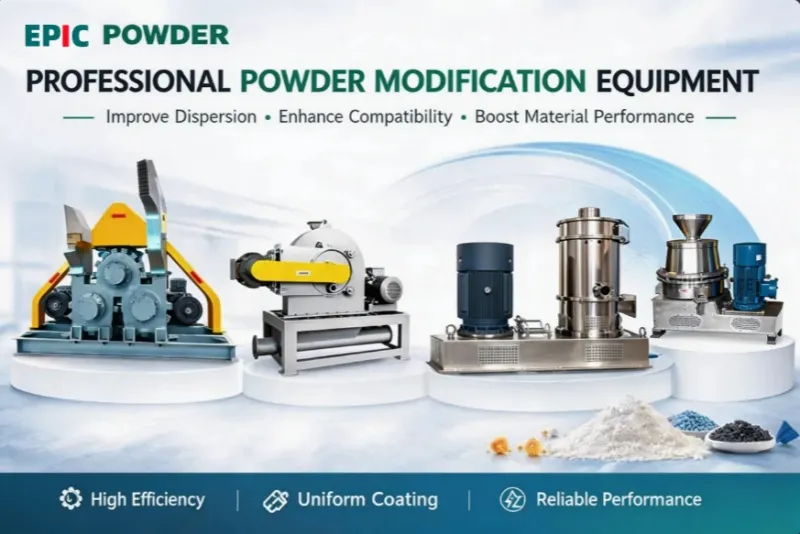
Simple physical grinding can no longer meet the needs of 5G/6G CCL. “Integrated Grinding and Modification” has become the industry trend.
During the Silica Powder ultra-fine grinding process in a jet mill or stirred mill, silane coupling agents are injected.
- In-situ Modification: During grinding, particles generate many fresh fractured surfaces and active sites. Surface modification at this moment allows the coupling agent to bond more firmly to the silica surface.
- Enhanced Hydrophobicity: Modified silica powder effectively prevents external moisture from penetrating the CCL substrate. This ensures the signal transmission stability of the circuit in high-temperature and high-humidity environments.
VI. Bottlenecks and Outlook for Industrial Production
Despite great progress in ultra-fine grinding and sphericalization, challenges remain:
- Energy Consumption of Ultra-fine Grinding: When particle sizes reach the sub-micron level (<1 μm), energy efficiency drops sharply. More efficient fluid dynamics models are needed.
- Agglomeration of Ultra-fine Particles: Finer powders tend to clump together. Maintaining stable dispersion in the resin is a major difficulty for the application side.
- Equipment Localization and Wear Resistance: Given the high hardness of quartz, developing longer-lasting ceramic components is key to reducing operating costs.
Conclusion
Every leap in CCL performance is inseparable from innovations in filler technology. As the core driver, the transformation of silica powder from ore to high-performance filler is essentially a precision engineering project of “size control” and “morphology design.”
Silica Powder Ultra-fine grinding equipment is not just a guarantee of output. It is the source of product value. By precisely controlling grinding energy and optimizing classification logic, we can produce silica powder with higher filling rates and lower loss. In the future, as industrial breakthroughs in preparation technology continue, higher purity and more uniformly distributed spherical silica will break technical monopolies. It will support the foundation of the next generation of the electronic information industry.

“Thanks for reading. I hope my article helps. Please leave a comment down below. You may also contact Zelda online customer representative for any further inquiries.”
— Posted by Emily Chen