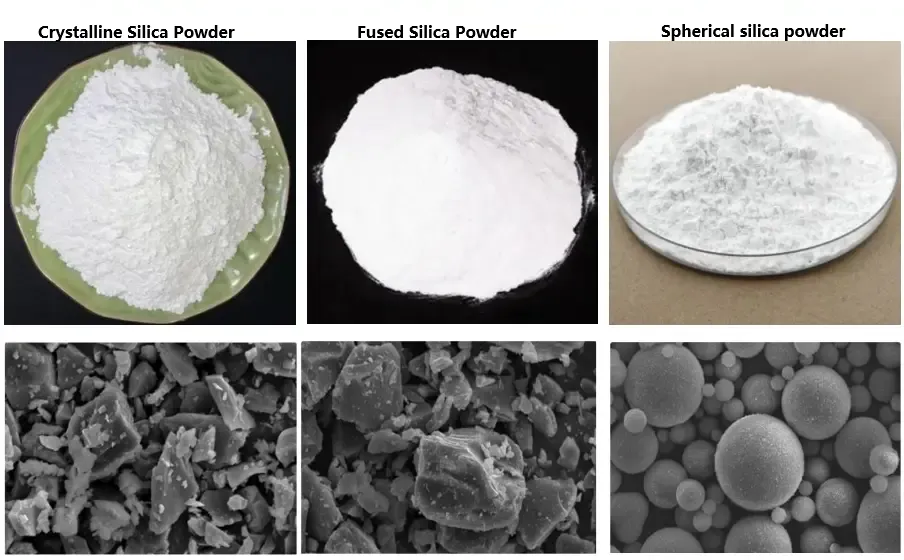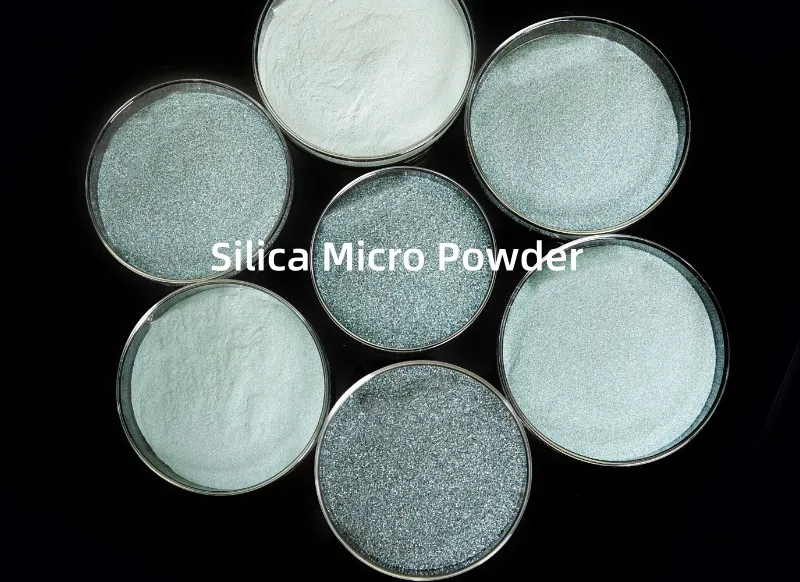
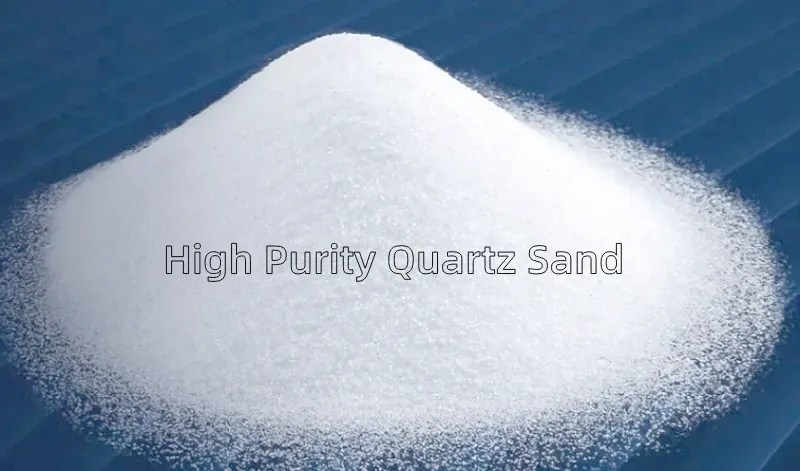
High purity quartz sand (HPQ), typically containing SiO₂ ≥99.99% (commonly 99.997%–99.999%, or even higher), is characterized by extremely low impurity levels (especially Al, Fe, Ti, B, P, etc.), typically controlled at ppb or even sub-ppb levels. Even trace contamination can render the end products completely ineffective. Due to these characteristics, it has become one of the most critical and strategic raw materials in modern high-tech industries.
Main Uses of High Purity Quartz Sand
Semiconductor Industry:
- High purity quartz crucibles and containers for 300mm single-crystal silicon pulling
- Quartz tubes, boats, and bell jars for diffusion, oxidation, LPCVD processes, etc.
- Ultra-pure epitaxial layer fillers
- Raw material for synthetic fused silica for photomasks and wafer carriers
Photovoltaic (Solar) Industry:
- High-end quartz crucibles for single crystal (Czochralski method) and multi-crystal ingots
- Quartz tubes and components for high-temperature diffusion furnaces
- The growing demand for high purity due to the stringent requirements of N-type TOPCon and Heterojunction (HJT) cells with respect to metal impurities.
Optical Fiber and Photonics:
- Core rods and cladding materials for ultra-low loss optical fibers (used in subsea cables, 5G/6G backbone networks)
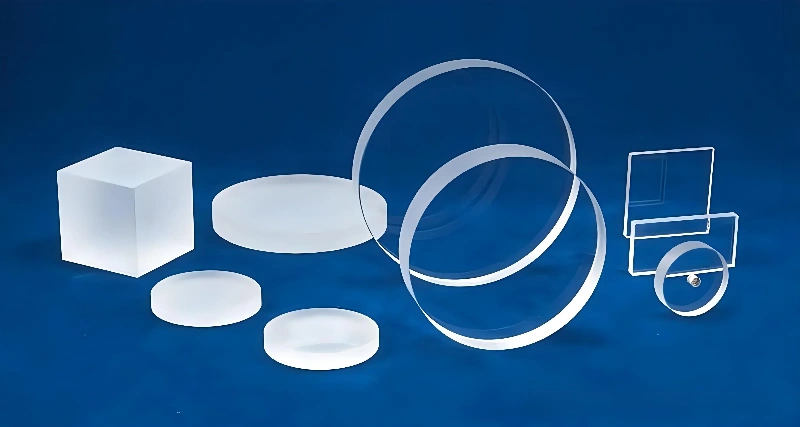
- Synthetic fused silica lenses and prisms for laser optical systems
High-End Lighting:
- UV lamps, halogen lamps, mercury lamps, xenon lamps
- Quartz tubes for high-power LED packaging
Precision Optics and Aerospace:
- Windows and mirror substrates for space telescopes (Hubble, James Webb)
- Ultra-high purity fused quartz for hemispherical resonant gyroscopes (HRG)
5G and Advanced Packaging:
- EMC (epoxy molding compound) fillers for advanced IC substrates
- Ultra-low α-ray quartz glass to prevent soft errors in memory chips
For these reasons, high purity quartz sand has been classified as a critical mineral by the European Union, the United States, Japan, and China.
Global Classification of High Purity Quartz Sand
- Low-end: 99.9–99.95% → Ordinary lighting, general photovoltaic applications
- Mid-range: 99.97–99.99% → Mainstream photovoltaic crucibles
- High-end: 99.995–99.998% → Semiconductor crucibles, optical fiber
- Ultra-high-end: ≥99.999% (4N8–5N5) → Photomask substrates, aerospace and military-grade optics
There are very few companies globally that can stably supply 4N8–5N+ quality.
Where Does High Purity Quartz Sand Come From?
Natural quartz deposits that are already ultra-pure, requiring minimal beneficiation to achieve semiconductor-level quality, are extremely rare. There are only three mature pathways globally:
Natural Ultra-pure Quartz Ore (Primary Ore)
There are very few known deposits worldwide, including:
- Spruce Pine, North Carolina, USA (The Quartz Corp / Sibelco) — the global benchmark
- Kyshtym, Chelyabinsk, Russia (Russian Quartz)
- Øverby, Norway (The Quartz Corp)
- Mauritius, Canada (new mine, still under development)
- Jiangxi Xinyi Mine, Jiangsu Donghai, China (limited reserves)
These mines belong to hydrothermal or pegmatite-type quartz, with virtually no Al, Fe, Ti-type isomorphous substitutions, and very few fluid inclusions. The ore typically has total impurities <50 ppm.
Physical + Chemical Deep Purification of Ordinary Quartz
Most manufacturers start with ordinary vein quartz or sandstone and undergo 15–30 steps of processing, where air classification milling (ultrafine grinding + classification) is one of the core steps to achieve 4N8–5N level purity. Without this step, it is almost impossible to stably mass-produce semiconductor-grade high purity sand.
Typical Process:
- Crushing and Screening: Jaw crusher → Cone crusher → Screening to <15mm
- Washing and Mud Removal: Removing clay and muddy impurities
- Color Sorting: Electromagnetic color sorter to remove colored minerals like biotite and feldspar
- Multistage High-Strength Magnetic Separation: Dry and wet magnetic separation drums (up to 20,000 gauss), repeated 3–6 times, to remove iron-bearing minerals and iron filings
- Flotation: Cationic/anionic mixed flotation to remove feldspar and mica
- First Acid Leaching (Pre-acid leaching): Standard pressure HCl + HF mixed acid to remove surface impurities
- High-Temperature Calcination (900–1200℃): Breaking mineral inclusions, opening crystal cracks, and removing structural water
- Quenching and Secondary Crushing: Rapid water cooling of high-temperature quartz to produce micro-cracks, facilitating deeper acid leaching
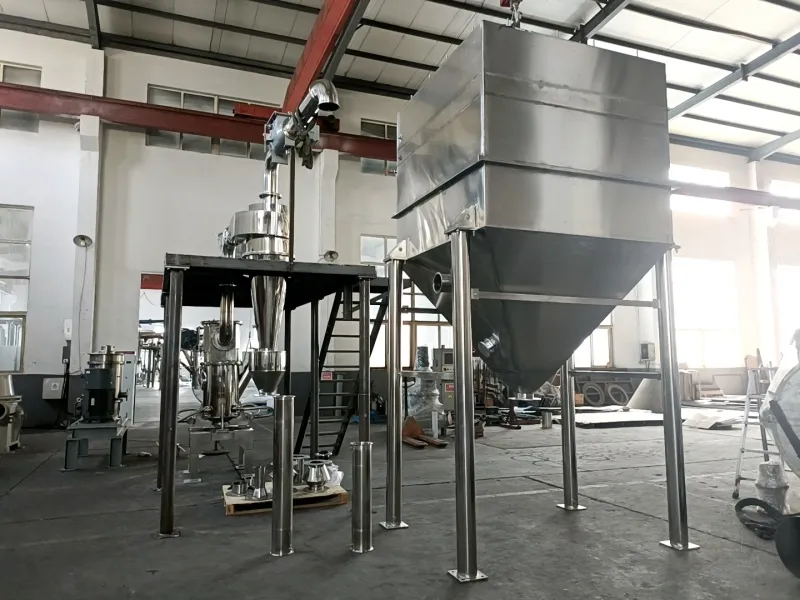
- Key Step — Air Jet Mill for Ultrafine Grinding + Precision Classification
- Equipment: Fluidized bed opposed jet mill or target jet mill
- Grinding Medium: High-purity nitrogen or compressed air (processed by multi-stage drying + molecular sieve to remove water and oil)
- Particle Size Control: d50 controlled in the range of 8–25μm (for semiconductor crucible sand, typically requiring >90% of the particles to fall in the 100–300μm range, but must be processed through air milling to thoroughly open all inclusions)
- Core Functions:
- Completely open the micro-cracks created during calcination, fully exposing the inclusions and lattice replacement impurities
- Remove surface contamination (ordinary mechanical crushing introduces significant Fe, Cr, Ni, and other metallic wear)
- Air jet milling introduces almost no metal contamination, making it the only grinding method that can control iron increase to <0.05 ppm.
Synthesis Route (Chemical Vapor Deposition)
When natural resources are insufficient, the most expensive but purest method is used:
- SiCl₄ or SiHCl₃ + O₂ → Ultra-pure SiO₂ smoke → Melt into quartz ingots → Crush into sand
- The cost is 10–50 times that of natural high-purity sand, but the total impurity level can be <50 ppb.
Conclusion
High purity quartz sand plays a crucial role in the technological advancement of multiple industries, particularly in electronics, solar energy, and optics. Its unique properties make it an indispensable material for high-precision manufacturing. Obtaining high purity quartz involves a complex process of mining, purification, and refinement, ensuring that it meets the stringent requirements for specialized applications. As demand for cutting-edge technologies continues to grow, the need for high purity quartz sand will only increase, further emphasizing its importance in modern manufacturing.

“Thanks for reading. I hope my article helps. Please leave a comment down below. You may also contact Zelda online customer representative for any further inquiries.”
— Posted by Emily Chen