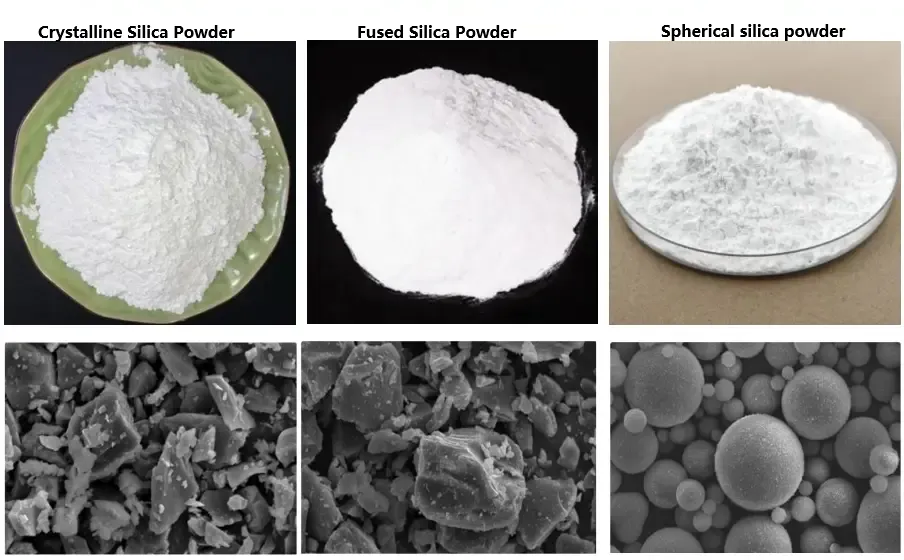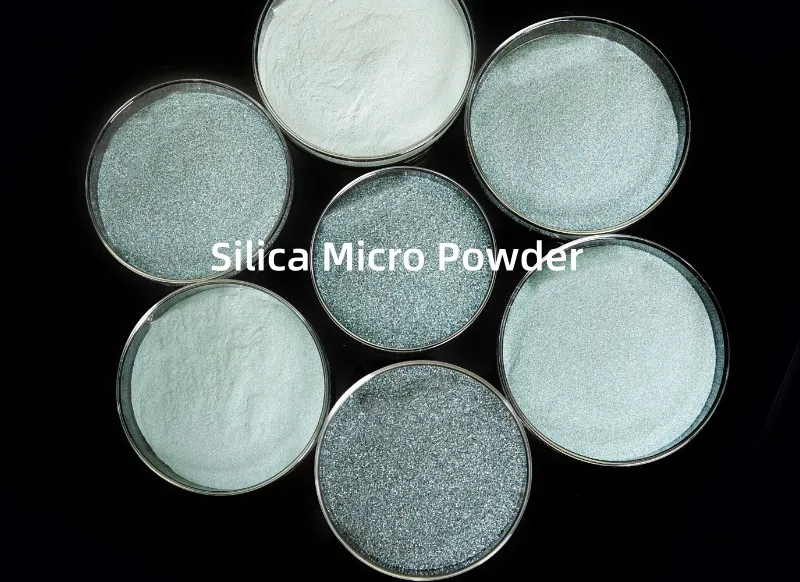
In the production of copper clad laminates (CCL) — the foundational material for printed circuit boards (PCBs) — silicon micropowder (primarily fused silica or crystalline silica powder) serves as the primary inorganic filler. It significantly influences key properties such as dielectric constant (Dk), dissipation factor (Df), thermal expansion coefficient (CTE), thermal conductivity, moisture absorption, drilling processability, and overall reliability of high-frequency, high-speed, and substrate-like PCBs.
Particle characteristics of the silicon micropowder — including particle size (D50, D97), particle size distribution span, particle morphology (sphericity, aspect ratio), surface area, and especially purity / contamination level — directly determine the performance of the final laminate. Two common dry grinding technologies for preparing silicon micropowder are ball mill and jet mill (also known as fluidized bed opposed jet milling or air jet milling). Which method is more suitable for high-end CCL applications?
Basic Principles and Comparison
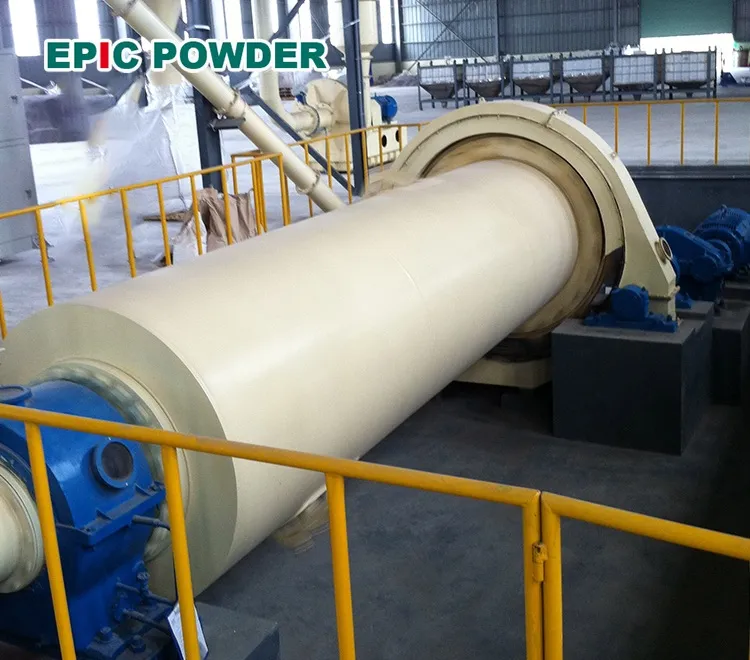
Ball Mill: Ball milling uses mechanical impact, shear, and abrasion between grinding media (balls, rods, or cylinders — commonly ceramic or metal) and the material inside a rotating jar or cylinder. It is a mature, low-cost, high-throughput method.
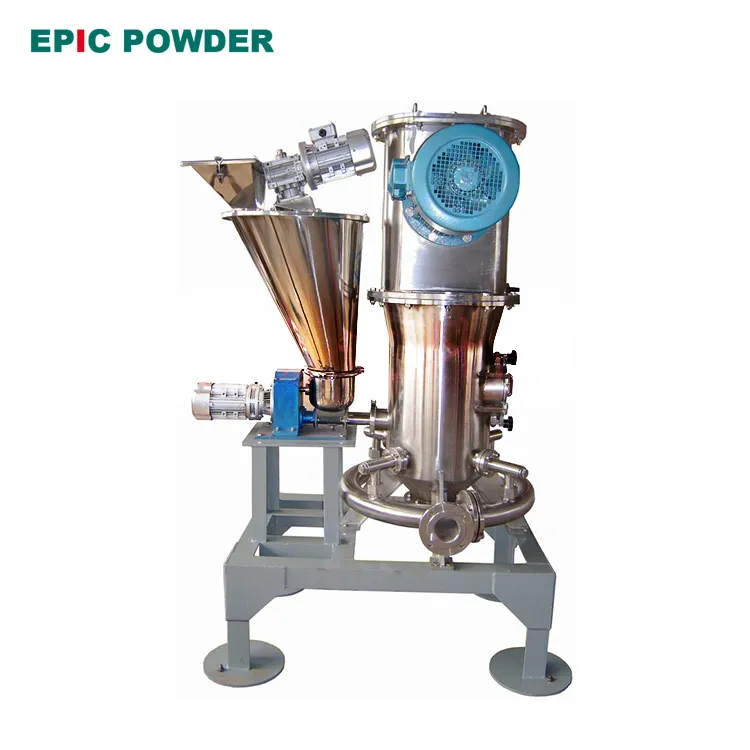
Jet Mill: Jet milling relies on high-speed collisions between particles themselves, accelerated by compressed air or steam jets (no grinding media). Particles collide, fracture, and are classified in one continuous process, typically using fluidized bed opposed jet mills for hard materials like silica.
Key differences:
| Property | Ball Mill | Jet Mill | Advantage for CCL silicon powder |
|---|---|---|---|
| Achievable D50 | Typically 3–10 μm (ultra-fine difficult) | 0.5–3 μm (easily reaches sub-micron) | Jet mill better |
| Particle size distribution | Broader span, more coarse tails | Narrower, sharper distribution | Jet mill better |
| Particle shape | More irregular, higher aspect ratio, angular | Closer to spherical or blocky, lower aspect ratio | Jet milling better (less agglomeration) |
| Contamination risk | Medium to high (media wear introduces Fe, Zr, Al, etc.) | Very low (no media, can use ceramic liners) | Jet milling significantly better |
| Purity (Fe, metal ions) | Higher tramp elements (especially Fe/Co) | Lower tramp elements | Jet milling better |
| Heat generation | Moderate (can cause local heating) | Almost none (cool grinding) | Jet milling better for stability |
| Energy & operating cost | Lower | Higher (high-pressure gas consumption) | Ball mill better |
| Throughput & scalability | High | Medium | Ball mill better for bulk |
Specific Requirements for Copper Clad Laminates Silicon Micropowder
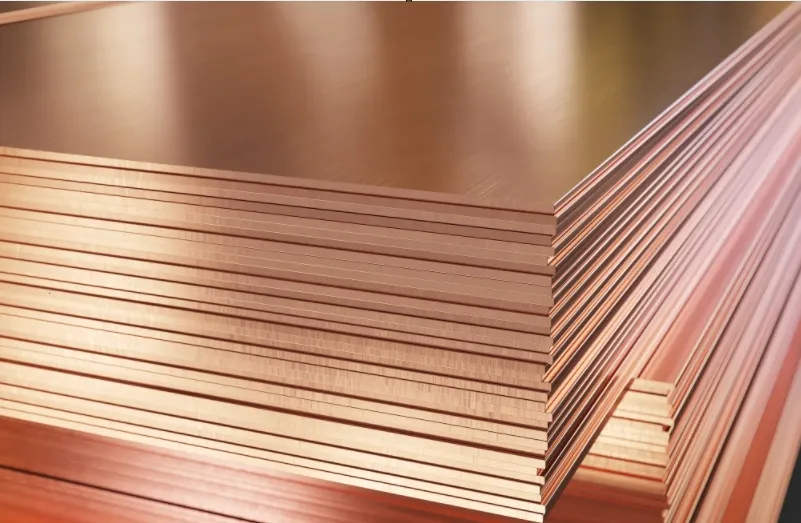
Modern high-frequency CCLs (5G, automotive radar, server/AI substrates, low Dk/Df materials) demand silicon micropowder with:
- D50 usually 2–5 μm, sometimes <2 μm for very low Dk/Df formulations
- Very narrow particle size distribution (small span) to ensure uniform resin filling and minimal resin-rich/deficient zones
- High sphericity or low aspect ratio to improve flowability, reduce resin viscosity, increase filler loading (up to 70–90 wt%)
- Extremely low ionic/metal contamination (especially Fe <10–20 ppm) to avoid dielectric loss, electrochemical migration, and reliability failures
- Good dispersibility after surface treatment (silane coupling)
Ball mill can meet cost-sensitive, mid-low frequency CCL requirements (D50 ~4–8 μm), but struggles with ultra-fine size, narrow distribution, and especially purity. Media wear introduces trace metals that are difficult to completely remove even with subsequent acid washing or magnetic separation, which increases cost and may damage particle surface activity.
Jet mill excels in producing the ultra-fine, high-purity, narrow-distribution silicon micropowder required for premium CCLs. Many leading fused silica suppliers for electronic-grade applications use fluidized bed jet mills (often with ceramic or silicon carbide liners) to achieve D50 <3 μm with minimal contamination. This is particularly critical for low-loss, high-reliability substrates.
Related Questions & Detailed Answers
Q1: Why is the “Narrow Particle Size Distribution” produced by these mills so critical for Copper Clad Laminates?
In CCL production, silicon micropowder is used as a filler in epoxy resins. If the particle size distribution is too wide (too many “oversized” or “ultra-fine” particles), several problems occur:
Resin Viscosity: Too many ultra-fine particles increase the surface area, requiring more resin and making the mixture difficult to coat onto glass cloth.
Laminate Defects: Large particles (over 20μm) can cause “micro-short circuits” or unevenness in the ultra-thin copper foil layers of high-density PCBs.
Answer: A narrow distribution ensured by the mill’s Air Classifier ensures uniform thermal expansion (low CTE) and consistent electrical properties across the entire board.
Q2: Can Jet Milling and Ball Milling be used together for Silicon Micropowder?
Answer: Yes, this is often the “Golden Standard” for high-end electronic fillers. In a Hybrid Process, the material is first processed in a ball mill to achieve the bulk fineness and a more rounded shape. Then, it is passed through a jet mill or a dedicated high-precision air classifier to remove the “top cut” (large particles) and further refine the D97. This combination leverages the cost-efficiency of ball milling with the extreme precision and purity of jet milling/classification.
Conclusion: Which is Best?
For ordinary FR-4 or mid-range CCLs, ball milling remains a cost-effective choice.
For high-frequency, high-speed, low Dk/Df, low-loss, or HDI/advanced packaging CCLs — which dominate current and future demand — jet milling is clearly superior and has become the industry-preferred method for preparing high-end silicon micropowder.
Many top-tier CCL manufacturers specify jet-milled fused silica in their formulations precisely because of its advantages in purity, particle size control, morphology, and ultimately better electrical, thermal, and reliability performance.
In short: Jet milling is the better choice for silicon micropowder used in high-performance copper clad laminates.

“Thanks for reading. I hope my article helps. Please leave a comment down below. You may also contact Zelda online customer representative for any further inquiries.”
— Posted by Emily Chen