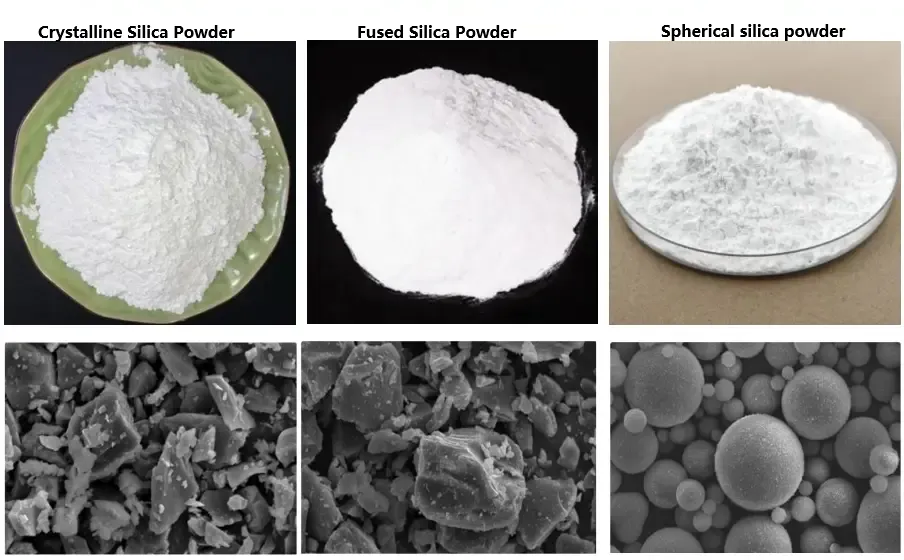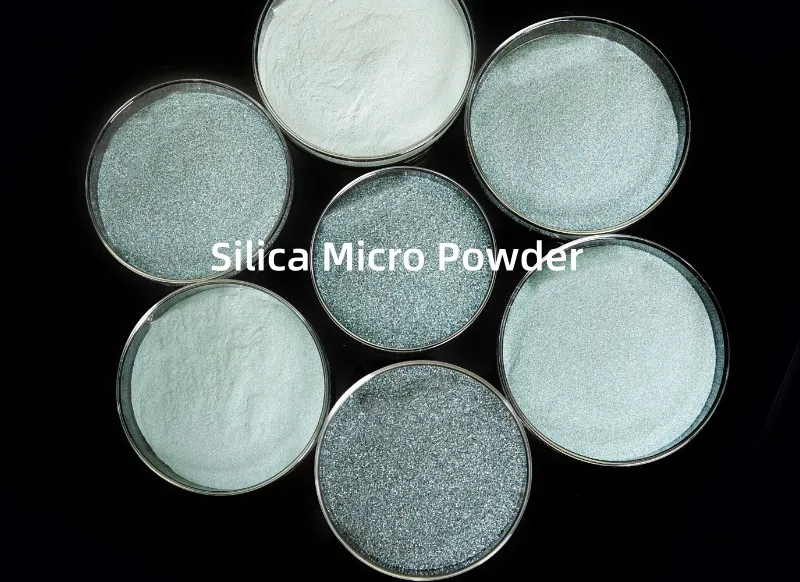
In coating formulations, silica (SiO2) is ubiquitous. It appears in everything from high-performance paints and varnishes to advanced functional coatings and industrial adhesives. But have you ever wondered why the same chemical compound can turn a film matte in one instance while preventing pigments from settling in another? The secret lies not in chemical composition, but in Silica Ultrafine Grinding. This process shapes the microscopic morphology of the particles, which in turn dictates their macroscopic performance in coatings.
This article explores how matting-grade silica and anti-settling silica differ from a particle engineering perspective. We will break down their physical structures, key grinding parameters, industrial applications, and equipment considerations, offering formulators and process engineers insights into optimizing functional silica production.
1. The Essence of “One Name, Dual Functions”
In material science, chemical composition forms only the foundation. The particle structure is the soul. Silica’s functionality is governed primarily by physical characteristics determined during ultrafine grinding:
- Particle Size Distribution (PSD): Affects optical behavior and visibility in the coating film.
- Aggregate Morphology: Determines the ability to build three-dimensional networks in liquids.
- Surface Area and Porosity: Dictated by mechanical forces, collision energy, and classification precision during grinding.
Silica acts as a versatile “functional platform.” By adjusting jet milling or air classifier mill (ACM) parameters, the same raw material can be converted into matting agents, anti-settling additives, or hybrid functional powders.
In essence, particle engineering converts one chemical entity into multiple functional roles.
2. Matting Silica: Micro-Architects of Light Scattering
Matting relies on creating micro-rough surfaces that disrupt specular reflection. Here, Silica Ultrafine Grinding plays a critical role by:
Ultrafine Grinding in Matting
Matting agents typically originate from precipitated silica. Ultrafine grinding equipment serves several critical functions:
- Precise Particle Size Control:
- Particles must be slightly larger than the final film thickness or slightly protrude after film shrinkage.
- If particles are too fine (<1 μm), they become embedded in the resin, losing matting efficiency.
- If particles are too coarse, the surface roughness becomes excessive, producing a sand-like texture.
- Preservation of Porosity:
- High-performance matting agents are porous to optimize oil absorption and surface scattering.
- Advanced jet milling technology uses high-speed air to induce self-impact among particles, avoiding the destruction of delicate pores that traditional media-based milling could cause.
Key Parameters for Matting Grades
| Parameter | Typical Range | Notes |
|---|---|---|
| Average Particle Size (d50) | 3–10 μm | Optimal for uniform light scattering |
| Particle Size Span | 1.2–1.5 | Narrow PSD avoids inconsistent gloss |
| Porosity | 0.2–0.5 cm³/g | Maintains oil absorption and matte effect |
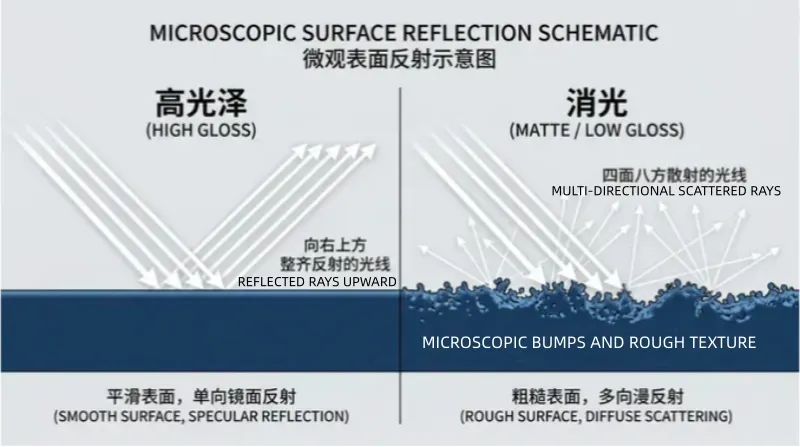
By carefully controlling these parameters, formulators can produce matte coatings with consistent gloss, high transparency, and minimal haze.
3. Anti-Settling Silica: Building Rheological Frameworks
For anti-settling applications, Silica Ultrafine Grinding is focused on de-agglomeration. By breaking primary particle clusters without damaging nanoscale structures, it ensures formation of 3D thixotropic networks that support pigment particles and prevent sedimentation.
Grinding for Rheological Control
Anti-settling silica (often fumed silica) is composed of nanoscale primary particles. The core ultrafine grinding process emphasizes:
- High Surface Area Retention:
- Primary particles are often 7–40 nm.
- Surface hydroxyl groups are preserved to enable hydrogen-bond networks.
- De-Agglomeration:
- Large particle clusters are broken into smaller aggregates suitable for 3D network formation.
- The process maintains primary particle integrity while optimizing rheology.
- Network Formation:
- The ultra-fine particles build a thixotropic network, supporting pigment particles and improving viscosity.
- This prevents sedimentation and caking during storage and transport.
Key Features
| Feature | Typical Values | Impact |
|---|---|---|
| Primary Particle Size | 7–40 nm | Determines network density |
| BET Surface Area | 200–400 m²/g | Influences viscosity and thixotropy |
| Agglomerate Size | 1–5 μm | Ease of dispersion, prevents clumping |
Properly processed anti-settling silica enhances suspension stability without adversely affecting film appearance or flow.
4. Equipment Selection: Shaping Function via Technology
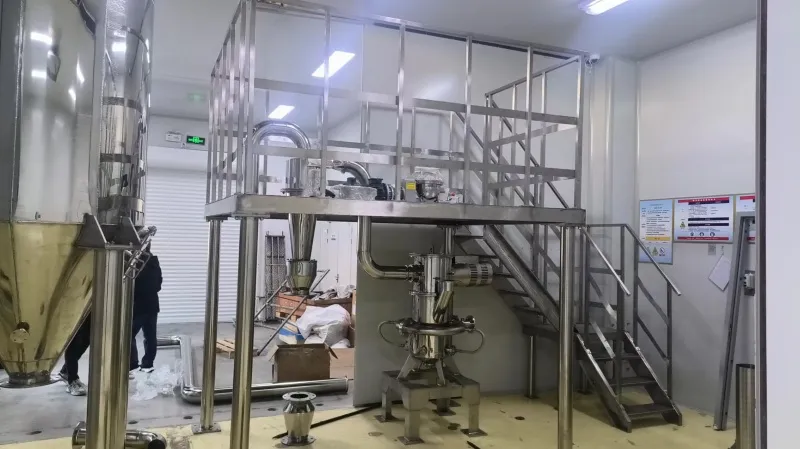
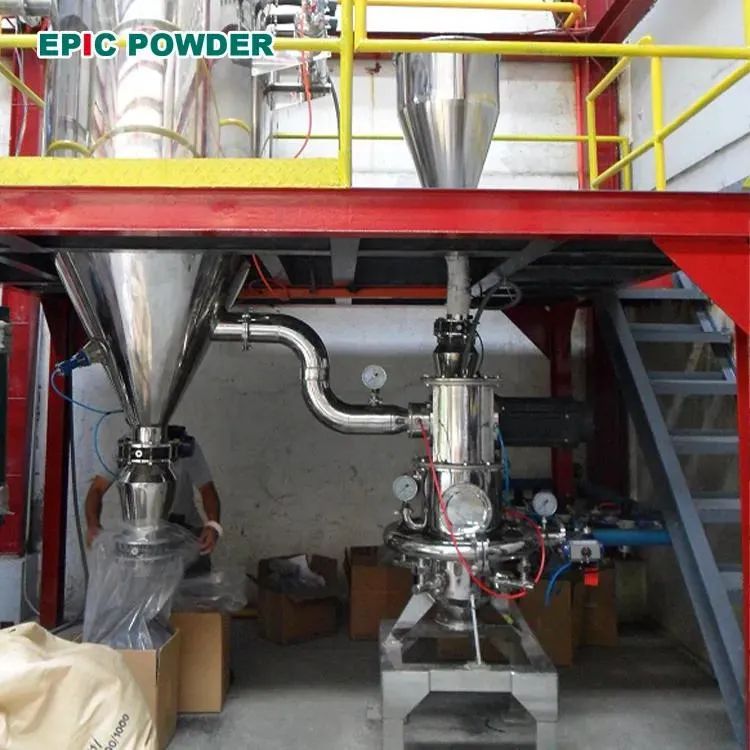
The choice of equipment directly influences the outcome of Silica Ultrafine Grinding:
Jet Mill: Ideal for Premium Matting Agents
Jet mills accelerate particles using supersonic air streams, causing high-energy collisions in a chamber without using grinding media.
Advantages:
- Cold grinding preserves porosity and delicate structures.
- Minimal contamination and heat generation.
Applications:
- High-transparency matte coatings.
- Specialty automotive or industrial coatings requiring precise optical properties.
Air Classifier Mill (ACM): Efficiency and Versatility
ACM couples a high-speed grinding rotor with an integrated classifier wheel.
Advantages:
- Produces narrow particle size distributions at high throughput.
- Simple adjustment of classifier speed allows switching between matting and anti-settling grades.
- Capable of large-scale industrial production, including surface-modified silica.
Applications:
- Mass production of functional silica for paints, adhesives, or food-grade coatings.
5. Why One Material Struggles to Excel at Both Functions
Formulators often desire a single silica to provide both high matting and anti-settling, but in powder engineering, these goals are inherently decoupled:
- Matting silica favors “granularity”: Requires micron-level $d_{50}$ and preserved porosity for optical scattering.
- Anti-settling silica favors “networking”: Requires nanoscale particles, high surface area, and strong inter-particle bonding for rheological support.
Conclusion:
Matting silica is a surface optical control material focusing on light.
Anti-settling silica is a rheological control material focusing on internal structure.
The bridge between these functions is precise ultrafine grinding and air classification technology.
By understanding how particle size, morphology, and surface area interact, formulators can select the appropriate raw materials and processing equipment to achieve the desired functional outcomes.
6. Advanced Considerations: Surface Modification and Hybrid Functional Silica
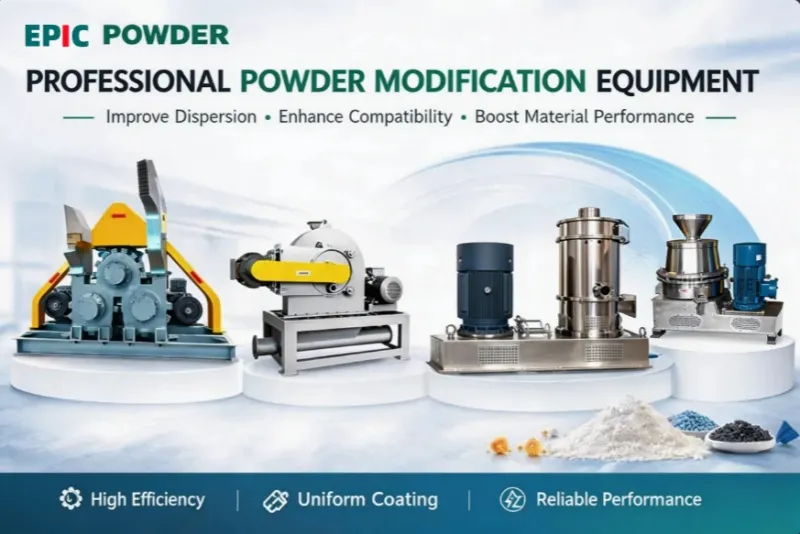
Modern applications often require hybrid functionality—e.g., matting silica that also contributes to suspension stability. Achieving this requires:
- Surface Treatment: Coating silica with silanes or polymers to modify hydrophobicity and particle interactions.
- Multi-Stage Grinding: Combining coarse grinding for matting with secondary nanoscale milling for anti-settling properties.
- Process Monitoring: In-line particle size analysis ensures consistent PSD and prevents batch-to-batch variation.
These advanced strategies allow manufacturers to design silica with dual functionality without compromising either matting or suspension performance.
7. Conclusion: Precision Engineering Determines Function
The function of silica is defined by its particle engineering, not merely its chemical formula.
- Matting silica creates optical effects through controlled roughness and porosity.
- Anti-settling silica builds structural networks via nanoscale particles and surface interactions.
- Jet Mills and Air Classifier Mills are the tools that turn raw silica into application-specific functional powders.
Understanding ultrafine grinding principles allows formulators to make informed equipment and process decisions, enabling consistent, high-performance coatings in diverse industrial applications.

“This article was compiled by the Epic Powder technical team. Our team has extensive experience in silica grinding, classification, and surface treatment, providing insights from lab-scale research to industrial-scale production.“
— Posted by Jason Wang