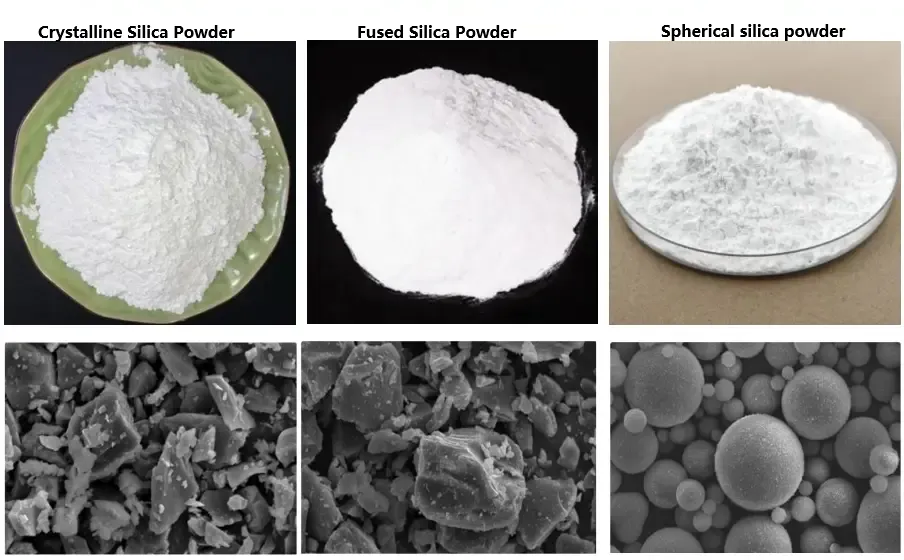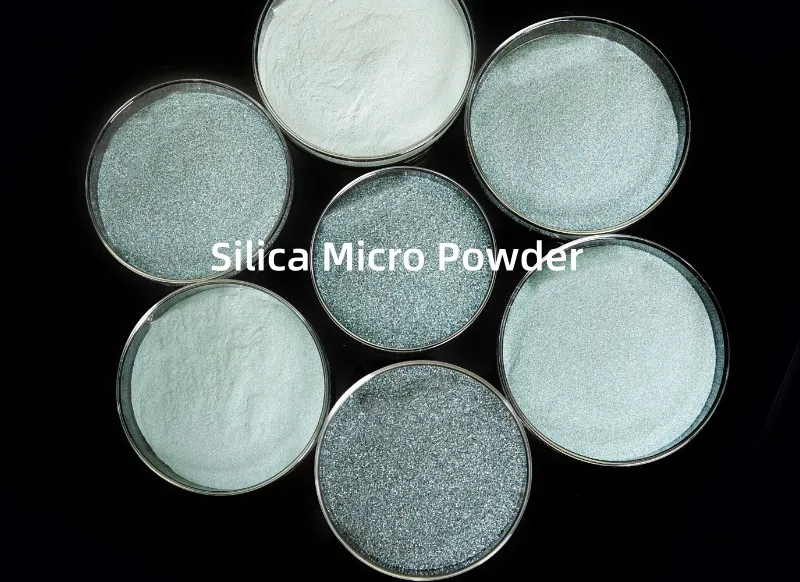
In modern construction materials, Ultra-Low Cement Castables (ULCC) are widely used in high-temperature industrial linings, steel furnaces, and cement kilns due to their high refractoriness, low thermal expansion, and excellent chemical stability. However, during ULCC preparation, flowability control remains a key challenge. Poor flowability can lead to uneven casting and increase the porosity of the castables, reducing their mechanical performance and durability. Recent studies have shown that ultrafine silicon powder significantly affects the flowability of ultra-low cement castables. The properties of silicon powder are closely related to its grinding process and the ultrafine grinding equipment used.
1. The Role of Silicon Powder in Ultra-Low Cement Castables
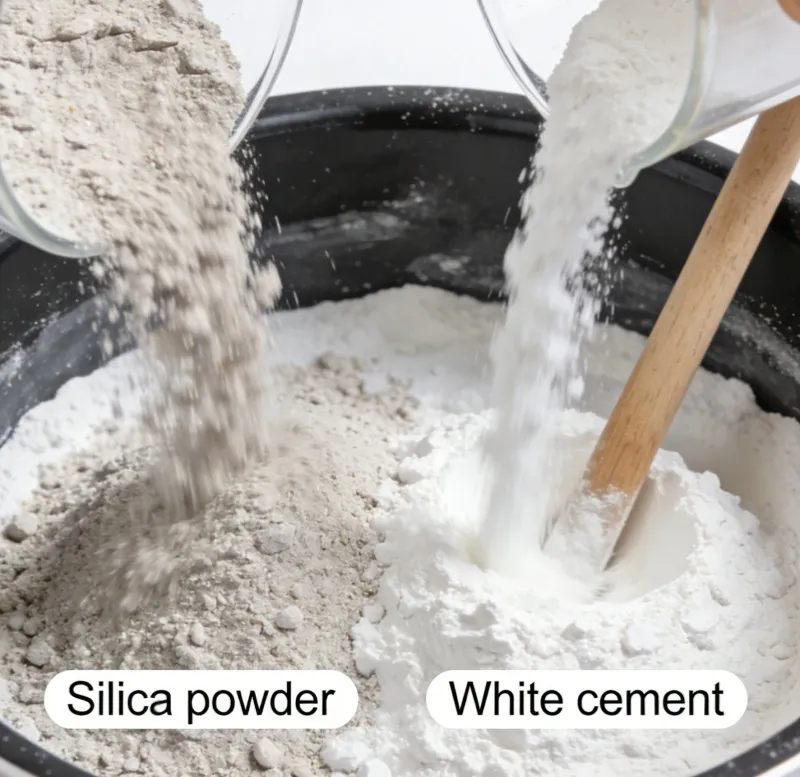
Silicon powder, commonly ranging from 1 to 10 microns, is an important mineral additive. It has a high specific surface area and good filling properties. In ULCC systems, silicon powder serves several purposes:
- Improving Particle Packing
Silicon powder can fill the voids between coarse particles in the castables. This increases the packing density and reduces the porosity of the slurry. - Enhancing Flowability
A proper amount of ultrafine silicon powder can reduce the friction within the slurry. This makes the castables easier to flow, lowering pumping pressure and facilitating placement. - Optimizing Cement Consumption
In ULCC, cement content is extremely low. Silicon powder not only provides micro-filler function but also improves the distribution of cement hydration products, enhancing strength without increasing cement usage.
However, coarse or unevenly distributed silicon powder can increase slurry viscosity, reducing flowability. Conversely, excessively fine particles may cause agglomeration, forming localized sticky zones, which also hinder casting operations.
2. Ultrafine Grinding of Silicon Powder
To maximize the positive effects of silicon powder on ULCC flowability, ultrafine grinding is essential. Ultrafine grinding not only reduces particle size but also improves particle size distribution and specific surface area, enhancing powder dispersibility and filling efficiency.
- Grinding Principles
Ultrafine grinding includes techniques such as jet mills, vibration mills, ball mills, and high-energy micro-grinding. The core goal is to reduce silicon powder to nano- or sub-micron scale while maintaining uniform particle morphology and avoiding agglomeration. - Particle Size Effects on Flowability
- Coarse particles (>10 μm): limited filling effect, high slurry porosity, reduced flowability.
- Medium particles (1–5 μm): optimal filling effect, significantly improves flowability.
- Extremely fine particles (<1 μm): high specific surface area, may increase water demand, potentially reducing flowability.
- Surface Property Control
Ultrafine grinding equipment can adjust the specific surface area and particle morphology. For example, a jet mill reduces particle size while smoothing the particle surface through collision and shear forces. This lowers slurry friction and improves flowability.
3. Ultrafine Grinding Equipment and Characteristics
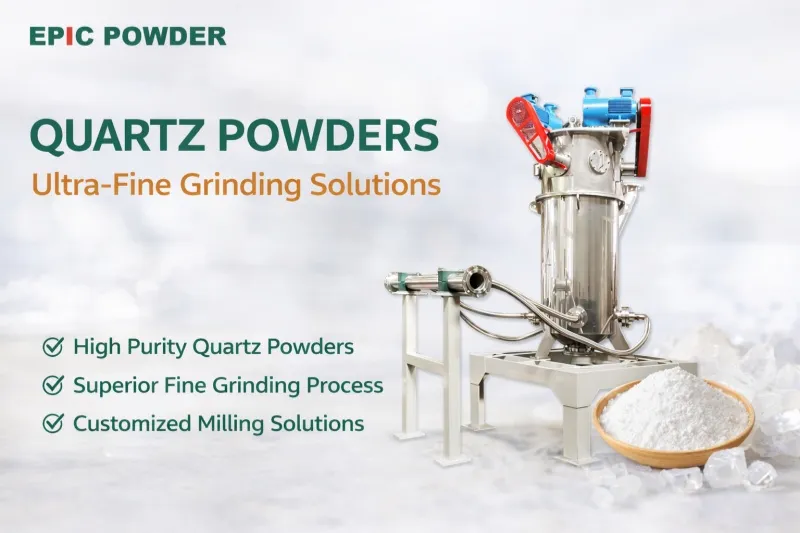
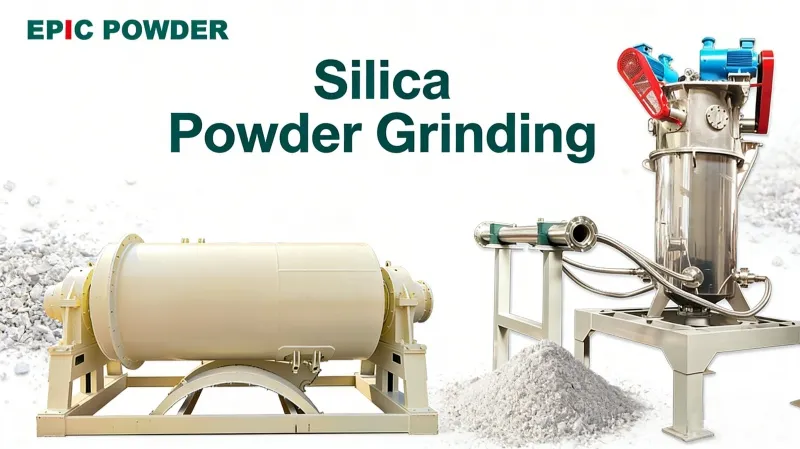
In industrial production, different types of ultrafine grinding equipment significantly affect the performance of silicon powder and, in turn, the flowability of ULCC.
- Jet Mill (Air Jet Mill)
- Principle: High-speed airflow drives particles to collide and grind. Integrated classification controls particle size.
- Advantages: Simultaneous grinding and classification, uniform particle size, suitable for continuous production.
- Impact on ULCC flowability: Uniform particle size reduces slurry friction, improving pumping and casting efficiency.
- High-Energy Ball Mill
- Principle: Uses fast-rotating balls to impact and grind the material.
- Advantages: Suitable for hard-to-grind materials, can produce ultrafine powder.
- Impact on flowability: Achieves nano-scale particles but may cause agglomeration. Surface modification or dispersants may be required.
- Vibration Mill
- Principle: High-frequency vibration moves grinding media at high speed, achieving ultrafine grinding.
- Advantages: Suitable for lab or small-scale production, particle size controllable.
- Impact on flowability: Produces uniform micro-powder, but capacity is limited.
- Vertical Roller Mill / Ultrafine Mill
- Principle: Uses roller compression combined with airflow classification for continuous fine grinding.
- Advantages: Low energy consumption, suitable for large-scale industrial production.
- Impact on flowability: Stable particle size, suitable for bulk ULCC preparation.
4. Mechanism of Silicon Powder’s Influence on ULCC Flowability
- Filling Effect
Ultrafine silicon powder fills voids between large particles, reducing slurry porosity and improving flowability and density. - Lubrication Effect
Fine particles create a “rolling ball” effect in the slurry, lowering interparticle friction and facilitating flow. - Specific Surface Area and Water Demand
Ultrafine grinding increases surface area and reactive sites. With proper control, water demand can be managed, reducing cement usage while maintaining flowability. - Dispersibility
Ultrafine grinding equipment produces uniform, non-agglomerated particles. This prevents local sticky zones, improving overall flowability.
5. Engineering Applications and Practical Experience
In practice, optimizing ULCC flowability involves several steps:
- Choosing Appropriate Silicon Powder Particle Size
Typically controlled between 1–5 μm for optimal performance. - Using Advanced Ultrafine Grinding Equipment
Jet mills and high-energy ball mills are common. Equipment choice depends on production capacity and powder performance requirements. - Powder Classification and Screening
A wide particle size distribution can negatively affect flowability. Classification ensures a narrow distribution. - Laboratory Flowability Testing
Includes slump, flow, and pumping tests to verify the improvement in slurry flowability after adding silicon powder. - Adjusting Dosage and Additives
Based on test results, optimize silicon powder dosage and dispersants to achieve the best casting performance.
6. Conclusion
In summary, silicon powder affects the flowability of ultra-low cement castables through particle size, specific surface area, dispersibility, and filling effect. The ultrafine grinding of silicon powder and the choice of ultrafine grinding equipment are crucial for achieving the desired powder properties. Proper equipment selection and process optimization can significantly improve ULCC flowability, pumping performance, and casting density.
With ongoing advances in ultrafine powder technology and intelligent control of grinding equipment, silicon powder will continue to enhance ULCC performance, enabling high-performance, low-cement, and easily castable products.
“Thanks for reading. I hope my article helps. Please leave a comment down below. You may also contact Zelda online customer representative for any further inquiries.”
— Posted by Emily Chen