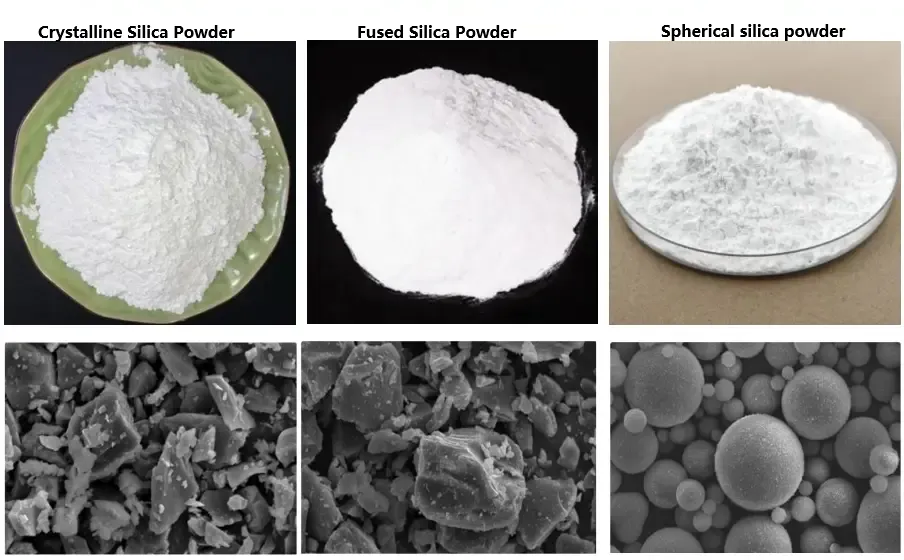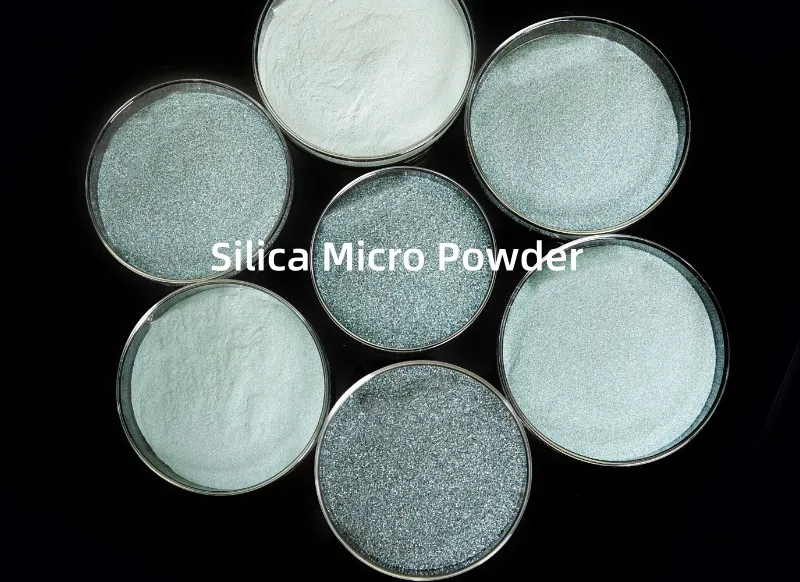
Quartz (SiO2) is one of the most abundant and widely used industrial minerals in the world. From traditional industries like ceramics, glass, and refractories to high-tech sectors like photovoltaics (solar panels), semiconductors, and aerospace, high-purity quartz (HPQ) is an indispensable raw material.
However, transitioning raw quartz into high-value ultrafine powder (D50: 2-10μm) is a highly challenging engineering task. Due to its high Mohs hardness (7.0) and strict purity requirements, the grinding process often encounters severe bottlenecks.
This comprehensive guide analyzes the most common problems encountered during quartz grinding and provides practical, industrial-grade solutions to optimize production efficiency and product quality.
1. High Equipment Wear and Tear (Metal Contamination)
The Problem
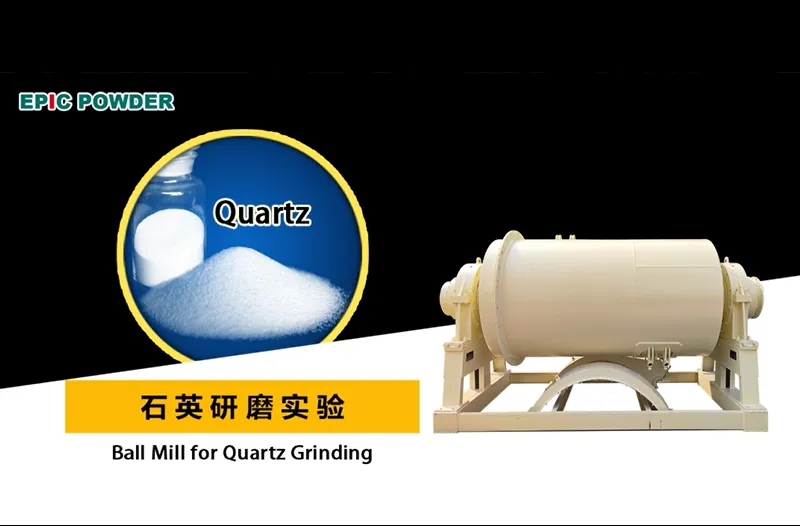
Quartz is extremely abrasive. During mechanical grinding, the high-speed impact and friction between the quartz feed and the internal components of the machinery lead to rapid wear of grinding media, liners, and classifiers. This causes two major issues:
- High Maintenance Costs: Frequent replacement of expensive mechanical parts.
- Product Contamination: Wear debris introduces iron (Fe), chromium (Cr), and nickel (Ni) impurities into the quartz powder. For semiconductor and photovoltaic glass applications, even ppm (parts per million) or ppb (parts per billion) levels of iron contamination can ruin the electrical and optical properties of the end product.
The Solution: “Zero-Metal” Ceramic Protection
To completely eliminate iron pick-up and prolong equipment lifespan, the entire grinding path must be contamination-free.
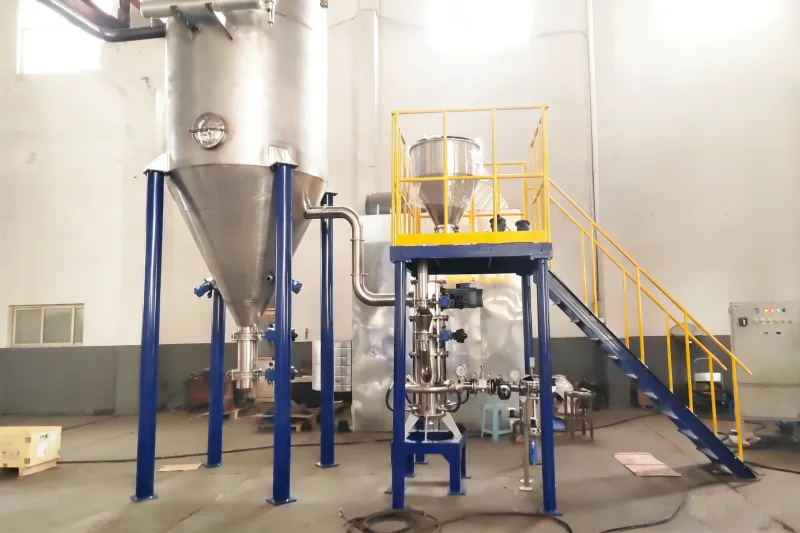
- Fluidized Bed Jet Milling (Dry Method): For ultrafine quartz powder, Fluidized Bed Jet Mills are highly recommended. In a jet mill, the quartz particles collide with each other at supersonic speeds driven by compressed air. Because the material grinds itself, wear on the chamber wall is dramatically reduced.
- Advanced Ceramic Liners: Every contact surface inside the mill, including the classification wheels, nozzles, feed pipes, and cyclone separators, should be lined with engineering ceramics.
- Alumina (Al2O3): Suitable for standard industrial quartz.
- Silicon Carbide (SiC) or Zirconia (ZrO2): Highly recommended for high-purity quartz due to their extreme hardness and zero-iron profile.
- Polyurethane Coating: For non-impact zones or wet-grinding pipes, polyurethane coatings offer excellent abrasion resistance.
2. Low Grinding Efficiency and Over-Grinding
The Problem
As quartz particles break down below 10μm, their specific surface area increases exponentially. This gives rise to strong electrostatic forces and Van der Waals forces, causing the ultrafine particles to agglomerate (stick together).
- The “Cushioning” Effect: The agglomerated fine particles coat the grinding media or create a buffer layer inside the mill. Instead of fracturing new quartz crystals, the mechanical energy is wasted on compressing this soft “cushion,” dropping grinding efficiency significantly.
- Over-Grinding: Particles that are already fine enough remain in the grinding chamber for too long, becoming unnecessarily small. This wastes massive amounts of energy and ruins the Particle Size Distribution (PSD).
The Solution: Optimized Closed-Circuit Systems and Grinding Aids
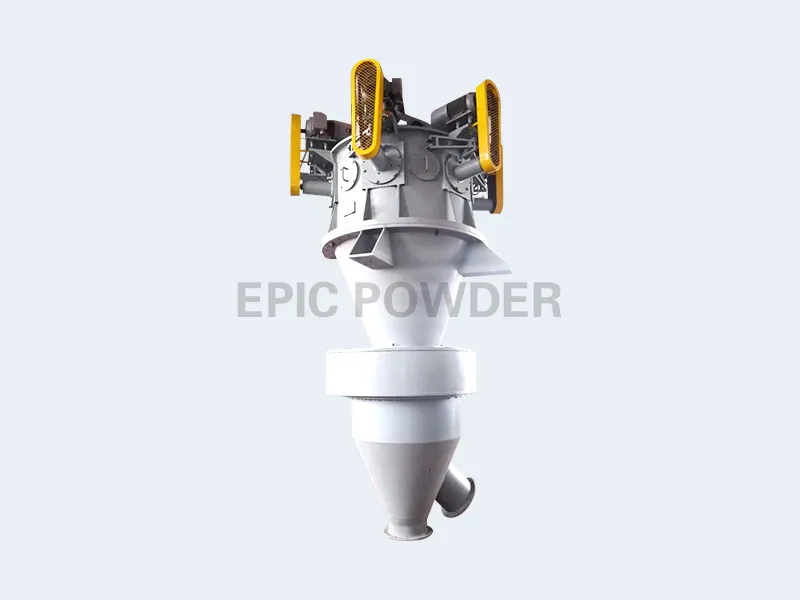
- High-Efficiency Air Classifiers: The milling machine must operate in a closed circuit with a high-precision Air Classifier. The classifier must instantly extract the qualified fine particles from the milling chamber, returning only the oversized particles for re-grinding. This prevents over-milling and optimizes energy usage.
- Application of Grinding Aids (Chemical Additives): In dry or wet grinding, adding trace amounts of grinding aids (such as triethanolamine [TEA], polyols, or specialized surfactants) can modify the surface charge of the quartz particles. This neutralizes electrostatic forces, prevents agglomeration, increases material fluidity, and boosts throughput by 15%-30%.
3. Product Inconsistency and Broad Particle Size Distribution (PSD)
The Problem
For applications like electronic-grade silica filler (used in epoxy molding compounds for semiconductor chips), the quartz powder must have a very tight, predictable PSD. A broad distribution with too many ultra-coarse or ultra-fine particles will lead to uneven thermal expansion and poor flowability in the final resin matrix.
The Solution: Multi-Stage Classification and Parameter Tuning
- Precision Classification Wheel Design: Use horizontal, high-speed ceramic classification wheels. The gap between the wheel and the housing must be precisely sealed (often utilizing an air-purge seal) to prevent large, unground quartz grains from leaking into the final product.
- Automated Parameter Control: Quartz grinding lines must implement automated control systems (PLC). Fluctuations in the feed rate alter the material-to-air ratio inside the mill, changing the final PSD. By stabilizing the feed rate using weight-loss feeders and syncing it with the classifier wheel speed (RPM) and system airflow, the PSD can be held within strict tolerances.
4. High Dust Generation and Environmental Hazards
The Problem
Dry quartz grinding generates a substantial amount of sub-micron dust. Inhaling respirable crystalline silica particles poses severe health risks, primarily silicosis, a progressive and irreversible lung disease. Industrial regulations worldwide mandate extremely low dust emissions for quartz processing plants.
The Solution: Negative Pressure Operations and Advanced Filtration
- Total Negative Pressure System: The entire milling system—from the feeder to the packaging unit—must operate under continuous negative pressure. This ensures that even if there is a minor leak or loose seal in the pipework, air rushes into the machine rather than dust blowing out into the workshop.
- Premium Pulse-Jet Bag Filters: Use baghouse collectors equipped with high-efficiency PTFE-membrane filter cartridges. These filters can capture 99.97% of particles as small as 0.3μm, ensuring that the clean air discharged outside complies with local environmental laws (typically 10mg/m3).
- Automated Packaging: Implement automated, sealed big-bag (FIBC) or small-bag valve packing machines to minimize human exposure during the final handling stages.
5. Core Focus: Two Crucial Questions and Answers in Quartz Grinding
To help production managers and project engineers navigate the subtle operational nuances of quartz processing, we break down two highly debated industrial questions.
Question 1: When targeting an ultrafine quartz powder of D50: 3-5μm, should a plant choose a Dry Jet Mill system or a Wet Ball Mill/Ball Mill-Classifier system? What are the economic and technical trade-offs?
Answer:
The choice depends entirely on the end-use application of the quartz powder and the initial investment budget. Neither system is a one-size-fits-all solution. Here is a direct technical comparison:
| Evaluation Metric | Dry Fluidized Bed Jet Mill System | Wet Ball Mill / Bead Mill System |
| Particle Shape | Angular, irregular, sharp-edged. High structural activity. | Rounder, smoother spheres (especially with extended milling time). |
| Purity Control | Excellent. No grinding media is used; full ceramic lining protects against all metal contamination. | Moderate to Good. Requires high-wear zirconia beads. Risk of bead fragmentation contaminating the slurry. |
| Drying & Post-Processing | None. The product comes out as a bone-dry, ready-to-use powder. | High. Requires a substantial investment in spray dryers or rotovap systems, which consume massive amounts of energy. |
| Energy Consumption | High electricity usage for air compressors to generate supersonic gas streams. | Lower milling energy, but very high energy consumption during the thermal drying phase. |
| Typical Application | Electronic fillers, high-purity semiconductor quartz, premium photovoltaics. | Standard ceramics, architectural quartz surfaces, glass fibers. |
Question 2: Why does the grinding capacity of a quartz production line suddenly drop after several weeks of smooth operation, even though the raw quartz feed and machine settings remain unchanged ?
Answer:
When a system experiencing consistent feed quality and identical RPM settings suffers a sudden drop in output, it is almost always caused by internal mechanical drift or pneumatic imbalances rather than the mineral itself.
Engineers should troubleshoot the following three hidden culprits:
- Wear of the Classifier Wheel’s Vanes: Even ceramic components wear down eventually when bombarded by quartz 24/7. As the edges of the classifier wheel blades erode, the aerodynamic balance changes. The wheel loses its precision in separating fines, allowing fine particles to drop back into the grinding zone. This triggers the “cushioning effect” mentioned earlier, degrading the system’s capacity.
- Blinding of the Dust Collector Filter Bags: Over time, sub-micron quartz particles can wedge themselves deep into the pores of the filter bags (known as bag blinding). This increases the differential pressure across the baghouse, restricting the system’s overall airflow. In a jet mill or air-classifier circuit, reduced airflow immediately lowers the material transport capacity, resulting in less material being pulled out of the mill.
- Nozzle Erosion (In Jet Mills): The nozzles of a jet mill accelerate gas to supersonic speeds. If the nozzles experience even minor internal wear or misalignment due to stray quartz dust backflow, the kinetic energy of the air streams drops significantly. Less energy means fewer high-velocity particle-on-particle collisions, slowing down the reduction rate.
6. Future Trends in Advanced Quartz Grinding Technology
As industries push toward sub-micron chip designs and higher solar cell efficiencies, quartz grinding lines must adapt. The next generation of quartz milling plants focuses on four key developments:
- Smarter Particle Size Tracking: Integrating online laser particle size analyzers that continuously sample the output stream. The analyzer feeds real-time PSD data back to the PLC, which automatically adjusts the classifier speed to compensate for minor wear or feed variations without pausing production.
- Specialized Surface Modification Units: Combining grinding and surface coating into a single step. For instance, injecting silane coupling agents directly into the air classifier stream allows the ultrafine quartz particles to be coated instantly as they are being fractured, saving energy and improving resin compatibility for the electronics industry.
- Extreme Purity Gas Milling: Utilizing superheated steam or highly filtered, oil-free dry compressed air to guarantee that no microscopic hydrocarbon contaminants are introduced into high-purity quartz during high-velocity jet milling.
Conclusion
Successfully grinding quartz to an ultrafine size requires balancing mechanical force with precise system engineering. By transitioning to fully ceramic-lined, negative-pressure closed circuits and selecting the appropriate milling technology (such as fluidized bed jet milling for high-purity applications), producers can successfully mitigate the challenges of equipment wear, contamination, particle agglomeration, and dust hazards. Managing these variables ensures consistent, high-value quartz powder that meets the stringent requirements of modern global manufacturing.

“Thanks for reading. I hope my article helps. Please leave a comment down below. You may also contact Zelda online customer representative for any further inquiries.”
— Posted by Emily Chen