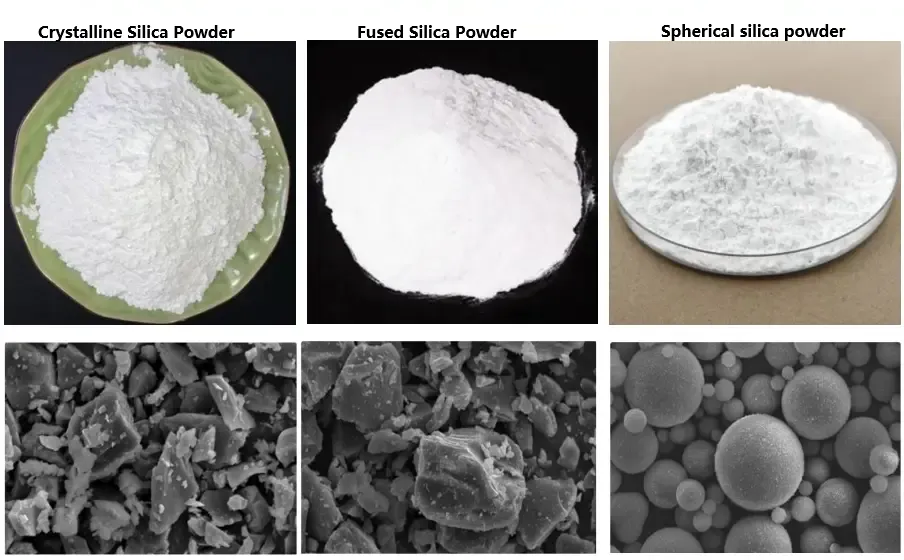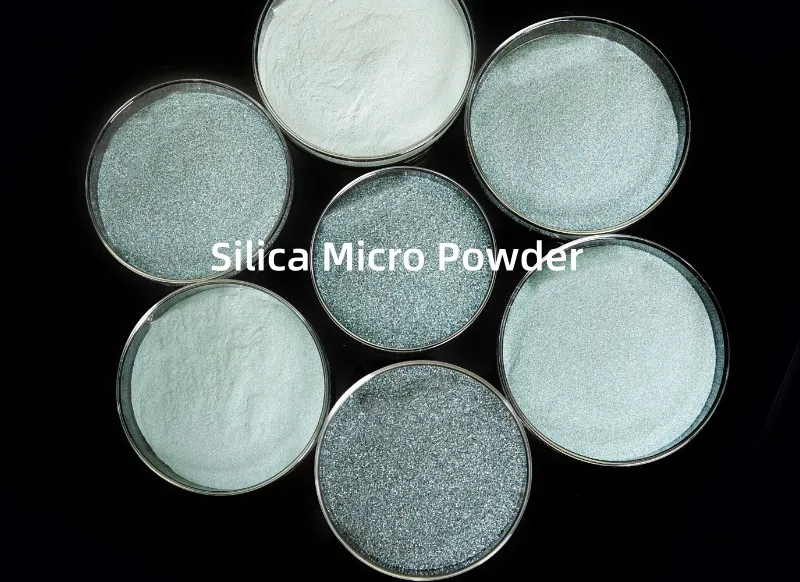
From a silicon wafer to a finished chip product, Epoxy Molding Compound (EMC) serves as the final protective barrier safeguarding the semiconductor core. Within the entire epoxy system, silica powder is far more than an ordinary filler—it is a critical functional material that determines packaging reliability, chip lifespan, and the upper performance limit of semiconductor devices. Especially in advanced packaging technologies, the industry follows an uncompromising rule:
“No spherical silica powder, no advanced packaging.”
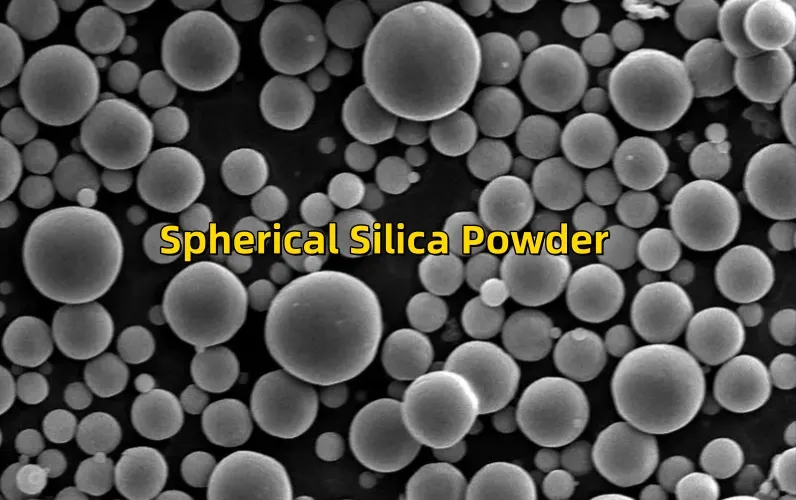
I. Why Must It Be Spherical?
The Equipment Limitations and Inherent Defects of Traditional Angular Silica Powder
In the past, the industry mainly relied on traditional mechanical crushing and impact equipment, such as jet mills and mechanical liner mills, to process crystalline silica. The resulting product is known as “angular silica powder.” Because these particles naturally possess sharp edges and irregular shapes, they are fundamentally incompatible with the requirements of modern high-end chip packaging, exposing three major fatal weaknesses:
Low Filling Rate and High Material Waste
Particles produced by traditional grinding equipment resemble crushed stones. They interlock with one another and create large void spaces during stacking.
As a result:
- The maximum filling ratio in resin systems is only about 50%–60%.
- More expensive epoxy resin is required.
- Packaging costs increase significantly.
- The overall compactness and density of the package become poor.
High Viscosity and Poor Flowability
Irregular particles generate enormous friction during mixing. Once added into epoxy resin, the system viscosity rises sharply, making the compound flow like thick cement slurry. During packaging, this easily causes:
- Mold blockage
- Voids and air pockets
- Incomplete filling
- Lower chip packaging yield
Stress Concentration Leading to Chip Cracking
The sharp corners left by mechanical grinding become microscopic “stress concentration points.” During operation, chips experience severe thermal cycling:
-55°C to 125°C The thermal expansion and contraction stresses cannot be effectively dispersed.
Under repeated thermal shock:
- Chips may crack
- Solder joints may detach
- Packaging interfaces may delaminate
For expensive AI chips and advanced semiconductor devices, such failures often mean total product loss.
II. From “Grinding” to “Spheronization”:
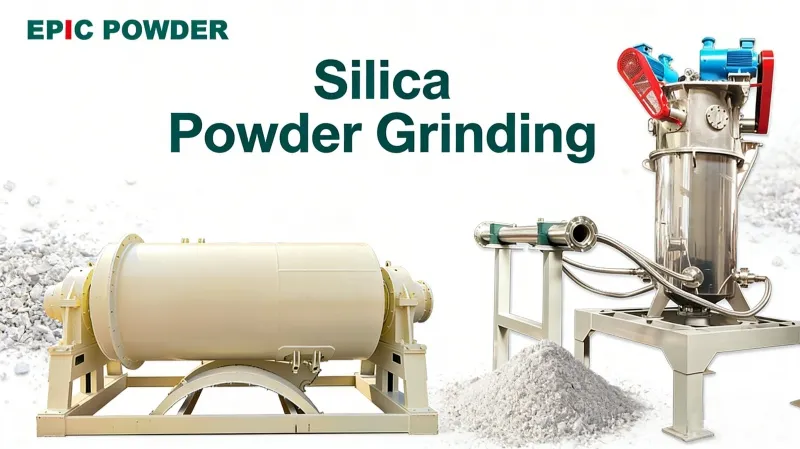
The Four Core Advantages of Spherical Silica Powder
To overcome the limitations of angular powder, modern manufacturing processes introduce flame fusion or plasma spheroidization technologies after ultrafine grinding processes such as vibration milling and stirred milling. These systems utilize temperatures of several thousand degrees to instantly melt the surface of irregular quartz particles. Through surface tension during cooling, the molten particles naturally shrink into nearly perfect spheres.
The final product is high-purity spherical silica powder:
- SiO₂ ≥ 99.9%
After undergoing this “complete transformation,” spherical silica powder exhibits four critical characteristics that directly meet the core requirements of semiconductor packaging.
1. High Filling Rate + Low Viscosity (Ball-Bearing Effect)
Thanks to the precise control of spheroidization equipment, the particle surfaces become extremely smooth. Inside the resin system, the spherical particles create a “ball-bearing effect,” dramatically reducing friction between particles.
As a result:
- Filling ratios can reach 70%–90% by weight
- The resin system maintains excellent flowability
This allows the material to perfectly penetrate micron-scale narrow gaps in:
- Flip Chip packaging
- Wafer-Level Packaging (WLP)
- Advanced semiconductor structures
without voids or blockage.
2. Low Coefficient of Thermal Expansion (CTE Matching Buffer)
Pure epoxy resin has a thermal expansion coefficient (CTE) of approximately:
- 60–80 ppm/°C
while silicon chips have a CTE of only:
- ~2.6 ppm/°C
This massive thermal mismatch can cause interface delamination and package warpage. Spherical silica powder itself has an ultra-low CTE of:
- 0.3–0.5 ppm/°C
By using high loading ratios, the overall CTE of EMC materials can be precisely adjusted to closely match that of silicon chips. In this way, spherical silica powder acts like a “thermal stress buffer,” significantly improving thermal cycling reliability—often extending service life by more than three times.
3. High Insulation + Excellent Stability (Ultra-Pure Protection)
High-purity spherical silica powder possesses an extremely high volume resistivity:
- 10¹⁵ Ω·cm
making it an outstanding electrical insulator. Combined with its highly stable chemical properties:
- Acid resistance
- Alkali resistance
- High-temperature resistance
- Moisture resistance
- Corrosion resistance
it can effectively protect chips from environmental moisture and ionic contamination over long-term operation.
This greatly reduces the risk of:
- Electrical leakage
- Short circuits
- Signal instability
4. Low Stress + High Mechanical Strength
Because spherical particles have no sharp edges, internal stress can be evenly distributed in all directions. Compared with traditional angular powder:
- Stress concentration is reduced to only about 60%
Meanwhile, silica’s Mohs hardness of 7 significantly enhances the mechanical strength of the packaging material. This ensures that chips remain resistant to deformation and damage during:
- Transportation
- Installation
- Long-term service
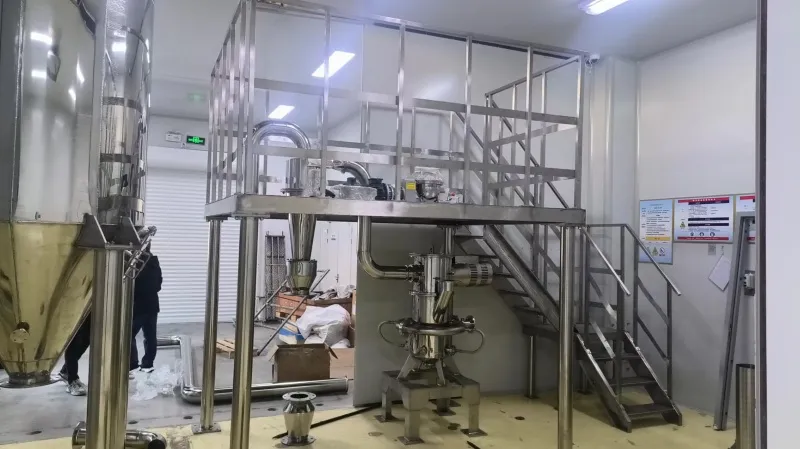
III. Advanced Packaging Demands “Extreme Standards” for Grinding and Spheroidization Equipment
For cutting-edge applications such as:
- 7nm and below semiconductor processes
- AI chips
- HBM (High Bandwidth Memory)
the quality requirements for spherical silica powder are extraordinarily strict.
This forces grinding equipment, classification systems, and spheroidization equipment to achieve world-class industrial precision.
Ultra-Low Impurity Levels
(Anti-Contamination Rule for Equipment)
The total content of harmful metallic impurities such as:
- Fe
- Na
- K
must remain below:
- ≤50 ppm
while top-tier applications may require:
- ≤10 ppm
Therefore, grinding systems must adopt:
- High-purity quartz linings
- Alumina or zirconia grinding media
to completely prevent iron contamination caused by mechanical wear.
Otherwise, impurities may cause:
- Chip corrosion
- Leakage current
- Signal abnormalities
High Sphericity
(Temperature Control Capability of Spheroidization Equipment)
Product sphericity must reach:
- ≥95%
while premium applications often require:
- ≥99%
This places extremely high demands on the uniformity of:
- Internal temperature fields
- Airflow fields
inside flame fusion and plasma spheroidization systems.
Every particle must be fully melted, with absolutely no unmelted angular particles or agglomerated clusters.
Zero Defects and Precise Particle Size Distribution
(Ultrafine Classification Technology)
The final product must contain:
- No black spots
- No carbonized impurities
- No agglomeration
Particle size distribution (D50) must be precisely controlled between:
- 0.5–30 μm
depending on packaging gap requirements.
This requires high-precision air classifiers for multi-stage separation processes in order to:
- Remove coarse particles completely
- Prevent oversized particles from blocking narrow gaps
- Control ultrafine nanoparticle content
- Avoid local stress concentration
IV. Conclusion
Fundamentally, the core challenges of electronic packaging revolve around:
- Thermal mismatch between resin and silicon chips
- Flowability within ultra-narrow spaces
- Long-term insulation reliability
Spherical silica powder is currently the only material that can be mass-produced through modern precision grinding and high-temperature spheroidization technologies while simultaneously solving all three challenges.
It is not merely a filler.
It is:
- A thermal expansion “balancer”
- A stress-relief “buffer”
- An insulation “shield”
- A packaging yield “accelerator”
As AI computing chips and advanced packaging technologies continue to expand rapidly, the strategic importance of spherical silica powder becomes increasingly critical. Without advanced grinding and spheroidization technologies, there can be no high-quality spherical silica powder. And without spherical silica powder, there can be no safe and reliable high-end semiconductor packaging.
“Thanks for reading. I hope my article helps. Please leave a comment down below. You may also contact Zelda online customer representative for any further inquiries.”
— Posted by Emily Chen