In the fields of geology, materials science, and mineral processing industries, “quartz” and “silica” (silicon dioxide) are two frequently occurring terms. Many people wonder: Is quartz identical to silica? Is there a complete equivalence between the two, or do subtle differences exist? This article provides a layered analysis of the connections and distinctions between them from the perspectives of chemical composition, mineral structure, physical forms, and milling characteristics.
I. Silicon Dioxide: The Chemical Essence and Structural Bedrock
Silicon dioxide, with the chemical formula SiO2, is a covalent compound composed of two elements: silicon (Si) and oxygen (O). In an ideal state, each silicon atom is bonded to four oxygen atoms via covalent bonds, forming a stable tetrahedral structure. This structure extends infinitely in space, constructing a giant covalent crystal lattice of silicon dioxide.
From a chemical perspective, silica is an extremely stable oxide that is insoluble in water, highly resistant to high temperatures, and chemically inert. It is not only the primary component of the Earth’s crust (accounting for approximately 59% of the crust’s mass) but also the core component of natural materials such as sand, rocks, and minerals. In industrial applications, it represents the ultimate target component of milling and processing.
II. Quartz: Natural Crystallization and Milling Challenges
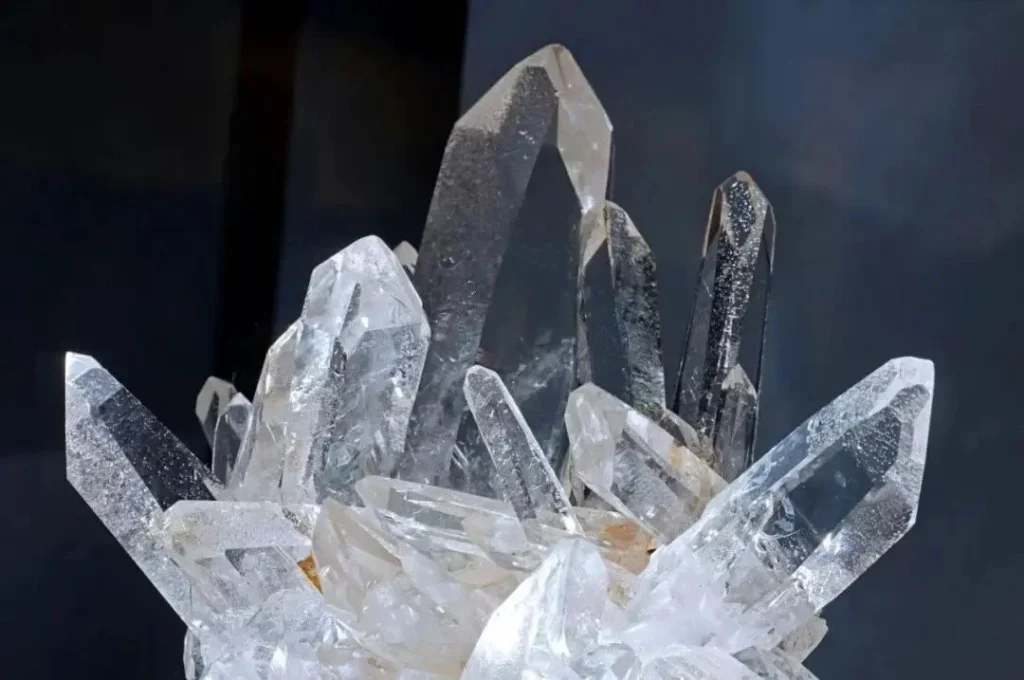
Quartz is the most common and typical crystalline form of silica in nature, classified as an oxide mineral belonging to the trigonal crystal system. Its chemical formula is also SiO2, but it possesses a well-defined crystal structure—specifically, hexagonal prismatic crystals. Pure quartz is colorless and transparent (such as rock crystal), while it can exhibit purple, yellow, smoky, and other colors when impurities are present.
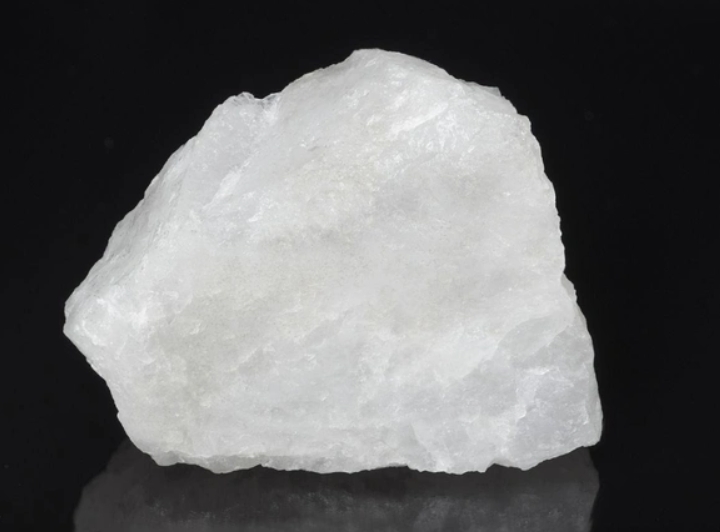
From the standpoint of mineral processing, natural quartz is almost never entirely pure; it often contains trace elements or inclusions such as aluminum (Al), iron (Fe), and calcium (Ca). Quartz boasts a high Mohs hardness of 7 and lacks cleavage (often displaying a conchoidal fracture). This makes it a typically hard and highly abrasive material in industrial milling. Its extreme compressive strength and abrasiveness place stringent requirements on the wear-resistant materials and power design of milling equipment.
III. “Equivalence” vs. “Difference”: From Macroscopic Minerals to the Powder Industry
1. The Primary-Secondary Relationship in Chemical Composition: Ideal vs. Reality
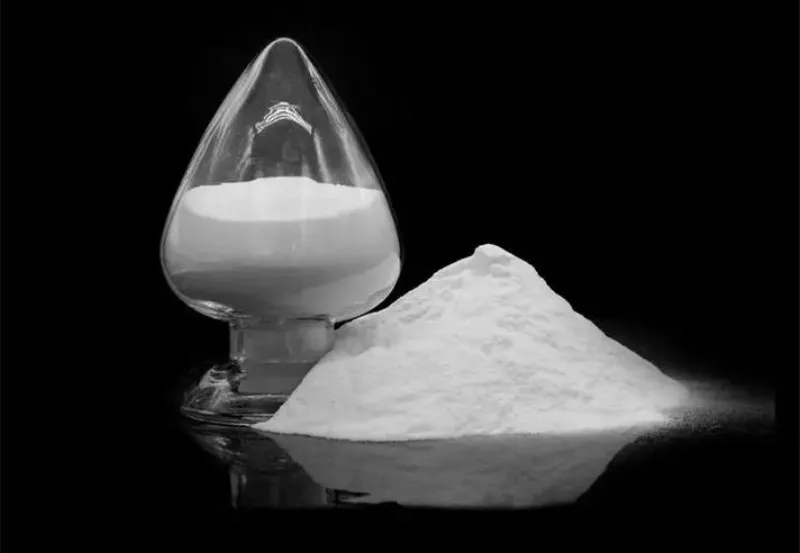
While the primary component of quartz is silica, the two are not absolutely identical. Pure silica—such as high-purity synthetic silica powder—represents the “ideal state.” In contrast, natural quartz is its “real-world manifestation” and inevitably contains impurities. In the milling industry, purification and grinding often occur simultaneously. First, mechanical forces liberate quartz from gangue minerals. Then, beneficiation equipment removes iron and other impurities to yield the final high-purity silica powder.
2. Morphological Diversity and Milling Behavior
Silica exists in far more diverse forms than quartz alone, and these distinct forms directly dictate the selection of milling equipment:
- Crystalline Silica: Examples include vein quartz and quartz sandstone, which possess high lattice energy and dense structures. When milled using conventional ball mills or vertical roller mills (VRM), energy consumption is high. They often require High-Pressure Grinding Rolls (HPGR) for pre-crushing to generate micro-cracks, thereby improving subsequent milling efficiency.
- Amorphous/Cryptocrystalline Silica: Examples include agate, diatomaceous earth, and opal. Among these, porous amorphous structures like diatomaceous earth are relatively soft. Their milling focuses more on “deagglomeration” rather than intense shearing. Consequently, mechanical impact mills or jet mills are typically selected to protect their unique porous microstructure.
3. Overlap and Focus of Application Areas (Material Mesh Size Classification)
As milling equipment continuously deconstructs quartz particles, silica unleashes different application values across various fineness levels (mesh sizes):
- Coarse/Fine Powder (20–200 mesh): Mostly processed by rod mills or standard vertical mills, used in glass, ceramics, and metallurgical fluxes.
- Micron-level Ultrafine Powder (325–2500 mesh): Frequently produced by ball mills or ring roller mills, widely utilized as fillers in coatings, rubber, and plastics.
- Nano/Sub-micron level (quasi-silica interface): Requires ultra-fine grinding via jet mills or stirred mills (bead mills), used in premium sectors such as epoxy molding compounds (EMC) for electronic substrates (copper-clad laminates) and optical fibers.
IV. From Quartz to Silica: Natural Mechanical Deconstruction and Industrial Reshaping
Nature weaves simple SiO2 molecules into a complex and diverse mineral world through geological processes:
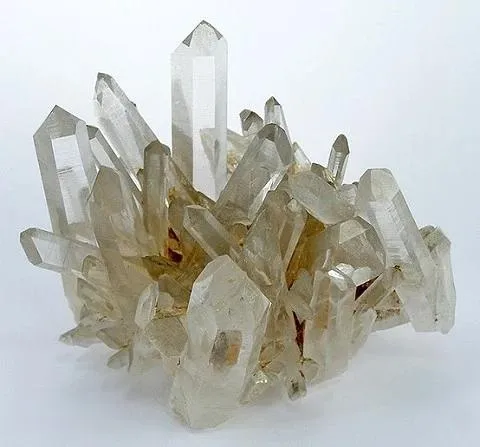
- When silica crystallizes slowly under high temperature and high pressure to form perfect crystals, it becomes crystal-clear rock crystal;
- When silica gel precipitates layer by layer in rock crevices and dehydrates, it forms beautifully banded agate;
- When a silica solution cools rapidly to form an amorphous structure, it becomes hard chert/flint.
Modern industry, however, uses milling equipment to reverse this geological evolution.
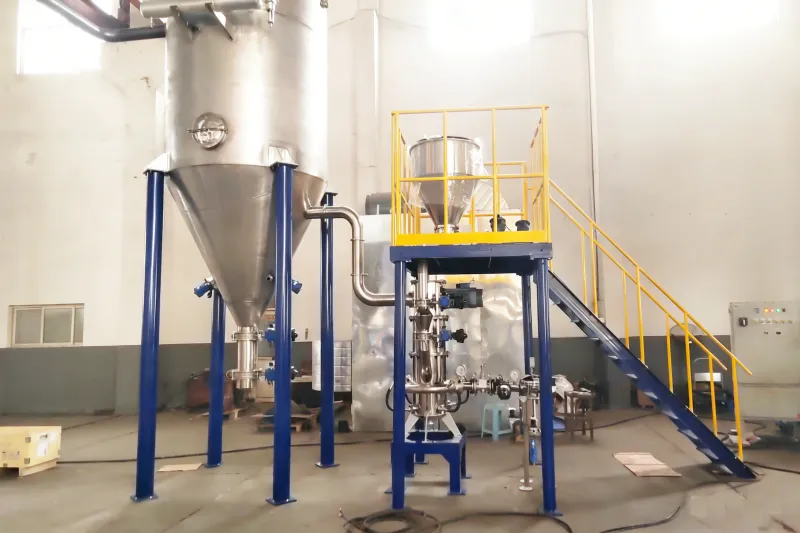
Geological movements spend millions of years aggregating SiO2 molecules from the “bottom-up” into macroscopic minerals. In stark contrast, milling equipment uses intense mechanical stress to break these minerals down from the “top-down.” Hard natural quartz is stripped and dismantled by various violent forces—the impact of steel balls in a ball mill, the roller-on-disc compression in a vertical mill, and the high-speed opposing streams in a jet mill. As its macroscopic features gradually vanish, the material returns to a microscopic form that infinitely approaches its chemical essence: pure SiO2 ultrafine powder. During this ultra-fine milling process, the surface energy of the particles is intensely activated. This exposes more active sites, ultimately achieving a complete transformation from a “natural mineral” to a “modern functional material.”
Conclusion: Connected But Not Identical—The Unity of Essence, Appearance, and Process
Returning to the original question: Is quartz silica?
A more accurate statement would be: The primary chemical component of quartz is silica; it is the most common crystalline form of silica in nature, but the two are not completely identical.
- Silicon Dioxide is a chemical concept representing the fundamental compound composed of Si and O.
- Quartz is a mineralogical concept specifically referring to a natural mineral with a distinct crystal structure and physical properties.
- Quartz sand/Silica powder is an industrial and materials science concept, referring to the commercialized forms of silica that exhibit specific particle size distributions (PSD) after natural quartz has been physically reshaped by milling equipment.
Understanding this relationship offers two main insights. First, it highlights the complexity of natural minerals, where hardness and impurities distinguish natural quartz from pure silica. Second, it reveals the essence of industrial processing.
The journey from natural quartz to ultra-fine powder demonstrates a fascinating logic: modern industry is “reshaping nature with mechanical force.” Ultimately, this offers a closed-loop research pathway from “ore physical properties” to “advanced applications” for fields like materials science and powder engineering.

“Thanks for reading. I hope my article helps. Please leave a comment down below. You may also contact Zelda online customer representative for any further inquiries.”
— Posted by Emily Chen