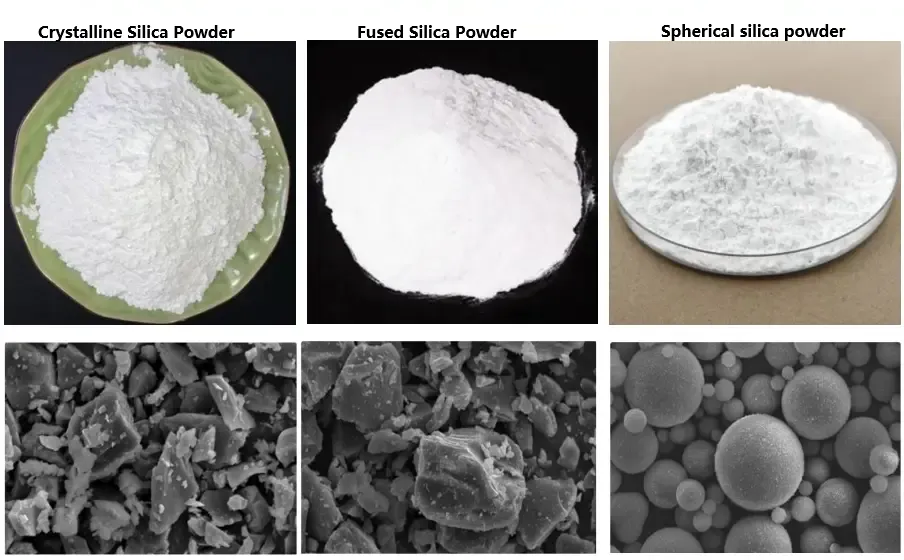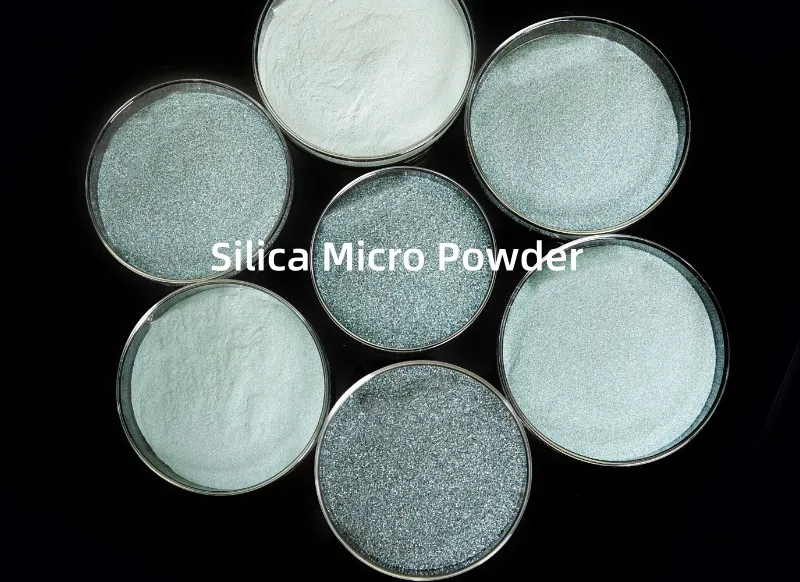
When we touch the smooth and delicate ceramic teaware or marvel at the lifelike textures on tile surfaces, few people realize that behind these beautiful and durable ceramic products lies an seemingly ordinary yet crucial raw material—quartz powder. Unlike kaolin, which is regarded as the “skin” of ceramics, quartz powder acts as the “skeleton,” determining the hardness, stability, and service life of ceramics.
A Low-Key yet High-Performance “Industrial Fine Grain”
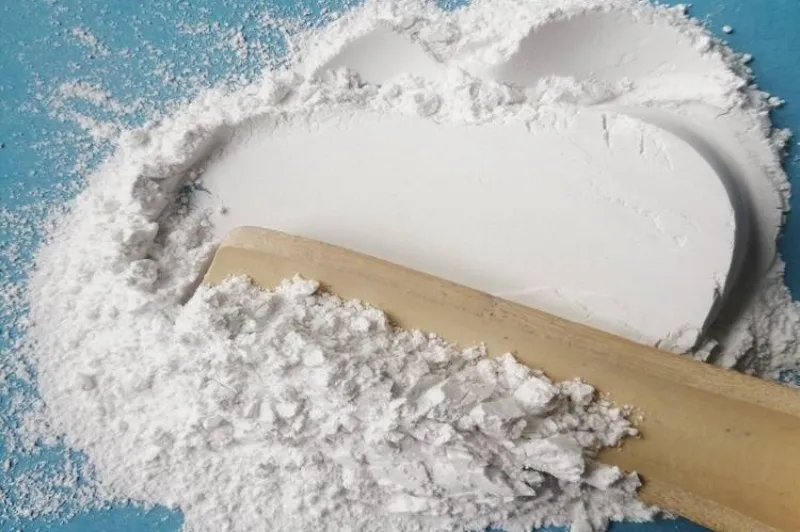
Quartz powder, as the name suggests, is a powdered substance obtained by grinding quartz stone. However, it is far from simple “stone dust.” Its unique physical and chemical properties give it a prominent position in numerous industrial fields.
High Hardness and Wear Resistance:
Quartz has a Mohs hardness of 7, second only to a few minerals like diamond and corundum. This hardness is retained after grinding into powder, providing an excellent wear-resistant foundation for subsequent products.
High Temperature Resistance and Chemical Stability:
Quartz has a melting point of about 1713°C and does not easily melt or deform at high temperatures. It is insoluble in acids (except hydrofluoric acid) and does not react with most chemicals, resisting acid and alkali corrosion.
Low Thermal Expansion Coefficient and Excellent Insulation:
Compared to other minerals, quartz powder has a lower thermal expansion coefficient, offering good volume stability during temperature changes. It also exhibits superior electrical insulation, making it an ideal raw material for electronic ceramics.
Strong Particle Size Controllability:
Through different grinding processes, the particle size of quartz powder can be precisely controlled from micron to nanometer levels, meeting stringent fineness requirements in various industries.
Quartz Powder Grinding Preparation: Key Steps from Ore to High-Purity Ultrafine Powder
The quality of quartz powder directly affects the performance of ceramic products, so its preparation emphasizes high purity, low contamination, and precise particle size control. A typical production process includes:
Raw Material Selection and Pretreatment
High-purity quartz ore (SiO₂ ≥99%) is selected, initially crushed (jaw crusher or hammer crusher) into tens-of-millimeters blocks, then purified via washing, magnetic separation, or flotation to remove iron, aluminum, and other impurities.
Coarse Crushing
The crushed quartz blocks are further reduced to millimeter sizes, typically using jaw + cone or impact crushers in a closed-circuit system for uniform discharge.
Fine and Ultrafine Grinding of Quartz Powder
(Core Stage) Depending on ceramic industry requirements (commonly 325–2000 mesh or finer), different equipment is used:
Ball Mill (Dry/Wet)
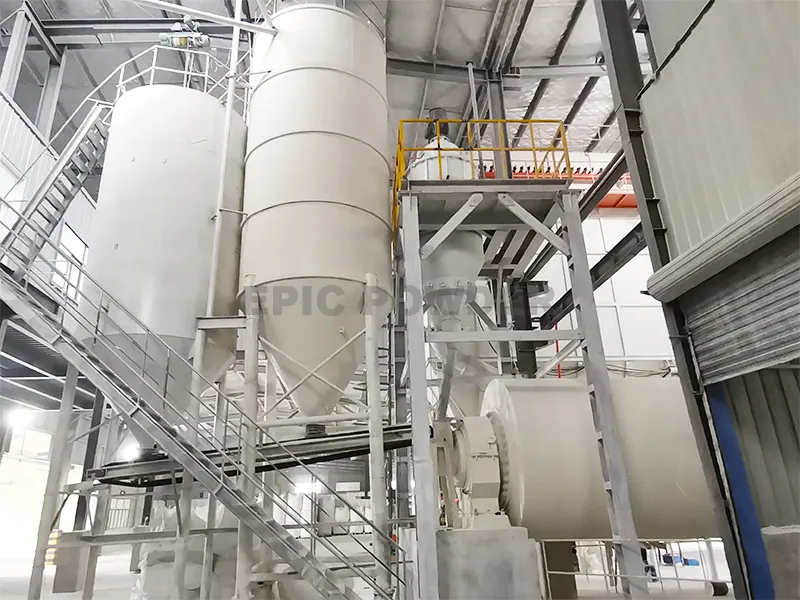
The most common, especially with ceramic or alumina linings to avoid iron contamination. Wet ball milling is often used for medium-fine powders (325–800 mesh), with ceramic or zirconia media, grinding for hours to tens of hours, achieving D50 5–20 μm.
Vibratory Mill:
Suitable for higher fineness, with high vibration frequency and energy density, ideal for brittle quartz ultrafine grinding down to sub-micron levels, though lower capacity.
Air Jet Mill (Fluidized Bed or Opposed Jet)
Preferred for high-end ceramic-grade quartz powder, especially electronic ceramics. It uses particle-to-particle collision with no media contamination, producing rounded particles, narrow distribution, and ultra-high purity, easily reaching D97 <10 μm or sub-micron. Often combined with classifiers for precise control.
Vertical Roller Mill or Ultrafine Vertical Mill:
Suitable for large-volume medium-fine powder, with lower energy consumption and high whiteness.
Others:
For extreme purity, wet stirred mills or planetary ball mills can further refine.
Classification and Purification
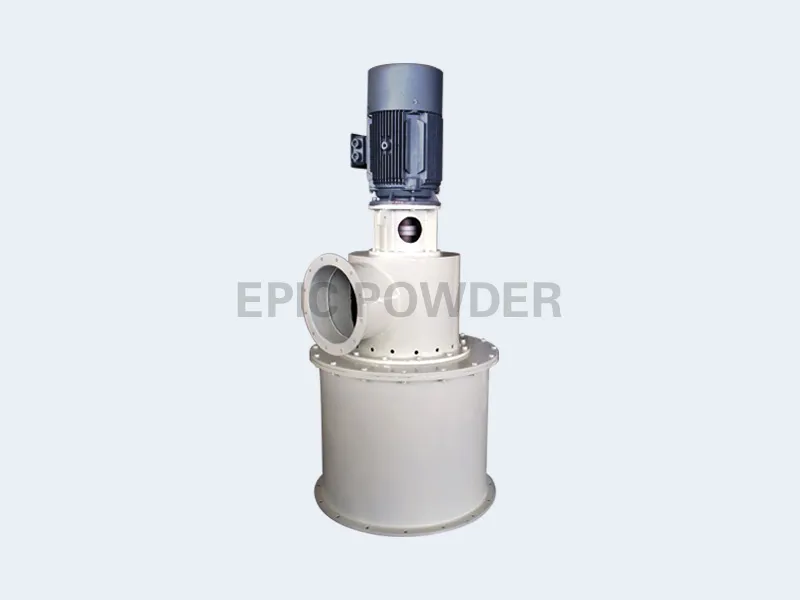
Post-grinding material enters air classifiers or turbine classifiers for size separation; high-gradient magnetic separation, acid leaching (oxalic or citric acid for iron removal), and deionized water washing further enhance purity (Fe₂O₃ <0.01%).
Surface Modification (Optional)
For high-end electronic ceramics, surface modification is sometimes required for quartz powder to enhance its compatibility with other ceramic raw materials.
Drying and Packaging
Wet processes require special drying (vacuum or flash drying) to prevent agglomeration; finished products are vacuum-packed to avoid secondary contamination.
Through this process, ceramic-grade quartz powder achieves high purity (SiO₂ ≥99.5%–99.99%), low iron/impurities, and controllable particle size, ensuring stable downstream ceramic performance.
The “All-Rounder” in Ceramic Production
In ceramic production, quartz powder is not used alone but mixed proportionally with kaolin, feldspar, etc. This seemingly simple “pairing” enables quartz powder’s irreplaceable roles.
Skeleton Support: Enhancing Ceramic Strength
Ceramic bodies are prone to cracking from uneven shrinkage during drying and sintering. Quartz powder acts as a “skeleton” to suppress excessive shrinkage of clay minerals like kaolin, reducing deformation and cracking risks. During sintering, quartz converts to cristobalite, tightly bonding with the matrix and significantly increasing compressive and flexural strength. Data shows that adding appropriate quartz powder can boost finished product strength by 20%-30%.
Wear and Scratch Resistance: Extending Service Life
For tiles and wear-resistant ceramic parts, abrasion resistance is key. Quartz powder’s high hardness acts as “wear-resistant particles” uniformly distributed on surfaces and interiors, resisting friction and preventing scratches. Polished tiles maintain long-term shine largely due to high-purity quartz powder in the formulation.
Sintering Regulation: Reducing Energy Consumption
During sintering, quartz powder forms low-melting eutectics with feldspar, lowering sintering temperature (typically by 50-100°C) and shortening firing time. This reduces energy use and costs while minimizing deformation from prolonged high-temperature exposure, improving yield.
Appearance Optimization: Enhancing Surface Texture
Fine quartz powder disperses well, making body composition uniform and reducing glaze defects like pinholes and bubbles. It also adjusts glaze refractive index and gloss, resulting in smoother, more delicate surfaces with even, stable colors.
An Irreplaceable “Industrial Cornerstone”
If kaolin is the “basic raw material” of ceramics, quartz powder is the “key driver” of industry upgrading. Its importance is evident in three aspects:
Accelerator for Product Upgrading:
As ceramics advance toward high-end and functional applications, performance demands rise. Electronic ceramics require high insulation and low expansion, wear-resistant ceramics need extreme hardness—all reliant on high-purity, finely controlled quartz powder. Its quality directly determines competitiveness in premium ceramic products.
Balancer of Industrial Costs:
Quartz resources are abundant and relatively inexpensive compared to rare minerals. Rational use of quartz powder enhances performance while controlling raw material costs, enabling large-scale production for ceramic enterprises.
Supporter of Green Production:
As noted, quartz powder lowers sintering temperatures, reducing energy consumption and carbon emissions. Waste ceramics can be recycled, with quartz components reused, aligning with circular economy principles.
In summary, though understated, quartz powder supports the entire ceramic industry’s backbone with its robust performance. From raw material preparation to final product properties, it is an indispensable “skeleton,” driving ceramics from everyday items toward high-tech materials.

“Thanks for reading. I hope my article helps. Please leave a comment down below. You may also contact Zelda online customer representative for any further inquiries.”
— Posted by Emily Chen