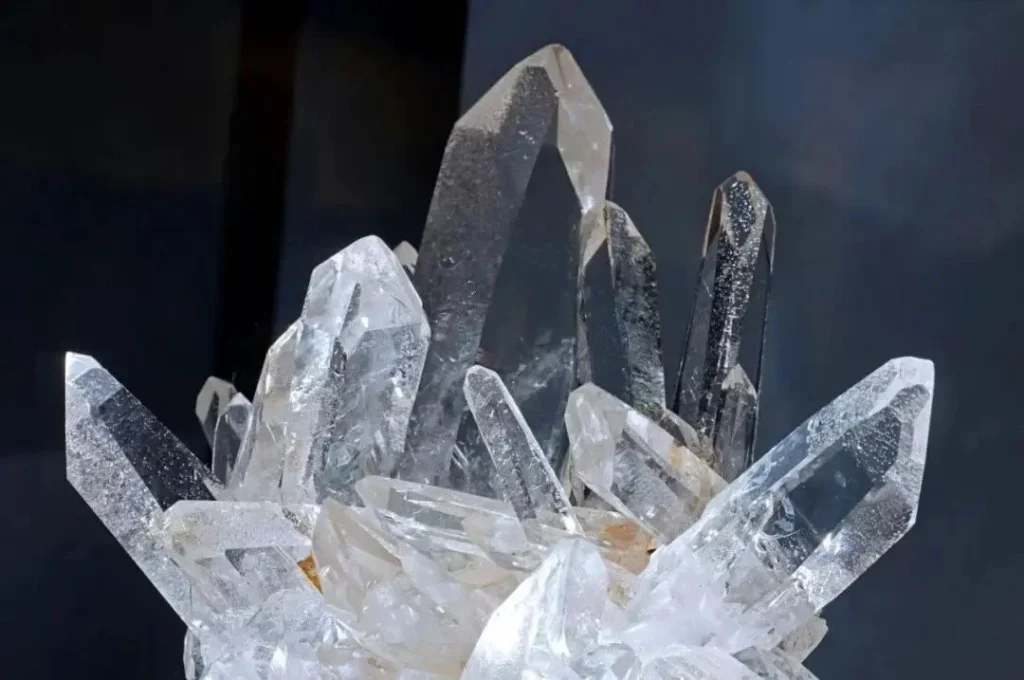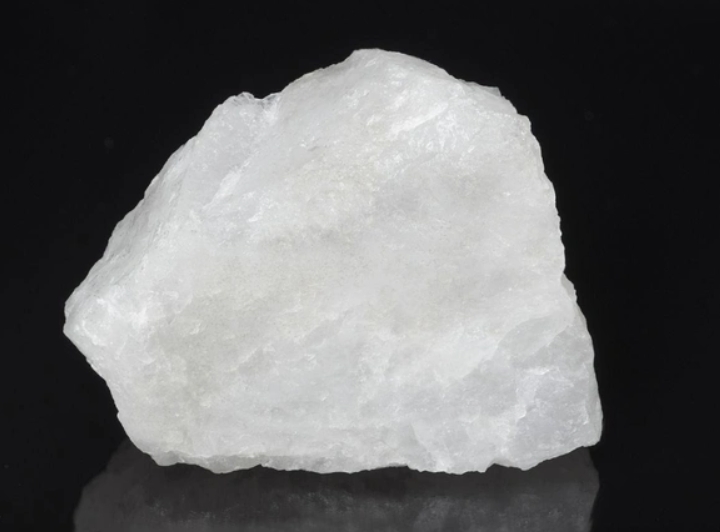
In the fields of semiconductors, optics, aerospace, and high-end ceramics, there is a material often referred to as the “most expensive sand”—fused silica. It is not just ordinary quartz sand that is melted and cooled. It is the purest, most stable form of amorphous silica (SiO₂>99.999%) that can be industrially produced. Fused silica is nearly irreplaceable in scenarios such as extreme ultraviolet (EUV) lithography machines, space telescope mirrors, 5G high-frequency copper-clad laminates, and precision casting.
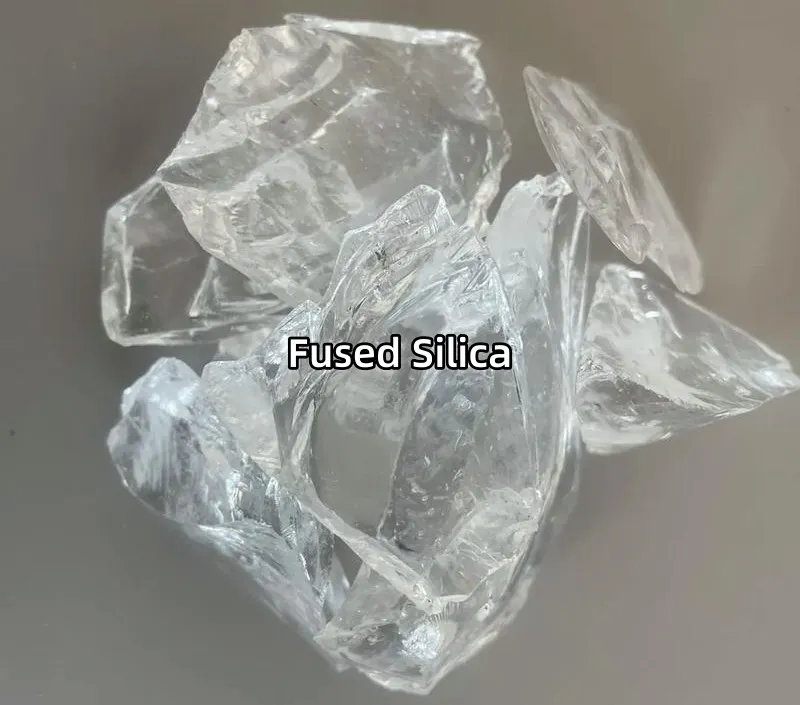
How Is It Made?
Fused silica is created by melting natural quartz crystals (crystals of silica) or high-purity silica sand at temperatures exceeding 2000°C, followed by rapid cooling to form an amorphous solid. The process appears simple, but the difficulty level is very high. Only four or five companies worldwide can stably produce optical-grade and semiconductor-grade fused silica.
Comparison of Main Production Methods:
| Method | Temperature | Purity | Typical Applications |
|---|---|---|---|
| Electric Fusion | 1800–2100°C | 99.99–99.999% | Photovoltaic crucibles, general optics |
| Flame Fusion (Hydrogen-Oxygen Flame) | ~2200°C | 99.999–99.9999% | EUV lithography mirrors, mask substrates |
| Plasma Fusion | >25000°C | Up to 9N | Aerospace-grade mirror blanks, optical fiber preforms |
| Continuous Electric Fusion + Vacuum Degassing | 1850–1950°C | 99.9995–99.9999% | Semiconductor-grade crucibles, 5G high-frequency CCL |
What truly determines the price and application ceiling of vitreous silica are factors like OH content, metal impurities, bubbles, and internal stress.
Properties of Fused Silica
Fused silica has several key properties that differentiate it from other materials:
- High Thermal Stability
Fused silica has an extremely low coefficient of thermal expansion (CTE), which means it hardly expands or contracts with temperature changes, making it highly resistant to thermal shock. This makes it perfect for applications involving extreme temperature fluctuations. - Excellent Optical Properties
Fused silica exhibits excellent transmittance across a wide range of wavelengths, including ultraviolet (UV), visible light, and infrared. Its high UV transmission makes it ideal for optical applications, such as lenses, mirrors, and other precision optical components. - Chemical Inertness
Fused silica is highly resistant to most acids, alkalis, and organic solvents. It does not react with water, making it suitable for use in harsh environments where other materials may degrade or corrode. - High Purity
Vitreous silica is known for its exceptional purity, typically exceeding 99.9%. This level of purity is crucial for sensitive applications such as semiconductor manufacturing and scientific instruments. - Mechanical Strength
Despite its low density, vitreous silica exhibits good mechanical strength, particularly when compared to other glass materials. It is resistant to abrasion and can be used in demanding environments.
Applications of Fused Silica
Fused silica’s unique properties make it ideal for a wide range of applications across various industries:
- Optics and Photonics Industry
Fused silica is widely used in the production of optical components such as lenses, mirrors, prisms, and optical fibers. Due to its excellent UV transmission and low thermal expansion, fused silica is the material of choice for high-performance optical systems, including scientific instruments, laser equipment, and space telescopes. - Semiconductor Manufacturing
In semiconductor production, fused silica is used for photomasks, wafer carriers, and reaction chambers. Its high purity and resistance to chemical corrosion are critical for the production of integrated circuits, where even minute contaminants can impact device performance. - High-Temperature Applications
Fused silica can withstand extreme temperatures without deforming or cracking, making it highly valuable in industries such as aerospace, defense, and energy. It is used in components such as furnace linings, crucibles, and high-temperature insulation materials. - Glass and Ceramics Industry
vitreous silica is used as a raw material in the production of specialty glass and ceramics. It is also used as a refractory material in kilns and other high-temperature processing equipment, helping to reduce energy consumption due to its excellent thermal stability. - Chemical and Environmental Protection
Due to its chemical inertness, vitreous silica is commonly used in laboratory equipment, such as reactors, and in applications where protection from chemical corrosion is required. It is also used in the production of filtration systems for liquids and gases, providing efficient filtration properties due to its high surface area and stability. - Casting and Metal Foundries
Fused silica is used as a mold material in metal casting. Its low expansion rate ensures that the molds maintain their shape during the casting process, preventing defects in the final product.
Why Is Fused Silica Essential for Semiconductors and Lithography Machines?
EUV Lithography: 193nm and 13.5nm Extreme Ultraviolet Light Only Recognizes It
Fused silica has an exceptional transmission rate (>99.99%) in the deep ultraviolet to near-infrared range, and its low thermal expansion coefficient (5.5×10⁻⁷/K) makes it the only material capable of withstanding the laser bombardment in EUV lithography machines without deformation. In ASML’s EUV lithography machines, over 40 mirrors are made from vitreous silica.
Zero Thermal Expansion and Unmatched Dimensional Stability
Space telescope mirrors with an 8-meter diameter must be made from fused silica, as its low thermal expansion ensures that the mirror deformation stays within a few nanometers when subjected to temperature changes from -100°C to +50°C.
Ultra-Low Dielectric Loss and Core Filler for 5G/6G High-Frequency Substrates
When the frequency exceeds 28GHz, conventional fillers can no longer handle the dielectric loss. Fused silica spherical powder (Dk=3.5-3.8, Df<0.0005@10GHz) has become the preferred material for high-frequency copper-clad laminates (CCL) and antenna packaging.
Challenges and Future Trends
Despite the many advantages of fused silica, there are challenges. The production process can be energy-intensive, especially when large quantities of vitreous silica are required. Additionally, the brittleness of vitreous silica and the difficulty in processing it can make it challenging to work with in some applications.
Looking ahead, industries such as semiconductor manufacturing, optics, and renewable energy will continue to develop. As fiber optics and solar technology advance, the demand for vitreous silica is expected to grow. Fused silica will play a key role in developing new high-performance components and systems.
Conclusion
Fused silica may appear to be just a “transparent stone.” However, it encapsulates the pinnacle of human craftsmanship in areas such as high temperature, vacuum, purity, and stress control. It is the physical limit that allows lithography machines to advance from 7nm to 2nm and 1nm resolution. It will also be the “eye” that enables future space telescopes to see galaxies billions of light-years away.

“Thanks for reading. I hope my article helps. Please leave a comment down below. You may also contact Zelda online customer representative for any further inquiries.”
— Posted by Emily Chen