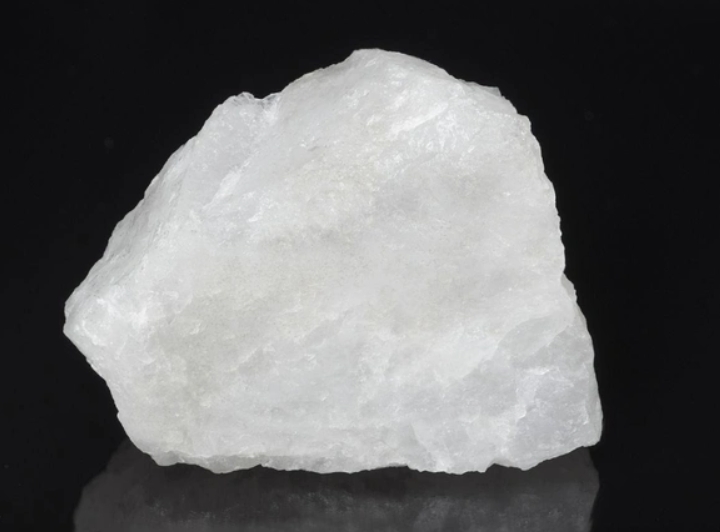
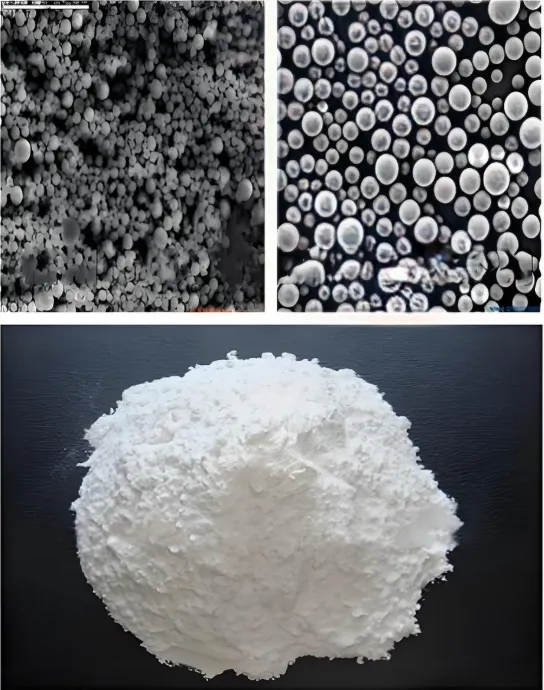
Spherical silicon micropowder has high purity, ultra-fine particles, excellent dielectric and thermal conductivity properties, and a low coefficient of thermal expansion. It finds wide applications in large-scale integrated circuit packaging, aerospace, coatings, pharmaceuticals, and daily-use cosmetics, making it an irreplaceable filler.
The preparation methods of spherical silicon micropowder can be divided into physical-chemical methods and chemical methods.
- Physical-chemical methods include flame synthesis, detonative combustion, high-temperature melt spraying, plasma methods, and self-propagating low-temperature combustion.
- Chemical methods include gas-phase, liquid-phase (sol-gel, precipitation, microemulsion), and other chemical synthesis methods.
In the production of spherical silicon micropowder, strict control at every stage is essential to ensure product quality.

Raw Material Control Factors
The main raw material for spherical silicon micropowder is angular fused or crystalline silicon powder.
- Raw material stability: It is best to use silicon powder from the same mineral vein and production process. This ensures uniformity and maximizes sphericity under consistent balling temperature, gas flow, feeding rate, pressure, and flow conditions.
- Physical and chemical properties: Large fluctuations in raw material properties affect balling temperature and particle dispersion.
- Particle size and distribution: Different particle sizes heat differently. Large particles have higher passivation points than small ones. Therefore, narrow-distribution angular silicon powder is generally used to achieve higher sphericity.
- Particle dispersibility: Ultra-fine angular silicon powders tend to agglomerate due to increased surface energy. If agglomerates are not broken, multiple particles may connect during balling, affecting performance.
- Moisture content: Improper storage or high humidity can lead to powder absorbing moisture, forming agglomerates, and reducing balling efficiency.
- Low radioactivity: Raw materials for low-radioactivity micropowder must have minimal uranium (U), thorium (Th), or other radioactive elements. Sourcing low-radioactivity mineral veins is rare and often monopolized, though research to reduce uranium content in silicon powders has achieved partial success.
Gas Requirements
- High calorific value: The balling temperature for high-temperature combustion methods ranges from 1700–2500°C. High-calorific gases ensure sufficient energy to reach the required temperature.
- High purity: Impure gases leave solid residues that affect powder performance.
Powder Blending
To improve sphericity, producers first create narrow (single-peak) distribution spherical silicon powders. However, these powders cannot achieve maximum packing density and may not meet high-filling requirements. A common solution is blending powders of different particle distributions to form a wide (multi-peak) distribution. This improves packing, reduces oil absorption, and enhances flowability.
Surface Modification
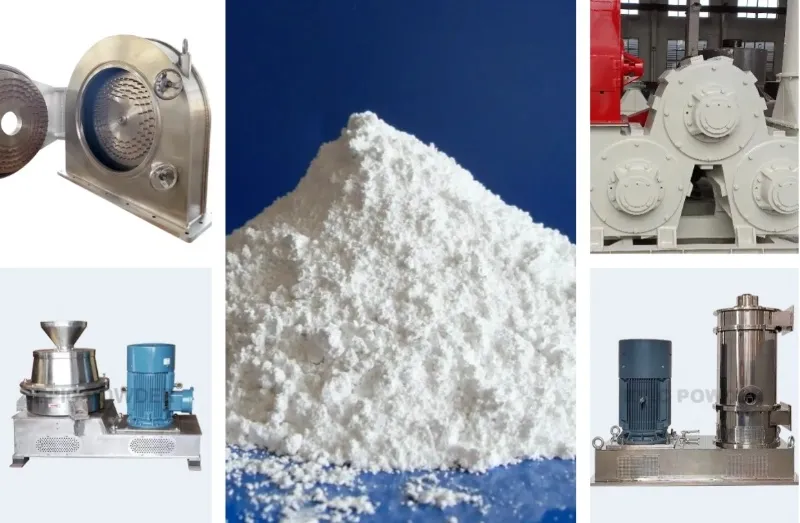
Surface modification occurs in two stages:
- Pre-ball milling dispersion: Ultra-fine angular powders tend to agglomerate. Surface activation disperses these particles before balling. The dispersant must fully volatilize at high temperatures; otherwise, carbon residues form, affecting quality.
- Post-ball milling modification: Spherical silicon powders often exhibit poor compatibility with organic resins, affecting heat and moisture resistance in IC packaging and substrates. Surface modification improves interface bonding with polymers and enhances performance.
Epic Powder
With advanced powder processing technology, Epic Powder provides solutions for the production of high-quality spherical silicon micropowder. By optimizing raw material selection, gas control, blending, and surface modification, Epic Powder ensures high sphericity, uniform particle size, and superior purity. Their systems enable consistent, large-scale production for applications in electronics, aerospace, coatings, and cosmetics. It help customers achieve high performance and reliability in their end products.