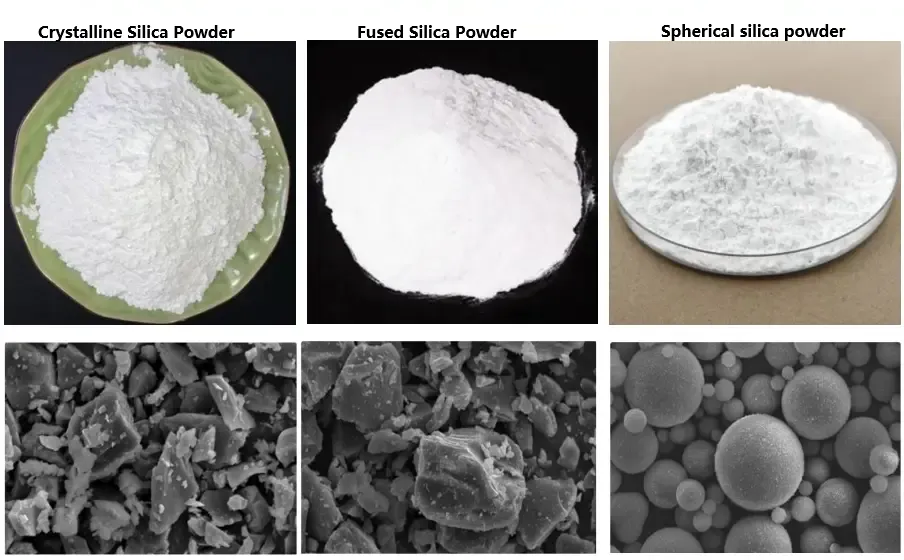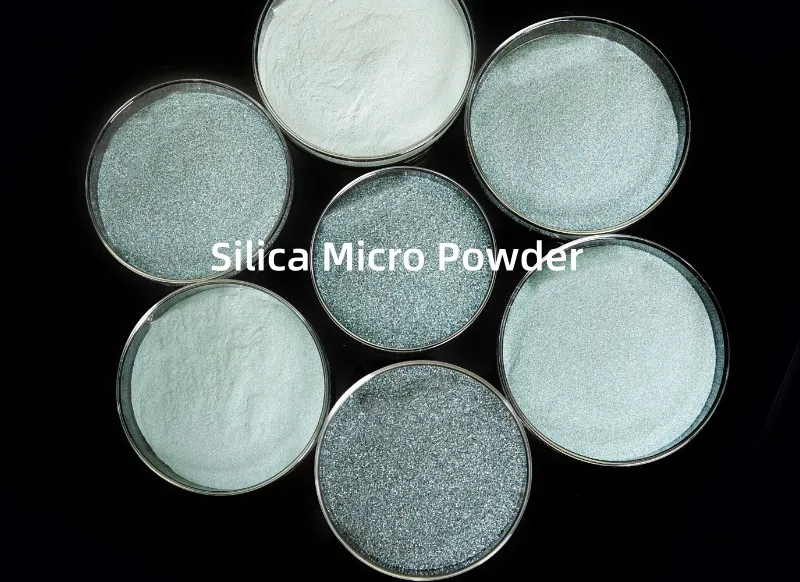
The rapid evolution of high-tech industries—ranging from semiconductor manufacturing and optical fibers to high-efficiency photovoltaic (PV) cells—has placed unprecedented demands on raw material specifications. At the heart of these technologies lies High-Purity Quartz (HPQ). While achieving a chemical purity of 99.99% (4N) or higher is a challenge in itself, the industry now demands this purity at an increasingly fine particle size: the sub-5-micron or even D50: 2μm scale.
This brings us to a critical technical crossroads: Can an ultrafine grinding system maintain 99.99% SiO₂ purity at such a fine scale? In traditional milling, the finer the powder, the higher the risk of contamination. However, with modern engineering and specialized material science, the answer is a resounding yes. This article explores the “how” behind this industrial achievement.
The Paradox of Purity and Fineness
In the world of powder processing, there is an inverse relationship between particle size and purity. As we push the boundaries toward a D50: 2μm target, several physical factors conspire against the 99.99% purity threshold:
- Increased Surface Area: A 2μm particle has a vastly larger surface area compared to a 100μm particle. This increased surface area makes the powder highly “active” and prone to adsorbing metallic ions from the grinding environment.
- Extended Processing Time: Reaching the 2μm threshold requires more energy and longer residence time inside the grinding chamber, increasing the duration of contact between the quartz and the machine components.
- Mechanical Attrition: Quartz is exceptionally abrasive (Mohs hardness 7). In a standard steel mill, the quartz acts as an abrasive medium that “grinds” the machine itself. Achieving successful ultrafine grinding SiO₂ requires overcoming the introduction of iron (Fe), chromium (Cr), and nickel (Ni) into the final product. Even a few parts per million (ppm) of iron can render quartz useless for semiconductor applications.
The Solution: Fluidized Bed Jet Milling Technology
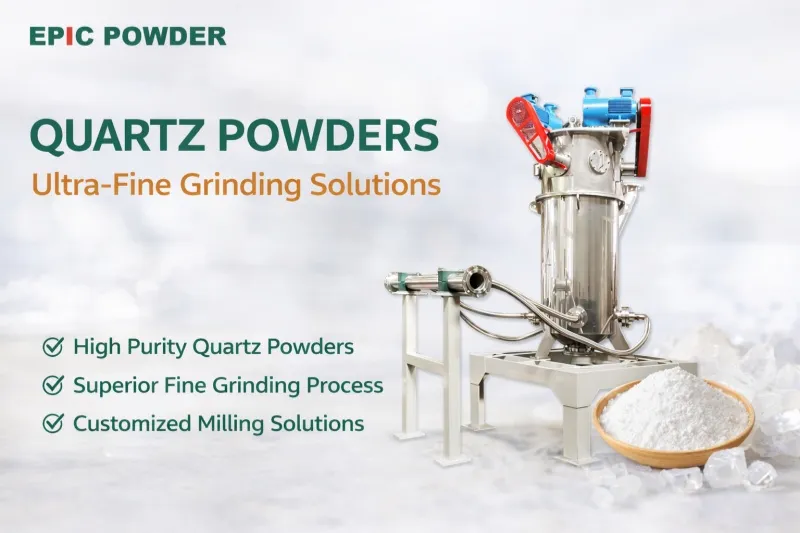
To maintain 4N purity, the industry has moved away from mechanical impact mills (like ball mills with steel media) toward Fluidized Bed Jet Milling. This is widely considered the “Gold Standard” for the ultrafine grinding of high-purity quartz.
How it Works
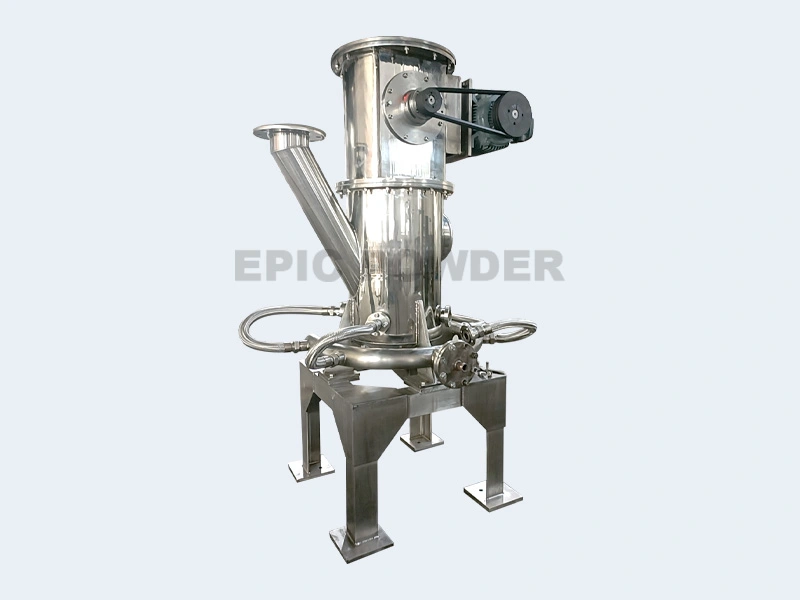
Unlike traditional mills that use a rotor or balls to crush material, a jet mill uses high-pressure, high-velocity compressed air (or inert gas). The quartz particles are suspended in a fluidized bed and accelerated by multiple supersonic nozzles.
The magic happens in the center of the chamber: particle-on-particle collision. Because the quartz grains collide with each other rather than with the walls of the machine, the primary grinding mechanism is “self-pumping.” This process is essential for the high-purity ultrafine grinding SiO₂ needed for high-end electronic fillers.
Precision Classification
To reach exactly D50: 2μm, the jet mill is integrated with a high-speed centrifugal classifier. This unit ensures that only particles that have reached the target size can exit the system. Particles that are still too large are rejected by the classifier wheel and fall back into the grinding zone for further reduction.
Total Contamination Control: The “Metal-Free” Environment
Even with jet milling, the risk of “secondary contamination” exists where particles strike the internal walls or the classifier wheel. To safeguard 99.99% purity, a Total Clean Solution is required.
1. High-Performance Ceramic Linings
Every “contact part” within the system—from the feeding hopper and grinding chamber to the discharge pipes—must be shielded. Common materials include:
- Alumina (Al2O3): Offers excellent wear resistance and is chemically compatible with most quartz applications.
- Silicon Carbide (SiC): Superior hardness and thermal conductivity, often used for the highest-grade HPQ.
- Zirconia (ZrO2): Used specifically in the classifier wheel to provide high structural integrity and zero iron shedding.
2. Specialized Classifier Wheels
The classifier wheel is the most vulnerable part of the system due to its high rotational speed. For HPQ, these wheels are often constructed from solid technical ceramics. This ensures that even under the stress of D50: 2μm classification, no metallic trace elements are introduced into the airflow during ultrafine grinding SiO₂.
3. Air Purification Systems
The air used for grinding must be as pure as the material. A professional HPQ grinding system includes multi-stage filtration, including oil-water separators and HEPA filters, to ensure that the compressed air does not introduce atmospheric micro-contaminants or compressor oil into the quartz.
Critical Parameters for 99.99% SiO₂ at 2μm
Achieving this standard is not just about the machine; it is about the “recipe.” Here are the typical operational benchmarks:
| Parameter | Specification | Purpose |
| Feed Purity | ≥ 99.99% SiO2 | Rubbish in, rubbish out. The feed must be pre-cleaned. |
| Grinding Medium | Supersonic Air / N2 | Eliminates mechanical impact. |
| Internal Lining | 99% Alumina / SiC | Provides a “Metal-Free” environment. |
| Classifier Speed | 6,000 – 12,000 RPM | Necessary to isolate the 2μm fraction. |
| Post-Grinding Fe | < 1.0 ppm | The ultimate metric of success for 4N quartz. |
Beyond Grinding: Collection and Packaging
The journey doesn’t end when the quartz is ground to 2μm . The collection and packaging phases are equally critical:
- Ceramic-Lined Cyclones: The primary collection unit must also be lined with ceramics to prevent wall-strike contamination.
- Pulse Dust Collectors: Using specialized anti-static and waterproof membrane filter bags to ensure 99.9% collection efficiency of the ultra-fine 2μm particles.
- Automated Clean-Room Packaging: The final powder should ideally be packed in a controlled environment directly from the machine to prevent exposure to ambient dust.
Conclusion: The Epic Powder Advantage
Maintaining 99.99% SiO2 purity at a D50: 2μm scale is a sophisticated engineering feat that requires a holistic approach. It is not enough to have a good mill; you must have a system designed from the ground up to be “inert” to the material it processes.
By combining Fluidized Bed Jet Milling with Advanced Ceramic Engineering, Epic Powder provides a turnkey solution that allows manufacturers to scale their HPQ production without sacrificing the extreme purity required by the next generation of high-tech hardware. In the world of high-purity quartz, the smallest details—down to the last micron and the last ppm—make the biggest difference.

“Thanks for reading. I hope my article helps. Please leave a comment down below. You may also contact Zelda online customer representative for any further inquiries.”
— Posted by Emily Chen