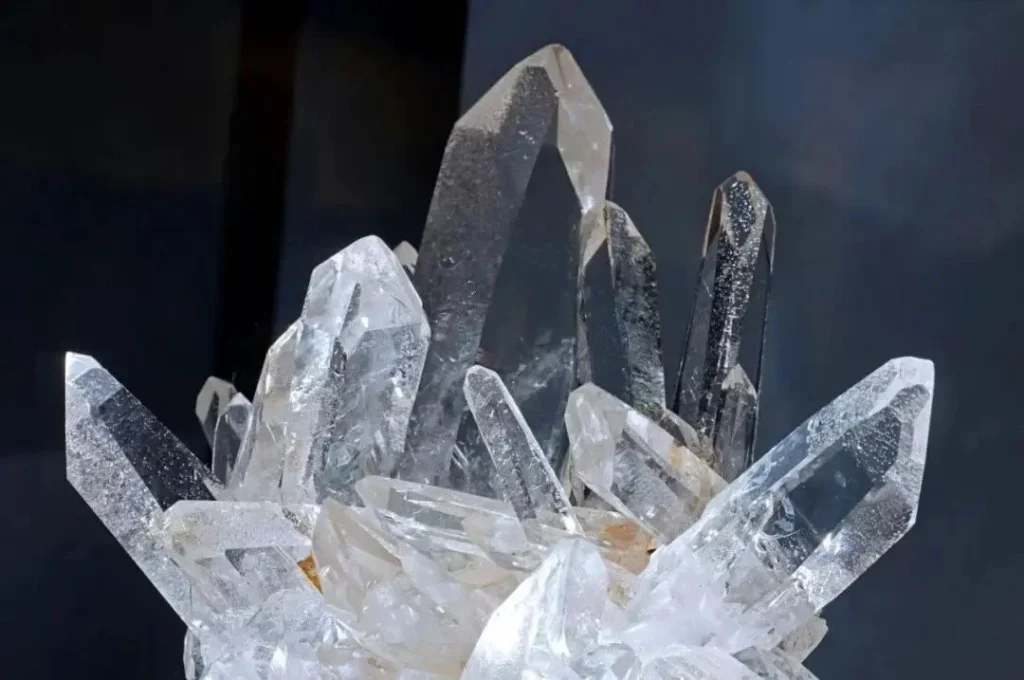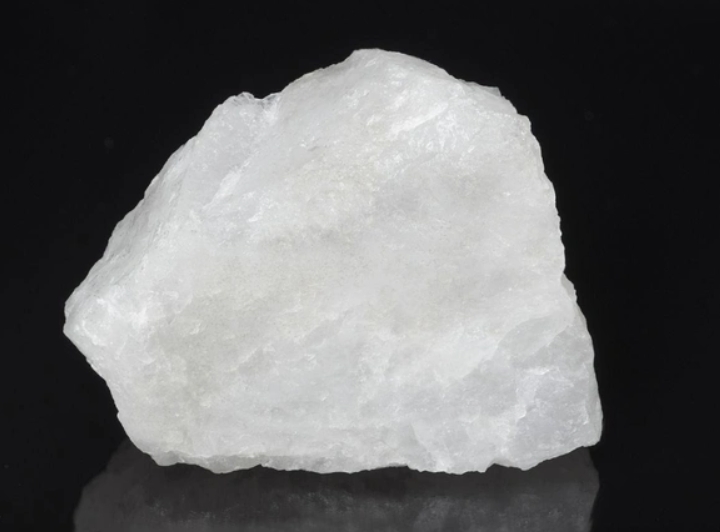
Unlike “soda ash, baking soda, washing soda, and hypo,” where each compound has its own distinct chemical formula, these silica powder materials all share the same primary chemical formula: SiO₂.
This is especially true for white carbon black and nano-silica, which are sometimes used interchangeably or confused with one another in practice. However, equating them directly is scientifically inaccurate.
Today, let’s explore the true relationships and key distinctions among silica powder, white carbon black, and nano-silica.
I. Core Concepts
1. Silica Powder
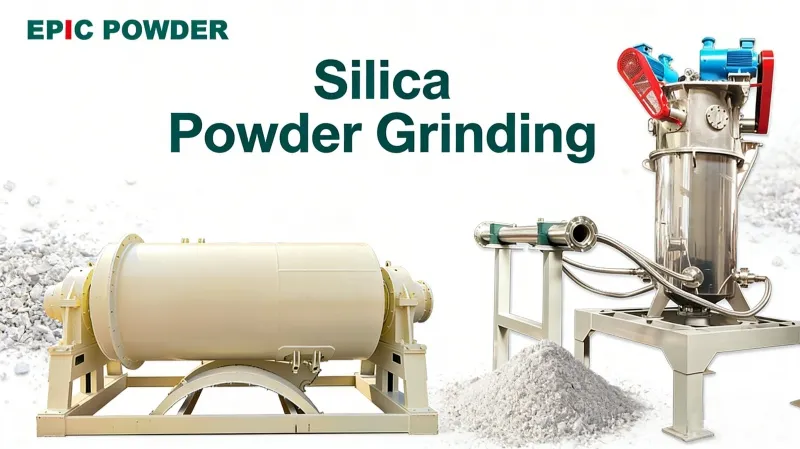
Silica powder is a general term for fine powders processed from natural quartz (SiO₂) or fused quartz (an amorphous form of SiO₂ created by melting natural quartz at high temperatures and cooling it).
It is produced through multiple processing steps:
- Crushing and ball milling (or vibration / air-jet milling)
- Flotation
- Acid-leaching purification
- High-purity water treatment
2. White Carbon Black
White carbon black is a general term for amorphous silicic acid and silicate products. It earned this name in the rubber industry because its reinforcing effect is similar to that of traditional carbon black.
- Chemical Formula: Generally expressed as SiO₂·nH₂O, where nH₂O exists in the form of surface hydroxyl groups.
- Appearance: A white, odorless, non-toxic, amorphous granular solid.
3. Nano-Silica
Nano-silica refers to ultrafine silica particles with particle sizes on the nanometer scale (less than 100 nm).
- Appearance & Nature: An amorphous, white, odorless, non-toxic powder.
- Surface Properties: It is a functional nanomaterial with hydrophilic hydroxyl groups adsorbed on its surface.
Summary of Concepts
All three materials consist primarily of SiO₂.
However, “white carbon black” covers a broader scope. Beyond precipitated silica, fumed silica, and ultrafine silica gel, it also includes powdered aluminum silicate and calcium silicate. In most cases, its chemical structure is represented as SiO₂·nH₂O, with surface hydroxyl groups.
II. Material & Atomic Structure
1. Silica Powder
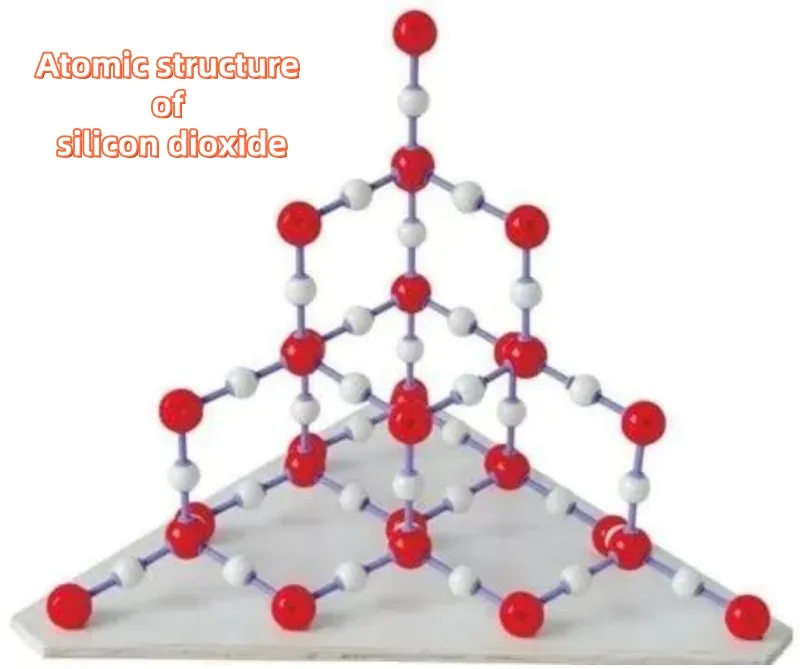
Silicon dioxide exists in two structural forms: crystalline and amorphous. Because “silica powder” is an umbrella term, it includes both forms. Its underlying framework is a 3D network built from silicon-oxygen tetrahedra (SiO4).
2. White Carbon Black
White carbon black consists of amorphous silica particles with a branched aggregate structure. It also shares a 3D spatial tetrahedral network made of silicon and oxygen.
- Bonding: Oxygen atoms sit at the vertices while silicon atoms occupy the center. Each vertex oxygen atom is shared with adjacent tetrahedra. This arrangement keeps the SiO₂ structure electrically neutral.
- Surface Hydroxyls: The surface features three distinct types of hydroxyl groups:
- Siloxane Groups: Present on dehydrated surfaces. These groups remain stable and are difficult to remove even as temperatures rise.
- Isolated Hydroxyls: Contain positively charged hydrogen atoms. These atoms readily form hydrogen bonds with electronegative atoms.
- Adjacent (Vicinal) Hydroxyls: Highly reactive toward polar substances. They easily form hydrogen bonds with one another.
3. Nano-Silica
Nano-silica appears as an amorphous white powder containing quasi-spherical particles organized in flocking or network structures.
- Microstructure: Particles are nearly spherical.
- Surface Energy: Particle surfaces contain unsaturated residual bonds and hydroxyl groups in various bonding states.
- Molecular Arrangement: Forms a three-dimensional chain-like network.
III. Key Properties
1. Silica Powder
- Superior Electrical Insulation: High chemical purity and low impurity content provide excellent electrical insulation and arc resistance in cured materials.
- Stress & Thermal Control: Lowers the peak exothermic temperature during epoxy curing. It reduces the linear thermal expansion coefficient and cure shrinkage, preventing thermal stress and cracking.
- Corrosion Resistance: Highly unreactive. It does not react with most acids or bases. Uniform surface coverage provides robust corrosion protection.
- Optimized Particle Distribution: Balanced particle size distribution minimizes settling and phase separation. It boosts tensile and compressive strength, enhances wear resistance, increases thermal conductivity, and adds flame retardancy.
- Excellent Resin Compatibility: When treated with silane coupling agents, it shows excellent resin wet-out, high adsorption, easy mixing, and no clumping.
- Cost Efficiency: Used as a functional filler in organic resins, it improves material performance while lowering overall manufacturing costs.
2. White Carbon Black
White carbon black is a porous material with high chemical stability. It is non-flammable, heat-resistant, odorless, and non-toxic, with strong electrical insulation properties. Its aggregate morphology and microstructure closely resemble those of carbon black. It is widely used as a reinforcing agent in rubber, as well as a dispersant and chemical carrier.
3. Nano-Silica
Nano-silica is a non-toxic, odorless, and pollution-free inorganic non-metallic material with ultrafine particles (0–100nm).
- Optical & Surface Properties: It features a high specific surface area and strongly reflects ultraviolet, infrared, and visible light.
- Nanoscale Effects: Due to volume effects and quantum tunneling, nano-silica exhibits strong percolation behavior.
- Polymer Reinforcement: It forms 3D spatial networks with organic polymer molecules. This dramatically improves the mechanical strength, toughness, wear resistance, and aging resistance of composite materials.
IV. Classification
1. Silica Powder
- By Application:
- Standard Grade (PG)
- Electrical Grade (DG)
- Electronic Grade (JG)
- By Particle Shape:
- Angular Silica Powder
- Spherical Silica Powder
- By Raw Material & Processing:
- Crystalline Silica Powder: Produced by directly milling quartz ore or silica rock.
- Fused Silica Powder (RG): Produced by milling fused (melted) quartz.
- Surface-Modified Varieties: Organic surface modification yields Standard Active (PGH), Electrical Active (DGH), Electronic Crystalline Active (JGH), Electronic Fused Active (RGH), and Spherical Active Silica Powders.
2. White Carbon Black
Categorized by manufacturing method:
- Precipitated Silica (Precipitated White Carbon Black)
- Fumed Silica (Pyrogenic White Carbon Black)
- Non-Metallic Mineral-Derived Silica
- Plant-Derived Silica (e.g., extracted from rice husks or grass crops)
3. Nano-Silica
Categorized by production method:
- Physical Methods
- Chemical Methods: Including Chemical Vapor Deposition (CVD), Precipitation, Sol-Gel, Microemulsion, and Solid-State Reaction methods.
V. Applications

1. Silica Powder & White Carbon Black
| Application Field | Primary Function & Uses |
| Rubber | Acts as a cross-linking agent and reinforcing filler to improve strength. |
| Paints & Coatings | Functions as a thickener, thixotropic agent, dispersant, flow-control agent, and anti-settling agent. Enhances color brightness and transparency. |
| Plastics | Increases mechanical strength and toughness. Significantly improves water resistance and aging resistance. |
| Agriculture | Serves as an ideal carrier for pharmaceuticals and pesticides. High liquid absorption capacity allows it to carry liquid insecticides efficiently. |
| Daily Chemicals | Used as a mild abrasive in toothpaste due to its physical stability and compatibility. Effectively cleans teeth and removes stains. |
| Papermaking | Improves paper whiteness and reduces overall paper weight, making paper suitable for high-speed printing. |
2. Nano-Silica
| Application Field | Primary Function & Uses |
| Rubber | Enhances structural strength, wear resistance, and anti-aging properties. |
| Plastics | Increases plastic density, improving overall aging resistance and chemical resistance. |
| Coatings | Substantially boosts coating adhesion to walls. Significantly increases film hardness and improves surface self-cleaning performance. |
| Medical, Construction & Appliances | Serves as a carrier substrate for bactericides and antimicrobial agents. |
| Optics | Used in advanced optical fibers to effectively minimize light energy loss. |
| Catalysts | Serves as a catalyst support due to its high specific surface area and chemical stability. |
| Sensors | Functions as a supporting substrate for constructing biosensors with specific recognition capabilities due to its high biocompatibility. |
| Glass | Enhances shielding against ultraviolet (UV) and infrared (IR) radiation. |
| Ceramics | Boosts the mechanical strength and elasticity of ceramic bodies. |
| Electronics | Provides toughening, densification, and strength enhancement during electronic assembly and encapsulation. |
VI. Summary & Key Takeaways
While silica powder, white carbon black, and nano-silica differ in their precise definitions, they remain closely related:
- Chemical Composition: All three consist primarily of SiO₂. However, white carbon black is usually expressed as SiO₂·nH₂O, where water exists as surface hydroxyl groups.
- Atomic Structure: All three feature silicon-oxygen tetrahedral networks. At the microscopic level, white carbon black contains three distinct types of surface hydroxyl groups.
- Physical & Chemical Properties: All three are white, odorless powders with high specific surface areas, excellent electrical insulation, and high chemical stability.
- Overlapping Applications: All three are extensively used in rubber, ceramics, plastics, and coatings. Notably, white carbon black serves as an essential substitute for carbon black in rubber manufacturing.

“Thanks for reading. I hope my article helps. Please leave a comment down below. You may also contact Zelda online customer representative for any further inquiries.”
— Posted by Emily Chen