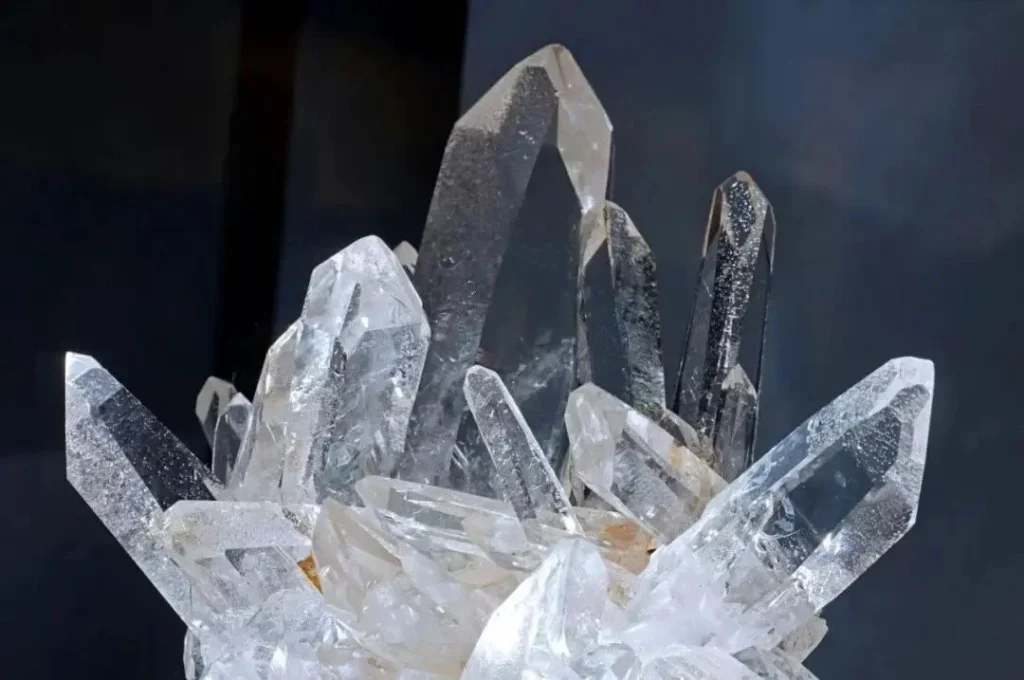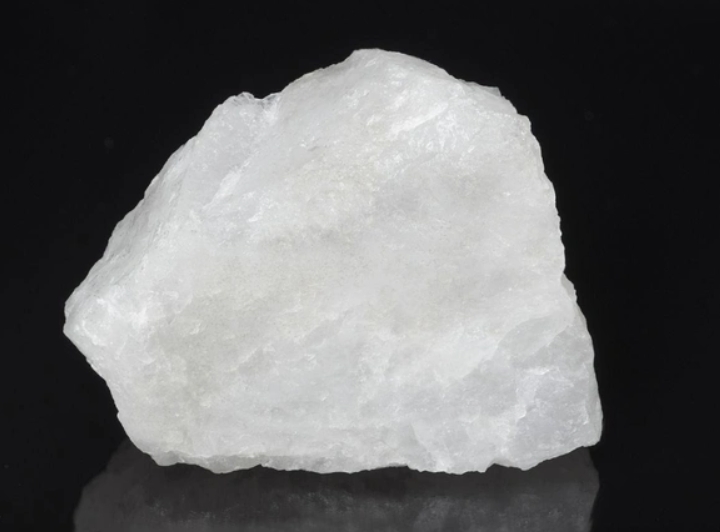
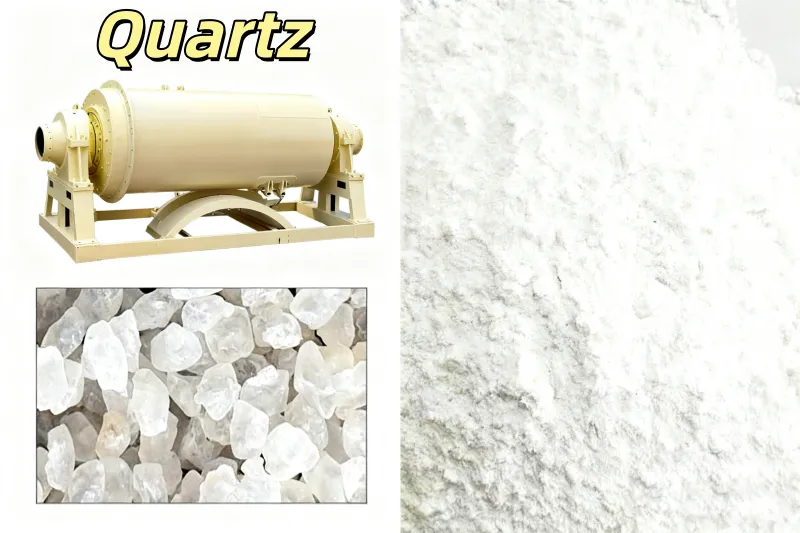
Quartz sand is an essential industrial mineral raw material with a remarkably broad range of applications. It can be found across numerous industries, including glass, casting, ceramics, refractory materials, metallurgy, construction, chemicals, plastics, rubber, and abrasives.
Beyond these, high-end quartz sand plays a pivotal role in high-tech fields such as electronic information, optical fibers, and photovoltaics, as well as in national defense, military industries, and aerospace. It is truly a case of tiny sand grains supporting massive industries.
What categories does quartz sand fall into today? How well do you know these different types?
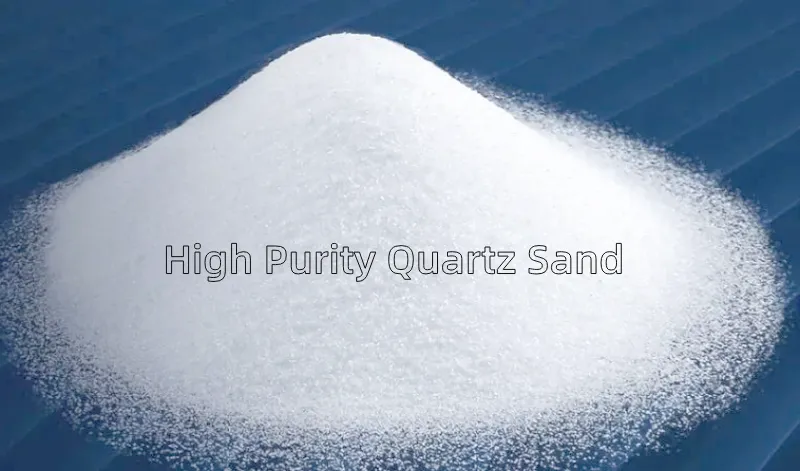
1. Quartz Sand by Particle Size Specification
Common specifications for quartz sand include: 0.5–1.0 mm, 1.0–2.0 mm, 2.0–4.0 mm, 4.0–8.0 mm, 8.0–16 mm, 16–32 mm, 10–20 mesh, 20–40 mesh, 40–80 mesh, 80–120 mesh, 100–200 mesh, 200 mesh, and 325 mesh.
The “mesh count” refers to particle size or coarseness. It is defined by the number of holes per square inch of a mesh screen through which the sand can pass. A higher mesh count indicates finer sand particles. Conversely, a lower mesh count means coarser particles.
Quartz sand of different specifications offers distinct performance characteristics and uses:
- Coarser Quartz Sand (e.g., 4–8 mm): Typically used in industrial manufacturing and metal casting.
- Finer Quartz Sand (e.g., 80–120 mesh): Better suited for applications requiring fine processing, such as wall mortar, where it helps increase adhesion and ductility.
2. Quartz Sand by Quality Grade
To be classified as quartz sand, the material generally must contain at least 98.5% silicon dioxide (SiO2). Raw materials with an SiO2 content below 98.5% are usually referred to simply as silica stone.
Through years of industrial development, quartz sand is now commonly categorized into five main grades: ordinary quartz sand, refined quartz sand, high-purity quartz sand, fused quartz sand, and silica powder (silica flour).
Ordinary Quartz Sand
Ordinary quartz sand is produced from natural quartz ore. It undergoes crushing, water washing, drying, and secondary screening. It is primarily used as a filter material for water treatment.
Technical Specifications:
- SiO2 ≥90%- 99%
- Fe2O3 ≤ 0.06%- 0.02%
Key Features & Applications:
This material features smooth edges without sharp angles, high density, and strong mechanical strength. It also delivers high dirt-holding capacity and a long service life, making it an ideal choice for chemical water treatment. Additionally, it is widely used in metallurgy, silicon carbide processing, glass and glassware manufacturing, enamel, cast steel, sodium silicate (water glass) production, chemical manufacturing, and sandblasting.
Refined Quartz Sands
Refined quartz sand is a premium material known for its high purity and versatile functionality.
Technical Specifications:
- SiO2 ≥90%- 99.5%
- Fe2O3 ≤ 0.005%
Key Features & Applications:
Made from selected natural quartz sand through meticulous processing, it provides high transparency and structural strength for glass manufacturing. It is also extensively used in refractory materials, ferrosilicon smelting, metallurgical fluxes, ceramics, abrasives, and foundry moulding. In construction, refined quartz sand is used to produce acid-resistant concrete and mortar due to its strong resistance to acid erosion. Industry professionals often refer to refined quartz sand as acid-washed quartz sand.
High-Purity Quartz Sands
High-purity quartz sand is processed from high-grade quartz stone using advanced techniques. Although there is no unified industry standard yet, high-purity quartz sand generally refers to ultra-pure materials with:
- SiO2≥ 99.95% (or higher)
- Fe2O3 < 0.0001%
- Al2O3 < 0.01%
Applications in High-Tech Sectors:
- Electric Light Sources: High light transmittance and stability make it a key raw material for high-quality lamps.
- Optical Fiber Communications: Excellent optical transmission properties ensure stable signal transmission.
- Solar Cells & Semiconductor ICs: Extremely high purity directly determines product performance and reliability.
- Precision Optics & Medical Glassware: High transparency and chemical stability guarantee overall product quality.
- Aerospace: High temperature and corrosion resistance make it an indispensable structural and protective material.
Silica Powder (Silica Flour)
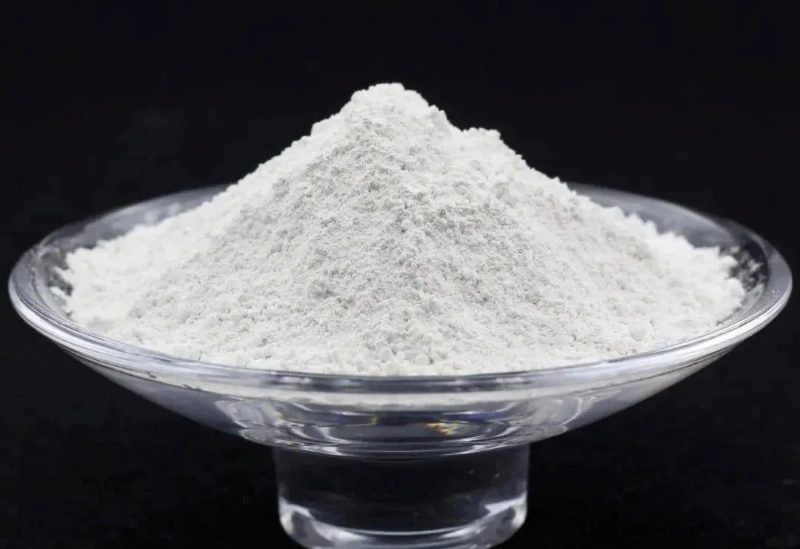
Silica powder is an inorganic, non-metallic micro-powder made from crystalline or fused quartz. It undergoes fine grinding, precision classification, impurity removal, and high-temperature spheroidization.
Key Features:
- Non-toxic, odorless, and pollution-free.
- High heat resistance and high electrical insulation.
- Low coefficient of thermal expansion.
- Excellent thermal conductivity.
Applications:
It serves as a vital functional filler in copper-clad laminates (CCL), epoxy molding compounds (EMC), and electrical insulation materials.
Fused Quartz Sands
Fused quartz sand is an amorphous (glassy) form of SiO2. It is produced by melting selected high-purity silica (SiO2 > 99%) in an electric arc or resistance furnace at temperatures between 1,695°C and 1,720°C.
Because the viscosity of SiO2 melt is extremely high (10^Pa.s at 1,900°C), it cannot be formed by traditional casting. Upon cooling, it forms a glassy block, which is then mechanically processed, magnetically separated, purified, and screened into granular fused quartz sand of various sizes.
Key Features & Applications:
Fused quartz sand offers excellent thermal stability, high purity, stable chemical properties, uniform particle distribution, and a thermal expansion coefficient close to zero. It is used as a functional filler in coatings and chemicals, as well as a core raw material in epoxy resin casting, electronic encapsulants, foundry molds, refractories, ceramics, and specialty glass.
3. Quartz Sand by Industrial Purpose
Low-Iron Sand for Photovoltaic (PV) Glass
PV glass serves as the protective front panel for solar modules and interacts directly with the environment. Its weather resistance, strength, and light transmittance directly affect the lifespan and power efficiency of solar panels. Because iron ions easily discolor glass, PV glass requires extremely low iron content to maintain high solar transmittance. This demands the use of low-iron quartz sand with high silicon purity and minimal impurities.
High-Purity Quartz Sands for Photovoltaics
High-purity quartz sand is essential for manufacturing PV-grade quartz devices. These include quartz ceramic crucibles used for silicon ingot casting, as well as quartz boats, furnace tubes, and boat holders used in oxidation, diffusion, and PECVD processes.
Among these, quartz crucibles (both square crucibles for polycrystalline silicon and round crucibles for monocrystalline silicon) are consumable components in crystal pulling. They represent the largest source of quartz demand in the PV industry, and high-purity quartz sand is their primary raw material.
Quartz Sands for Engineered Stone (Slabs)
Engineered quartz stone is scratch-resistant, heat-resistant, corrosion-resistant, durable, and highly versatile. It has become a benchmark product in decorative materials and a top choice for home renovation.
Slabs are typically composed of 95%–99% quartz sand or powder bound with resin, pigments, and additives. The quality of the quartz directly impacts slab performance. Raw materials are derived from high-quality vein quartz or quartzite via crushing, screening, and magnetic separation.
- Coarse Quartz Sand/Powder (5–100 mesh): Used as aggregate, requiring an SiO2 content ≥ 98%.
- Fine Quartz Powder (320–2,500 mesh): Used for filling and structural reinforcement.
- Strict requirements are enforced for hardness, color, impurity levels, moisture content, and whiteness.
Foundry Sand
Due to its high refractoriness, hardness, and excellent processing traits, quartz sand is widely used in metal casting. It is suitable for traditional clay-bonded sand molding as well as advanced processes like resin-bonded sand and shell molding.
- Washed Sand: Natural silica sand processed by water washing and grading for foundry use.
- Scrubbed Sand: Natural silica sand produced via scrubbing, water washing, grading, and drying, with a mud content below 0.5%.
- Dried Sand: Produced from scrubbed sand washed multiple times using deep groundwater, then dried at 300°C–450°C. It features low moisture and minimal impurities, making it ideal for high-grade coated sand, chemicals, coatings, abrasives, and electronics.
- Coated Sand (Resin-Coated Sand): Scrubbed sand whose surface is coated with a thin film of phenolic resin.
4. Key Advantages of Quartz Sands
Quartz sand is a hard, wear-resistant, and chemically stable silicate mineral.
- Excellent Chemical Stability: It strongly resists acid and alkali corrosion. It maintains its structural and chemical integrity across harsh environments, making it suitable for acid/alkali-resistant containers, pipeline linings, or mortar layers in the chemical and metallurgical industries.
- High Hardness: With a Mohs hardness of up to 7, it offers exceptional wear resistance. It is widely used in abrasives and sandblasting to remove rust from metal surfaces or grind glass, significantly improving efficiency and quality.
- High Temperature Resistance: Featuring a melting point as high as 1,750°C, it withstands extreme heat. It is an ideal material for refractories, such as glass furnace linings and ceramic saggers.
- Good Electrical Insulation: It functions as a superior insulating material. It is applied in integrated circuit packaging and wire/cable insulation, effectively preventing current leakage and short circuits.
- Cost-Effectiveness: Abundant natural reserves and mature extraction and processing technologies make quartz sand an economical and practical solution across many industries.

“Thanks for reading. I hope my article helps. Please leave a comment down below. You may also contact Zelda online customer representative for any further inquiries.”
— Posted by Emily Chen