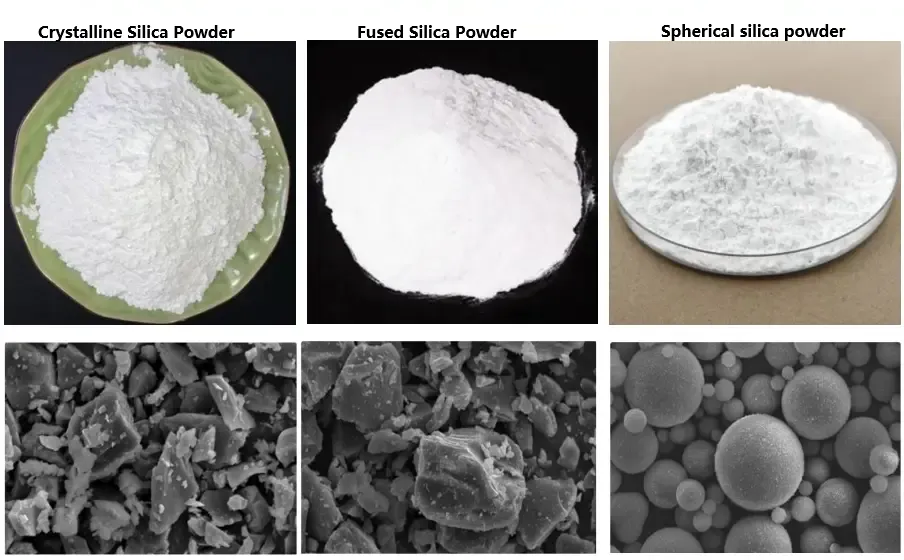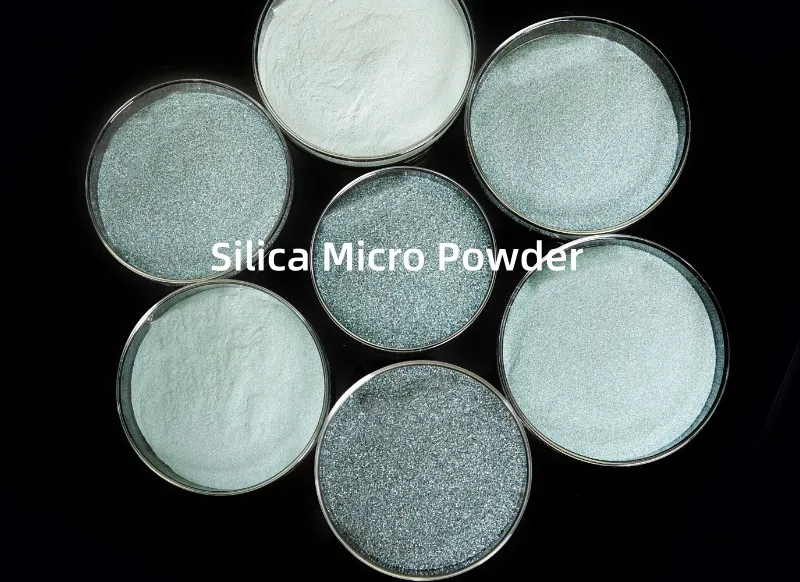
Silicon micropowder (also known as silicon powder or ultrafine silica powder) is a high-performance inorganic non-metallic powder material. It is widely used in electronic packaging, coatings, rubber, ceramics, and other industries due to its excellent physicochemical properties, such as high purity, high specific surface area, good dispersibility, and thermal stability. The core of silicon micropowder processing lies in the selection of grinding equipment and process optimization. This is because its parent mineral (such as quartz) has high hardness and tends to agglomerate, making grinding difficult.
This article adopts a Q&A format. It systematically addresses key issues in silicon micropowder processing by combining powder characteristics and grinding equipment considerations.
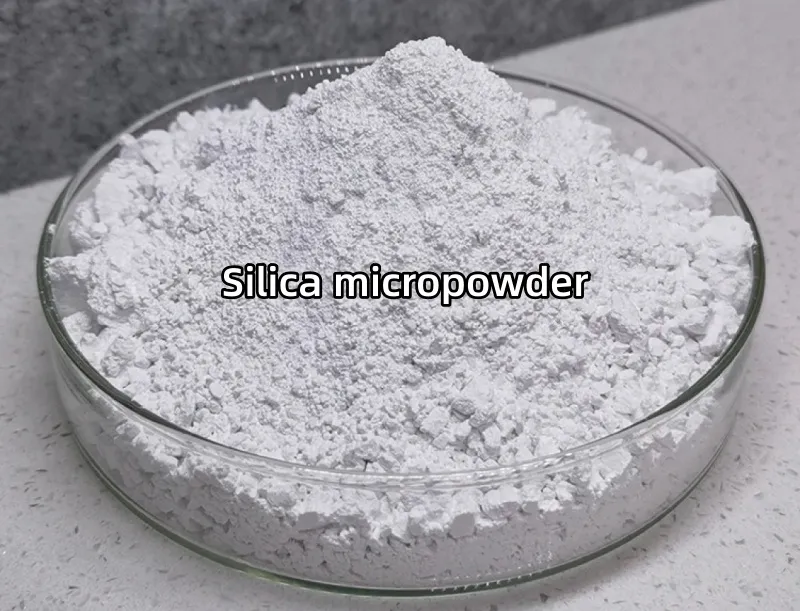
Q1: What is silicon micropowder? How is it different from ordinary quartz powder?
A: Silicon micropowder refers to ultrafine powder produced from natural quartz ore or synthetic silica. It is obtained through fine grinding and classification processes. Its typical particle size ranges from d50 = 0.1–10 μm (approximately 1250–8000 mesh). The SiO₂ content is ≥99%.
It is classified as a functional powder material. It features high specific surface area (up to 20–300 m²/g), low thermal expansion coefficient, and excellent dielectric properties.
Compared with ordinary quartz powder (particle size usually >10 μm and SiO₂ content 90%–99%), the main differences are:
- Fineness and uniformity: Silicon micropowder is finer and more uniform. It disperses more easily in matrix materials and enhances the mechanical properties of composites.
- Purity requirements: Silicon micropowder often needs to reach 99.9%–99.99% high-purity grades. This avoids impurities such as Fe and Al that may affect electronic-grade applications.
- Application fields: Ordinary quartz powder is mainly used as construction filler or glass raw material. Silicon micropowder is used in high-end fields such as chip encapsulation adhesives, 5G antenna substrates, and lithium battery anode coatings.
In summary, silicon micropowder is a “high-end player” in powder engineering. Its processing emphasizes ultrafine grinding and high purification.
Q2: Why is silicon micropowder particularly difficult to grind into ultrafine powder?
A: The parent quartz mineral has high hardness (Mohs hardness 7). It is a brittle material. However, grinding difficulty arises from multiple factors.
First, quartz has a dense crystal structure. When particles are refined to submicron levels, a “grinding limit” phenomenon occurs. Further size reduction requires extremely high energy input. At the same time, static electricity is generated, leading to agglomeration.
Second, impurities may be introduced during grinding. Wear of grinding media can release metal ions. Fe < 50 ppm is a common requirement.
Third, silicon micropowder has a large specific surface area and high surface energy. It easily absorbs moisture or reacts with air, forming hydrogen-bonded agglomerates. This affects flowability and dispersibility.
From a powder mechanics perspective, silicon micropowder has a Young’s modulus of 70–100 GPa. Its Bond work index is high and requires more than 100 kWh/t of energy. This is much higher than soft powders such as calcium carbonate.
Industry data in 2026 show that processing silicon micropowder with d50 < 1 μm consumes 3–5 times more energy than ordinary powders. The final product yield is only 70%–85%.
Solutions include optimizing equipment and additives. Wet processes combined with dispersants (such as polycarboxylates) can effectively reduce agglomeration.
Q3: What grinding equipment is commonly used in industrial silicon micropowder production?
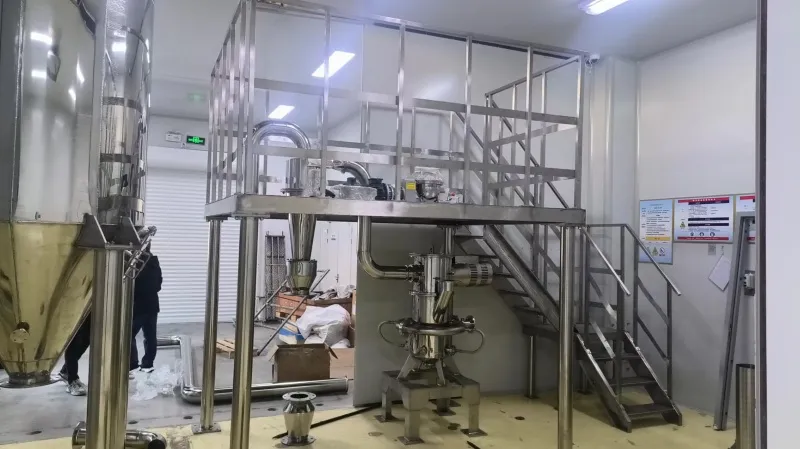
According to fineness (from coarse to ultrafine) and purity requirements, grinding equipment can be divided into three categories: mechanical impact type, media stirring type, and jet milling type.
Mechanical Impact Equipment (for medium-coarse silicon micropowder, d50 = 5–50 μm)
- Raymond mill / Pendulum mill: Low investment (single unit < RMB 500,000). Large capacity (5–20 t/h). However, fineness is limited to below 1250 mesh. Contamination is more likely. Suitable for low-end coating-grade silicon micropowder.
- Vertical roller mill (VRM): Lower energy consumption (20%–30% less than Raymond mill). Integrated classification. Suitable for 400–1250 mesh electronic filler grade. In 2026, upgraded VRMs include online monitoring systems.
Media Stirring Equipment (for ultrafine silicon micropowder, d50 = 0.5–5 μm)
- Ball mill (wet/dry): A classic piece of equipment. Wet ball mill combined with classifier can reach 2000 mesh. Cost is moderate. Dry milling easily causes contamination. High-purity silicon micropowder typically uses wet milling with high-purity media (e.g., zirconia balls).
- Stirred mill / Sand mill (horizontal/vertical): High power density (>2 kW/L). Fineness can reach d50 = 0.2 μm. Suitable for photovoltaic-grade silicon micropowder. Advantage: continuous production. Capacity 1–10 t/h.
Jet Mill Equipment (for extremely fine silicon micropowder, d50 < 1 μm)
- Fluidized bed opposed jet mill: No mechanical wear. Highest purity (impurities < 10 ppm). Narrow particle size distribution. However, energy consumption is high (>500 kWh/t). Suitable for semiconductor-grade small-batch production.
Overall, in 2026, most silicon micropowder production lines adopt a combined process: “coarse grinding + fine grinding + ultrafine grinding.” For example, VRM pre-grinding + stirred mill fine grinding + jet mill final grinding. This balances cost and quality.
Q4: Comparison of Raymond mill, vertical mill, and ball mill. Which has the best cost-performance ratio?
These three are the traditional mainstream grinding machines. When processing silicon micropowder (target fineness 800–2000 mesh), their performance can be compared as follows:
- Raymond Mill
- Advantages: Simple structure, easy maintenance, low investment (< RMB 300,000 per set), large capacity (3–15 t/h).
- Disadvantages: Fineness limited (<1250 mesh), high wear, iron contamination likely, more dust.
- Cost-performance: High for entry-level and low-purity silicon micropowder.
- Vertical Roller Mill
- Advantages: Low energy consumption (20–30 kWh/t), integrated classification, small footprint, high automation.
- Disadvantages: Medium initial investment (RMB 500,000–1,000,000), sensitive to moisture, requires professional maintenance.
- Cost-performance: Highest. Mainstream choice for mid-to-high-end silicon micropowder. ROI < 2 years.
- Ball Mill
- Advantages: Flexible fineness (wet process up to 3000 mesh), strong adaptability, grinding aids can reduce energy consumption.
- Disadvantages: High energy consumption (40–60 kWh/t), severe media contamination, batch production efficiency low.
- Cost-performance: Medium. Requires upgraded media for high-purity needs.
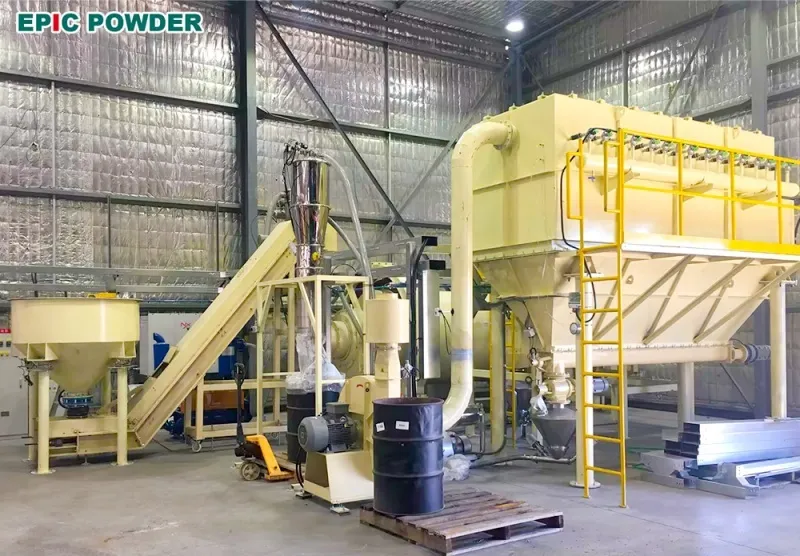
The vertical roller mill offers the best overall cost-performance ratio. In 2026, with variable frequency control and AI load management, energy consumption can be further reduced by 10%–15%.
For medium-sized plants (>5000 tons/year), VRM is preferred. For small plants or laboratories, Raymond mill is more economical. Ball mills are suitable for wet high-fineness scenarios.
Q5: What are the advantages and limitations of jet mills in silicon micropowder processing? When should they be prioritized?
Advantages:
- Purity guarantee: No mechanical wear. Only high-speed airflow collision. Impurity introduction < 5 ppm.
- Fineness and distribution: Easily achieve d97 < 1 μm. Narrow distribution (Span < 1.5).
- Low-temperature operation: Grinding temperature < 50°C. Suitable for heat-sensitive powders.
Limitations:
- High energy consumption: 500–1000 kWh/t. 3–5 times higher than stirred mills.
- Low capacity: Single unit < 1 t/h.
- High investment: Equipment + compressed air system > RMB 2 million. Requires professional maintenance.
Jet mills are preferred in high-end applications such as chip-grade silicon micropowder or artificial crystal raw materials, where purity is the top priority.
In 2026, hybrid jet mills (gas + additives) are emerging. Energy consumption is reduced by 20%.
Q6: What are the five common problems in silicon micropowder grinding and their solutions?
- Impurity contamination: From media wear.
- Solution: Use silicon nitride or zirconia media. Adopt wet process. Follow with flotation or acid washing (HCl/HF mixture).
- Agglomeration: Due to high surface energy of fine particles.
- Solution: Add dispersants (0.5%–1% sodium hexametaphosphate). Use high-shear dispersers or ultrasonic assistance.
- High energy consumption: Due to hard material properties.
- Solution: Add grinding aids (0.1%–0.3% alkanolamines). Reduce energy by 10%–20%. Optimize rotational speed with variable frequency control.
- Uneven particle size distribution:
- Solution: Use multi-stage classifiers (e.g., turbo type). Control d10/d90 ratio < 3.
- Equipment wear: Short liner lifespan.
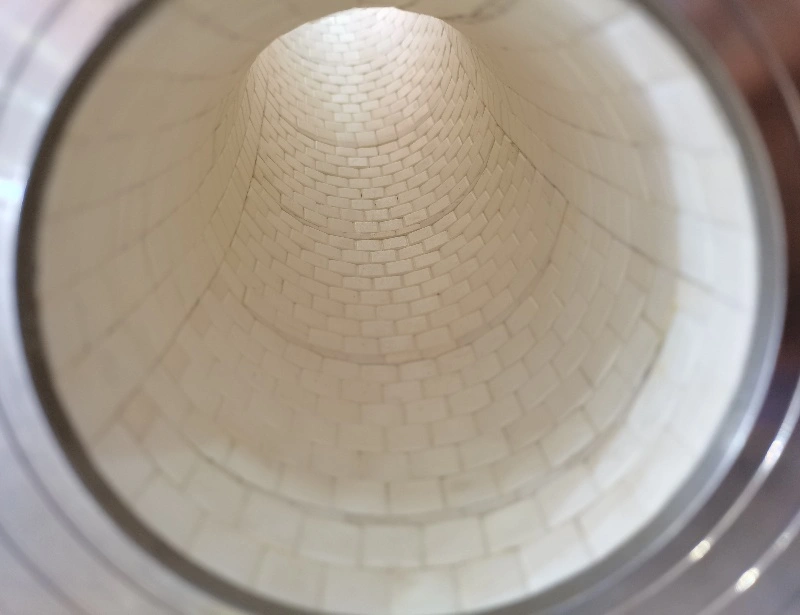
- Solution: Upgrade wear-resistant materials (polyurethane + ceramic composite). Apply AI predictive maintenance to reduce downtime by 30%.
These solutions have been standardized in intelligent production lines in 2026.
Q7: How does grinding equipment selection differ by application?
- Coating/Rubber grade (d50 = 5–10 μm, medium purity): Raymond mill or VRM. Cost-focused.
- Electronic packaging grade (d50 < 2 μm, high purity): Wet stirred mill + classifier. Emphasis on purity and distribution.
- Photovoltaic/Semiconductor grade (d50 < 1 μm, ultra-high purity): Jet mill or sand mill + impurity removal system. Purity prioritized.
- Lithium battery grade (spherical silicon micropowder): Requires spheroidization equipment, such as plasma spheroidization + stirred mill.
Differences arise from fineness and purity thresholds. High-end fields require double the equipment investment.
Q8: What are the development trends in silicon micropowder grinding technology from 2026–2030?
Over the next five years, silicon micropowder grinding will move toward intelligence, sustainability, and efficiency:
- Media innovation: Silicon nitride media will become mainstream. Wear reduced to 1/20. Purity improved.
- Process continuity: Transition from batch to continuous wet lines (e.g., sand mill + tubular classifier). Capacity doubled.
- AI integration: Real-time monitoring of particle size and energy consumption. Automatic parameter adjustment. Efficiency improved by 15%–20%.
- Green upgrades: Low-energy equipment + wastewater recycling. Compliance with carbon neutrality goals.
- Emerging equipment: Laser crushing or microwave-assisted grinding for sub-nanometer silicon micropowder.

“Thanks for reading. I hope my article helps. Please leave a comment down below. You may also contact Zelda online customer representative for any further inquiries.”
— Posted by Emily Chen