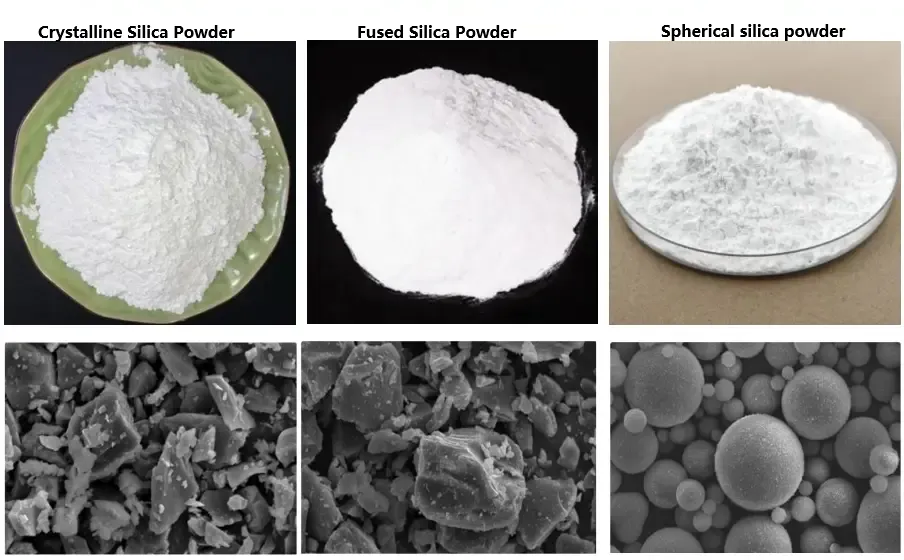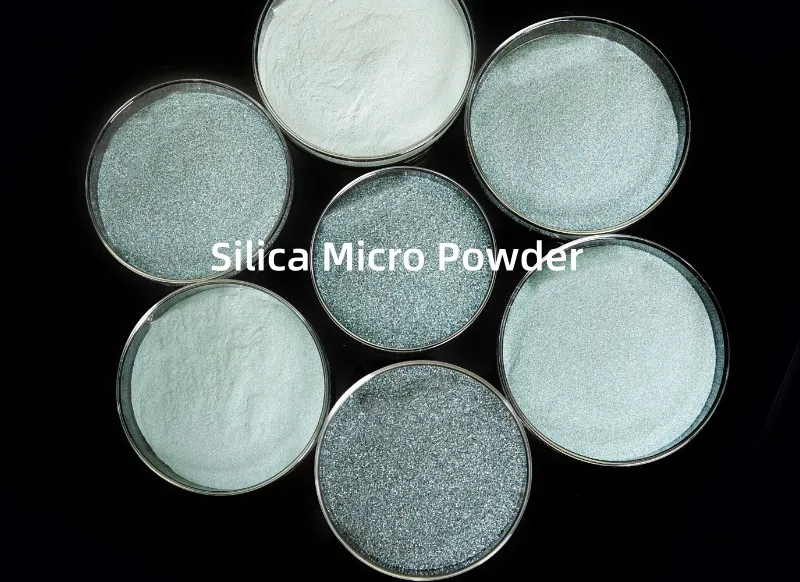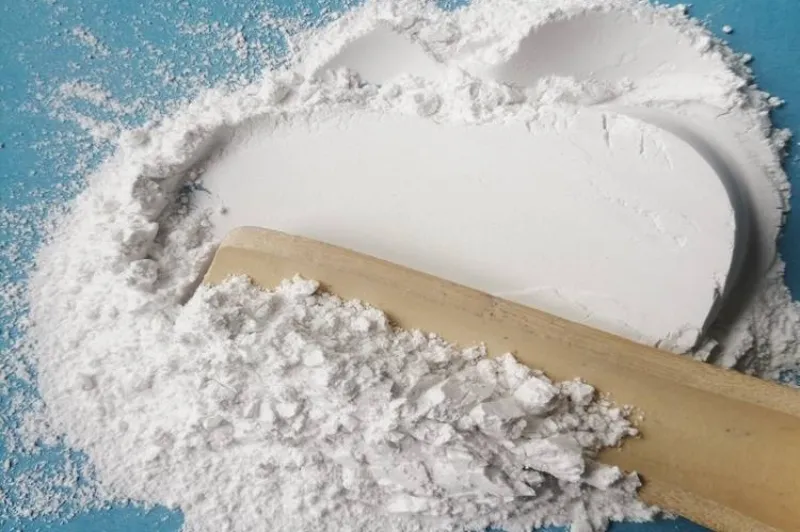

Silica micropowder is a high-performance inorganic non-metallic functional material. It is widely used in numerous fields, such as copper-clad laminates (CCL), epoxy molding compounds (EMC), and coatings. Other applications include paints, rubber, ceramics, cosmetics, drug delivery, and catalysis. The continuous advancement of technology is raising the quality requirements for silica micropowder. This is driven by the growing demands of downstream industries.
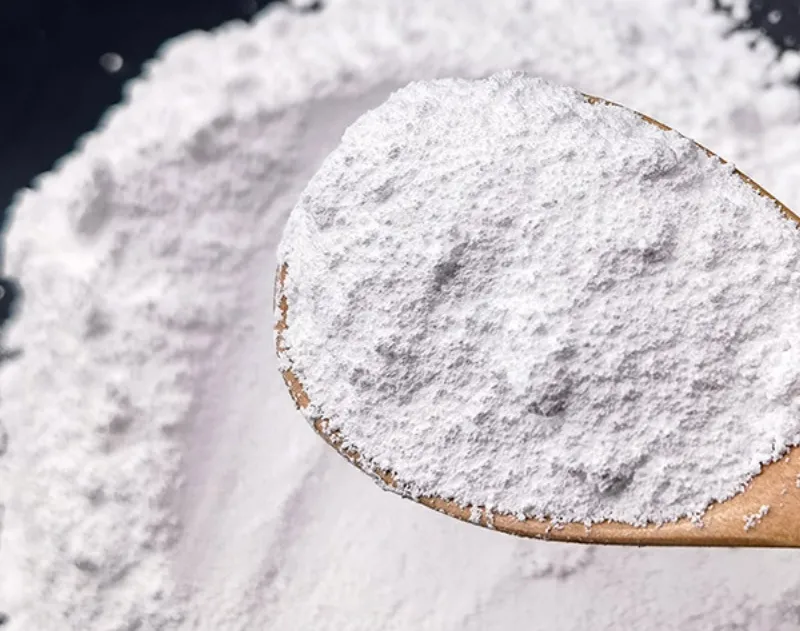
Silica Powder Demand Trend: Refinement
Silica micropowder is primarily prepared from natural quartz or fused quartz through a series of fine processing steps, including crushing, classification, grinding, magnetic separation, flotation, and acid washing. With the rapid development of high-tech industries such as electronics, 5G, semiconductors, and photovoltaics, the demand for silica micropowder is increasing day by day.
High-purity ultrafine silica micropowder, due to its small particle size, large specific surface area, high chemical purity, and excellent filling properties, exhibits superior stability, reinforcement, and thixotropy, significantly improving the material’s mechanical properties. Therefore, the ultrafine refinement and high-purification of silica micropowder represent the current trend in industry development. Specifically, as electronic products become thinner, lighter, and smaller, the silica powder fillers used in copper-clad laminates also require increasingly finer particles.
Ultrafine Grinding Technology and Equipment for Silica Powder
Ultrafine powders can be categorized into those prepared by chemical synthesis and those by physical pulverization. Chemical synthesis methods generally yield low output and have complex processes. The physical pulverization method offers advantages like low cost and simple processes, making it suitable for large-scale industrial production.
Pulverization methods can be further divided into dry process and wet process. The dry process roughly follows the sequence: feeding → grinding → classification → collection → packaging. The wet process roughly follows: feeding → grinding → drying → de-agglomeration → classification → collection → packaging. Dry process products are favored by most silica powder manufacturers due to their simpler process and lower production cost. The wet process is more complex and costly due to the required drying and de-agglomeration steps, so fewer companies adopt it; it is generally more suitable for products requiring a cut point below 5 microns and surface treatment.
In recent years, significant progress has been made in ultrafine grinding technology for silica micropowder, including methods such as mechanical grinding, jet milling, wet milling, and ultrasonic grinding. Common ultrafine grinding equipment includes jet mills, stirred media mills, vibration mills, and planetary ball mills.
Jet Mill Technology: The New Breakthrough Point for Ultrafine Silica Powder
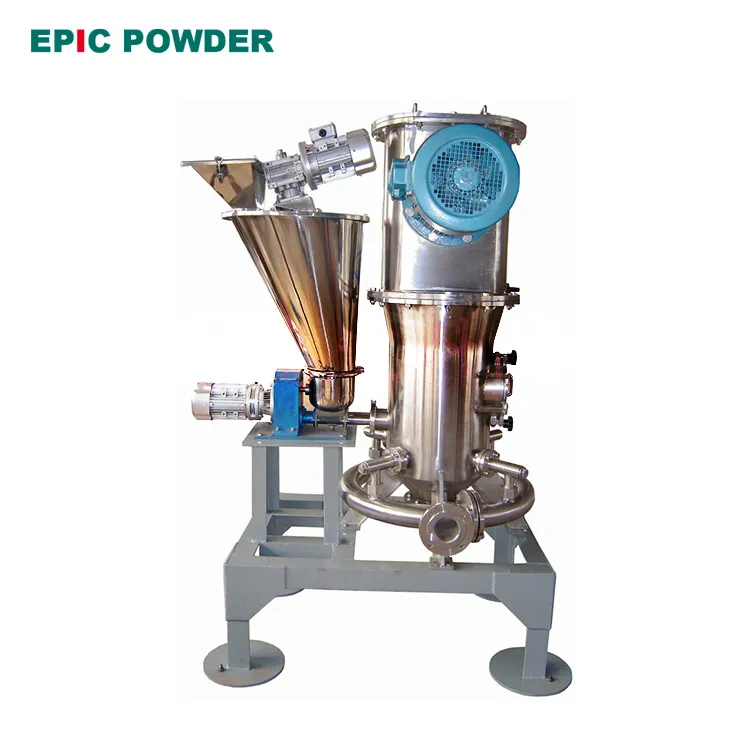
Quartz has high hardness and strong toughness. Consequently, traditional mechanical grinding results in high energy consumption and low capacity. It also easily introduces impurities, causing secondary contamination. In contrast, air jet milling technology is the ideal choice for preparing high-purity silica micropowder. Its unique working principle utilizes high-speed airflow to cause mutual particle collisions. This process produces silica micropowder with uniform particle size distribution and high purity. Jet milling technology also enhances the dispersibility and reaction activity of the powder. This makes it highly suitable for producing high-purity silica micropowder for electronic encapsulation.
Epic Powder
Looking ahead, innovation in ultrafine grinding will continue to drive the silica powder industry. Industry experts such as EPIC Powder Machinery play a key role in this progress. EPIC Powder specializes in advanced Jet Mill systems for high-purity silica. Its solutions minimize impurity introduction and eliminate secondary contamination. The company focuses on stable, precise, and efficient ultrafine grinding and modification. EPIC Powder’s Jet Mills and classification systems represent a core breakthrough for high-purity ultrafine silica production.
They meet the demanding standards of semiconductor and advanced electronics applications. Going forward, continuous exploration of clean and precise ultrafine grinding technologies will remain a top priority for the industry.