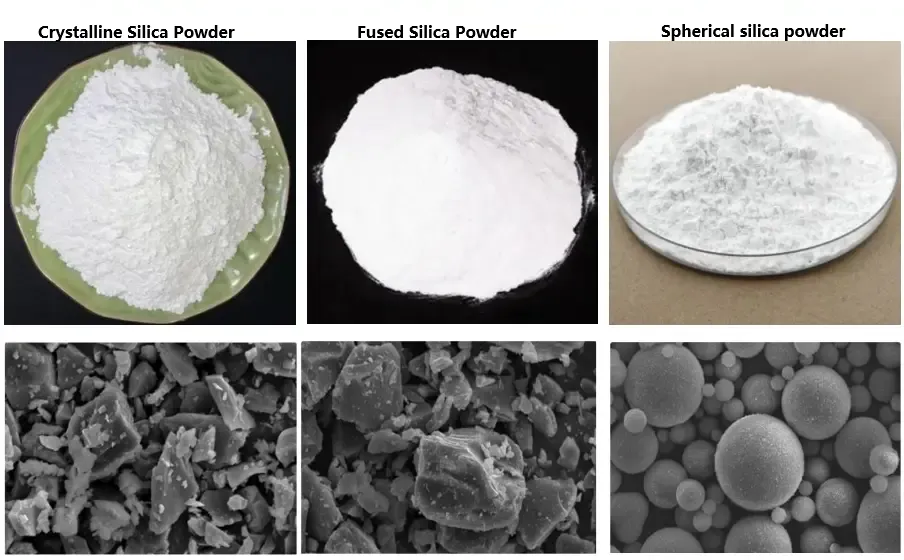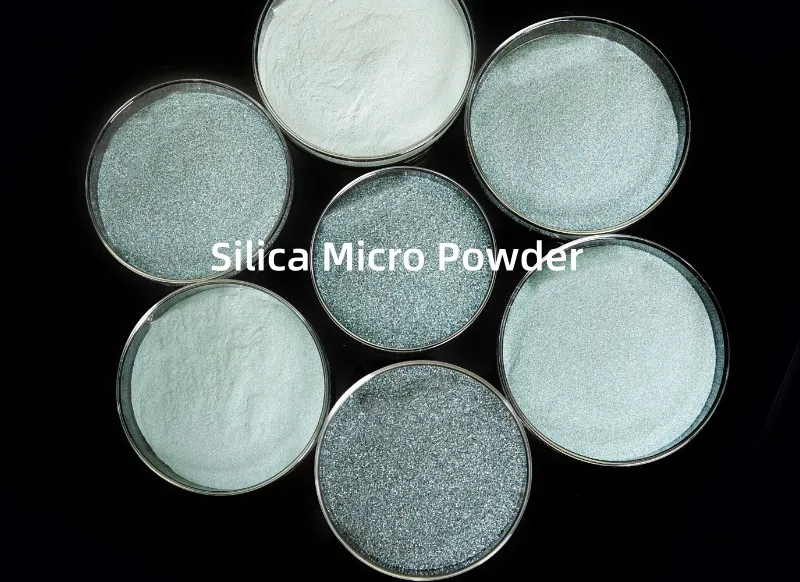
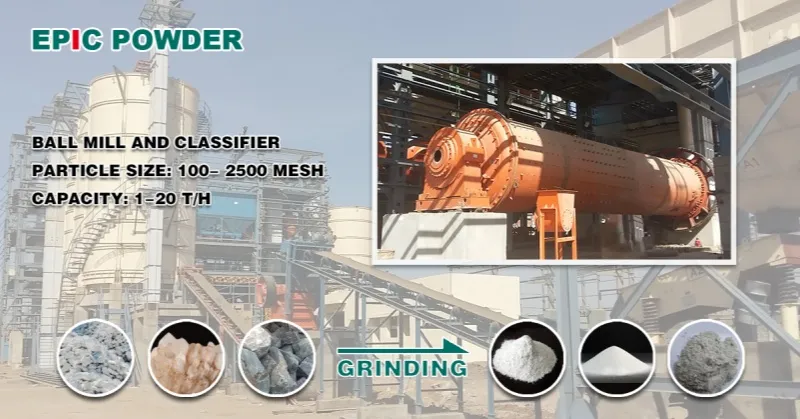
Quartz is a naturally hard and abrasive mineral with a Mohs hardness of 7 and high silica content. This makes it difficult to grind efficiently. In industries such as glassmaking, ceramics, foundries, and construction, achieving precise particle size and high purity is essential.
Among all grinding technologies, the ball mill remains the preferred choice for quartz powder processing. Although ring roller mills and Raymond mills are also available, ball mills offer superior performance and flexibility.
What Determines the Ideal Mill for Quartz Powder?
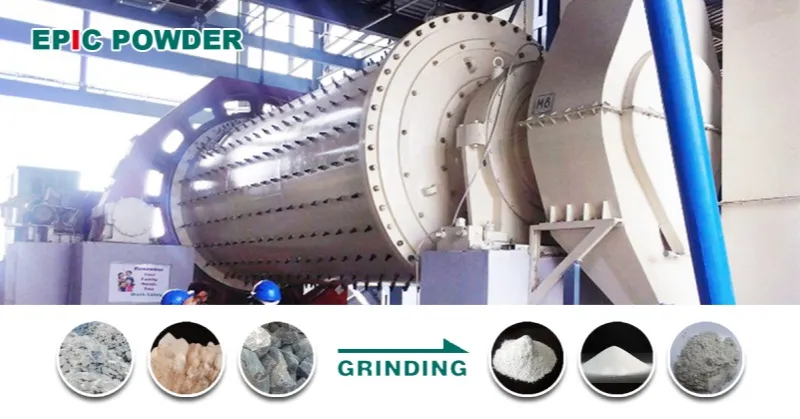
1. Material Hardness and Abrasiveness
The mosh hardness of quartz is 7. And it has high abrasive. Thus, it needs mills, which have high-impact grinding mechanisms. And the materials of the mill machine should be wear-resistant materials. For example, the ceramic liners and high-chrome steel balls are applicable.
2. Desired Particle Size and Fineness
For coarse grinding (20–100 mesh), crushers such as jaw crushers or cone crushers are commonly used to break down large quartz rocks.
For ultrafine grinding, ball mills deliver finer and more uniform particles than other mills. When paired with an air classifier, they can continuously separate fine powders and return oversized particles for regrinding.
3. Contamination Control
Purity is crucial for quartz used in glass or electronics. Iron contamination from steel media must be avoided. Ceramic-lined ball mills and alumina grinding media effectively prevent metallic contamination.
Why Ball Mill Is the Best Choice for Quartz Powder Grinding
Ball mill grinding machine is the most popular grinding equipment among our customers for calcium carbonate grinding, quartz powder producing, and talc powder processing. It can produce quartz powder, which is about 5 micron and 200 micron. Especially, for making finer powder quality, Epic Powder can provide air classifier for you. It can separate the powder size efficiently with high accuracy. And the unqualified powder can be returned into the ball mill machines until it is fine enough for meeting your needs.
How Does the Ball Mill Work?
The ball mill consists of a rotating cylinder partially filled with grinding media — either steel or ceramic balls. As the cylinder rotates, the media are lifted and then fall by gravity, impacting and grinding the quartz particles into fine powder. For efficient performance, the feeding size of quartz should be below 40 mm.
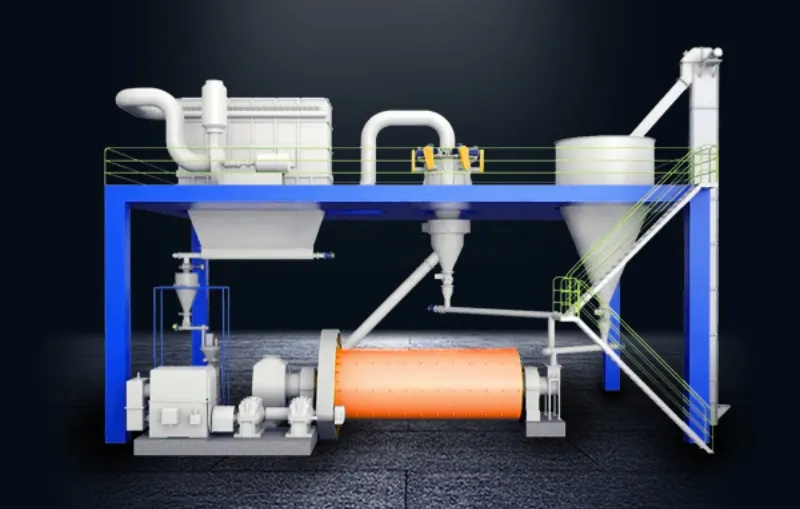
Why ball mills excel for silica sand?
High-impact grinding efficiency — ideal for hard and abrasive minerals.
Wet or dry operation — suitable for different production needs.
Adjustable fineness — controlled by grinding time, ball size, and rotation speed.
Low contamination — ceramic liners and alumina media ensure product purity.
How does Epic Powder optimize the ball mill plant for quartz powder grinding?
Epic Powder specializes in customized grinding plant design for high-purity materials.
To achieve the best performance in silica or quartz powder production, Epic Powder optimizes every step:
- Use of ceramic or high-chrome grinding media to minimize metal contamination.
- Integration of air classifiers to separate fine and coarse powders accurately.
- Application of dust collection systems to reduce pollution and maintain clean operation.
- Fully adjustable system for both grinding fineness and particle size classification.
With advanced technology and decades of experience, Epic Powder provides efficient, clean, and reliable solutions for quartz powder production lines.