In the modern building decoration industry, artificial quartz slabs have become a premier choice for replacing natural stone, high-end ceramics, and wood. This success is thanks to their exceptional hardness, wear resistance, and eco-friendly properties. However, a breakdown of production costs reveals a stark reality: unsaturated polyester resin (UPR) accounts for nearly 60% of total raw material costs. Yet, it comprises only 8% to 15% of the formulation by weight! In comparison, organic artificial marble (agglomerate stone) uses calcium carbonate as its primary filler. It requires a resin content of only 5% to 11% by weight. This represents a significant gap in resin consumption. Why does the quartz slab industry suffer from such high resin consumption? How can manufacturers break through this cost bottleneck? The answer lies entirely in the surface modification of quartz powder.
The Root Problem: Unmodified Quartz Powder is Secretly “Stealing” Your Resin
Why does the organic artificial quartz industry generally suffer from excessive resin usage?
Deep industry research reveals a fundamental reason: the majority of quartz powder used by manufacturers has not undergone surface chemical modification.
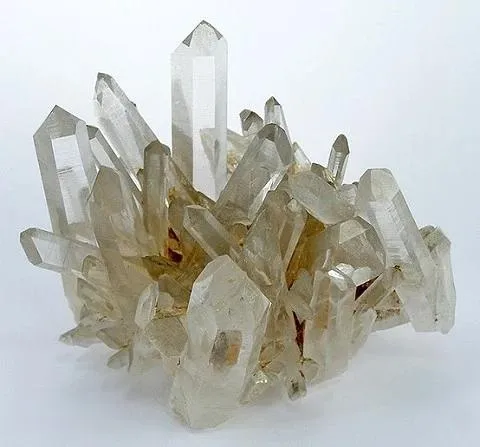
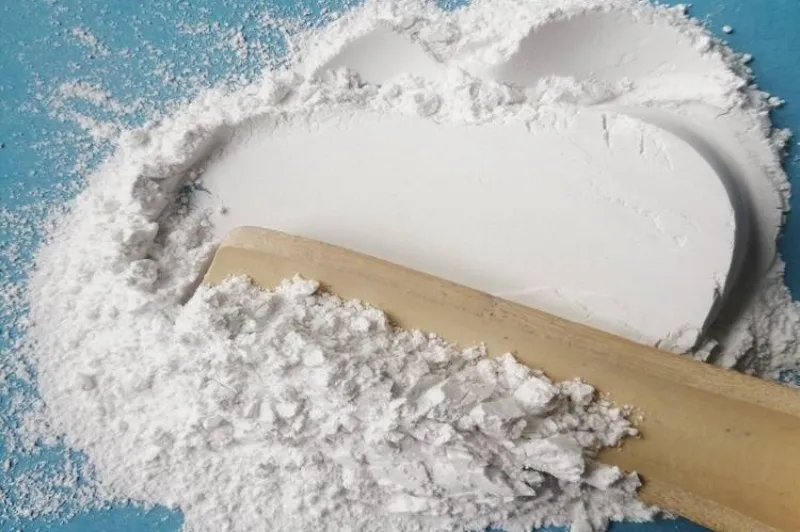
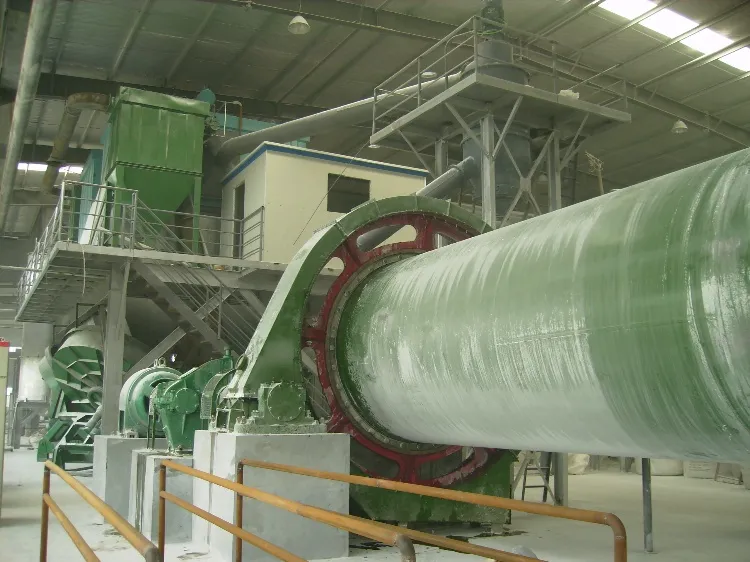
- The “Flaw” of Natural Quartz Powder: Natural quartz powder is typically produced from quartz sand via ball mill and air classifier production lines. It carries a high density of silanol groups (-SiOH) on its surface. This makes it highly polar and hydrophilic (water-loving).
- Poor Interfacial Compatibility: Unsaturated resin, being a non-polar organic polymer, acts like “oil and water” when mixed with highly polar natural quartz powder.
- Agglomeration and Localized Deviations: Unmodified quartz powder tends to agglomerate severely within the resin matrix. To fully wet and disperse these clumped particles, manufacturers are forced to inject far more resin than theoretically required. This not only drives up material costs but also creates localized structural deviations in resin content, which severely compromises the physical and chemical performance of the final slab.
The Core Logic: Within a quartz slab formulation, the amount of resin required to wet the coarse quartz sand aggregates is minimal. The vast majority of the resin is consumed to wet and disperse the high-surface-area quartz powder. Therefore, the surface state of the quartz powder directly dictates the total resin consumption of the entire production line.
The Critical Step: Selecting the Right Surface Modification Equipment and Technology for Quartz Powder
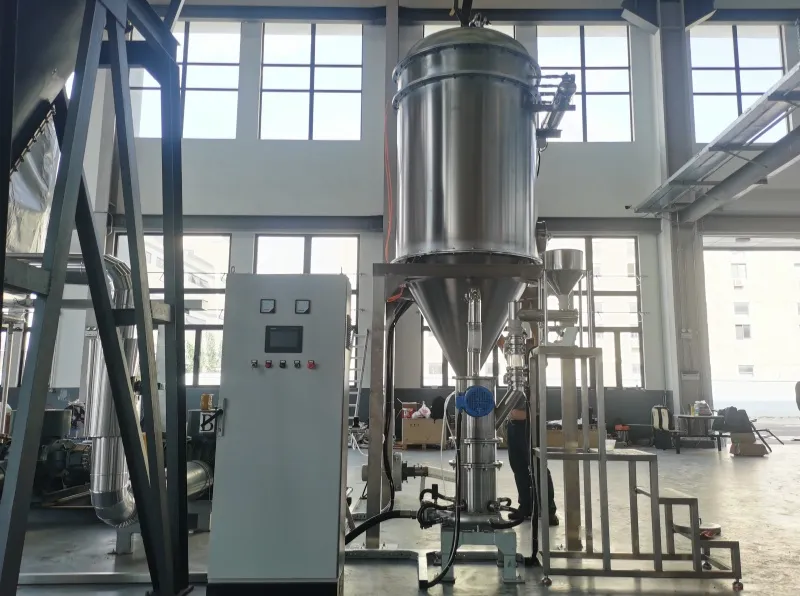
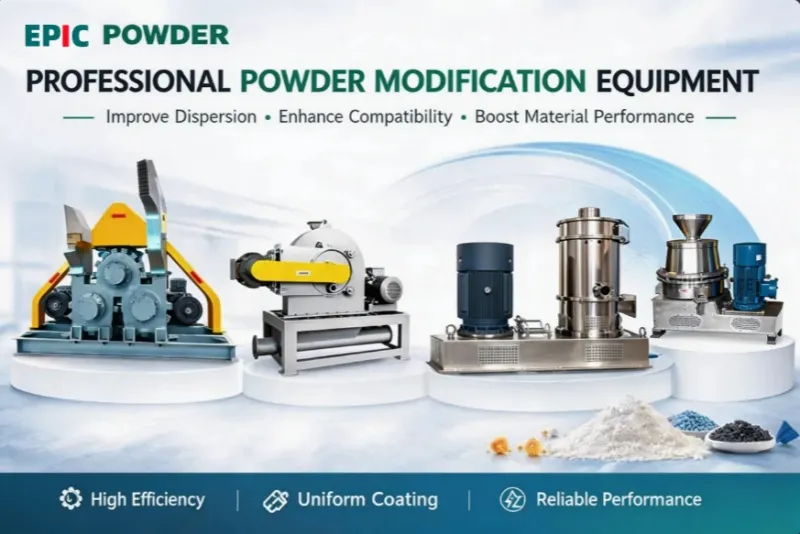
Manufacturers must transform quartz powder from “highly polar/hydrophilic” to “non-polar/hydrophobic and lipophilic (oil-loving).” To do this, they must utilize professional surface modification machinery alongside specialized silane coupling agents. Currently, three main types of processing equipment dominate the industrial manufacturing sector:
1. Continuous Cell Mill
- Working Principle: This system utilizes high-speed rotating rotors to generate supersonic vortices. This action puts the quartz powder into a highly fluidized state inside the “honeycomb” milling and modifying chambers. The liquid coupling agent is atomized and injected into the chamber, achieving precision monolayer coating within seconds.
- Core Advantages: Exceptional temperature control, high-intensity particle-to-particle collision, and incredibly uniform agent distribution. It delivers a coating rate of over 99%, making it the absolute best choice for large-scale, continuous industrial production lines.
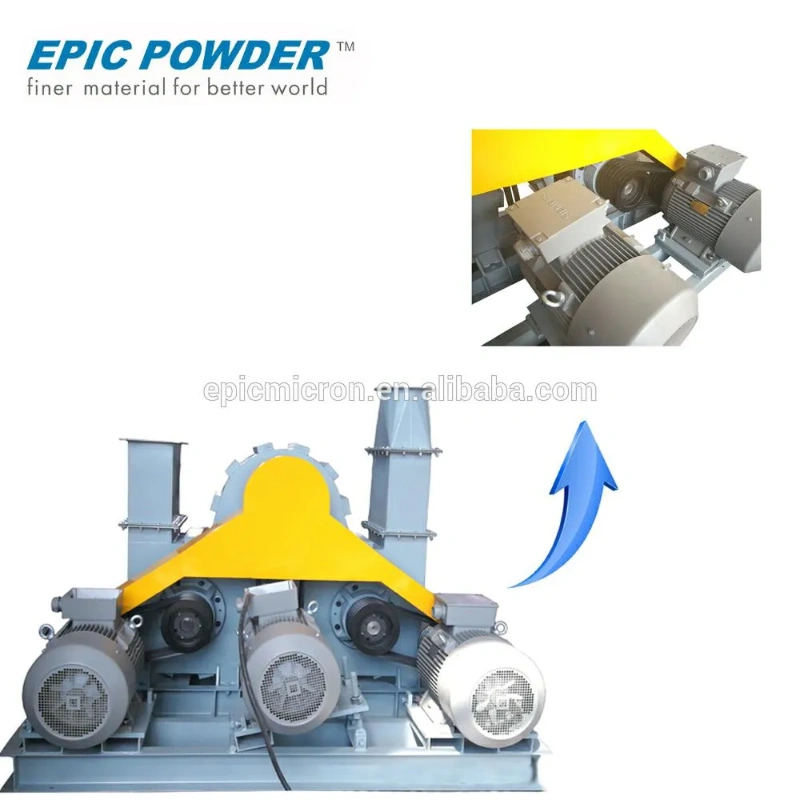
2. Continuous Three-roller Powder Surface Modifier
- Working Principle: Material enters the modification chambers and is subjected to powerful mechanical shear and impact forces generated by rotating throwing discs and stators.
- Core Advantages: Features an integrated dynamic classification mechanism. It simultaneously de-agglomerates or breaks apart clumped particles while coating them, ensuring that the modified powder exhibits superior dispersibility.
3. High-Speed Heating Mixer (Pin Mill/Turbo Mill)
- Working Principle: It utilizes the mechanical friction generated by high-speed mixing blades to raise the material temperature, typically to 90°C–110°C. This heat drives off any physically adsorbed water on the quartz surface. Afterward, coupling agents are added to initiate the chemical bonding reaction.
- Core Advantages: It offers a low initial capital investment and simple operation. This makes it ideal for small-to-medium enterprises, or flexible production operations handling multiple product types in small batches.
Cost & Efficiency Transformation: Three Key Breakthroughs Driven by Modified Quartz Powder
Replacing traditional, untreated quartz powder with “modified quartz powder” processed by the advanced machinery mentioned above triggers a highly beneficial chain reaction across all slab metrics:
1. Precipitous Drop in Oil Absorption and Continuous Reduction in Resin Consumption
The surface of the modified quartz powder exhibits strong hydrophobic and lipophilic properties. To achieve the exact same material flow state and wetting effect, the required volume of liquid resin drops sharply. Given that resin accounts for up to 60% of raw material costs, this reduction directly translates to a highly visible, bottom-line cost reduction for the slab.
2. Upgraded Surface Hardness and Gloss Values
Within a cured quartz slab matrix, the unsaturated polyester resin actually possesses the lowest surface hardness. It is far lower than the Mohs hardness of 7 exhibited by natural quartz grains.
- Resin consumption is cut back due to the incorporation of modified powder. Consequently, the proportion of rigid minerals within the slab increases, directly elevating the overall surface hardness.
- Once the surface hardness is enhanced, the slab becomes much easier to polish during the finishing stages. This automatically yields a significant boost in the gloss value of the final product.
3. Rock-Solid Core Physical Performance
Comparative experimental data demonstrates a clear trend as the replacement rate of modified quartz powder increases. Even as resin consumption is steadily scaled back, the core structural integrity remains uncompromised:
| Physical Performance Metrics | Unmodified Quartz Powder Slab | Modified Quartz Powder Slab (Low-Resin Configuration) |
| Water Absorption Rate | Maintains benchmark low levels | Maintains benchmark low levels (with higher density) |
| Ball Drop Impact Performance | Baseline standard | Identical performance (stronger interfacial bonding, less prone to cracking) |
| Surface Hardness | Baseline | Significantly Enhanced ↑ |
| Finished Gloss Value | Baseline | Significantly Enhanced ↑ |
Conclusion
Surface modification of quartz powder is far more than just “adding a bit of coupling agent.” It is an essential technological pathway for the artificial quartz stone industry to transition toward a low-carbon, green, eco-friendly, and low-cost future.
By integrating highly efficient continuous modifiers or cell mills, manufacturers can transform quartz powder. It changes from a “resin-guzzling black hole” into a premium, highly compatible functional filler. This strategy slashes the consumption of resin—the most expensive raw material. Simultaneously, it enhances product hardness and gloss without sacrificing ball-drop impact resistance or water absorption. Without a doubt, it stands out as the ultimate tool for artificial stone enterprises looking to optimize costs and maximize competitiveness in today’s aggressive global market.

“Thanks for reading. I hope my article helps. Please leave a comment down below. You may also contact Zelda online customer representative for any further inquiries.”
— Posted by Emily Chen