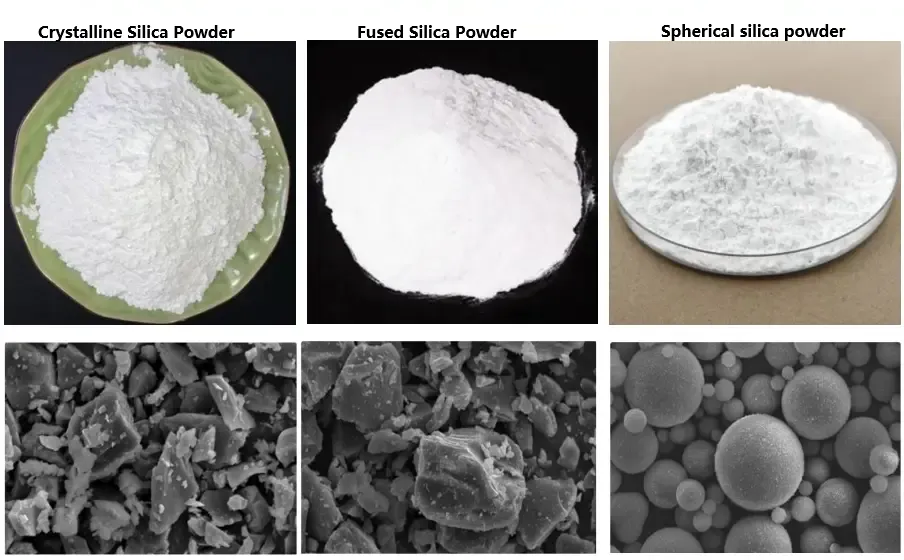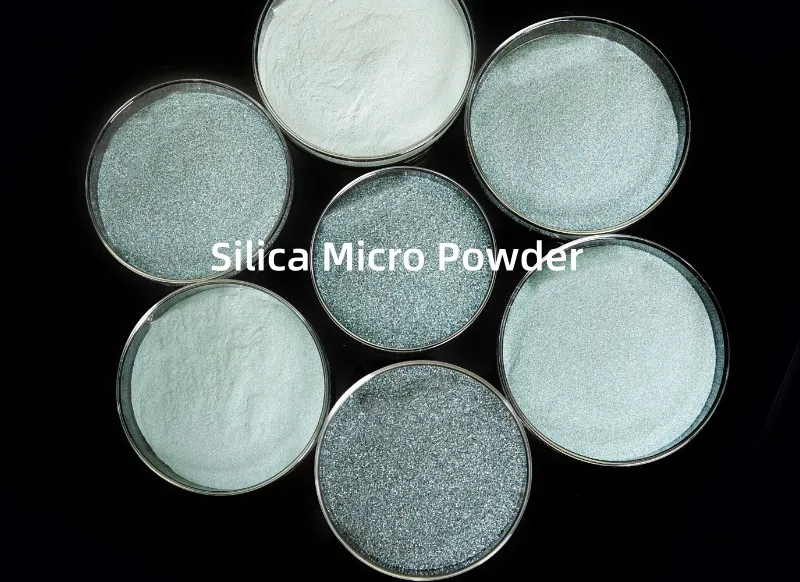
In modern industry, quartz (silicon dioxide) is not only the cornerstone of traditional glass, ceramics, and building panels. It is also an indispensable core strategic material for high-tech industries. These include semiconductors, photovoltaics, electronic packaging (such as silica fume for copper-clad laminates), and aerospace. As downstream high-end applications continue to demand ever-higher product performance, the requirements for quartz powder have also increased significantly. High-purity, ultra-fine powders (e.g., D50: 3.2 μm or finer), narrow particle size distribution, and contamination-free processing have become essential.
As a result, quartz ultrafine powder has become one of the industrial mineral products with the highest global market demand. It also carries extremely high technological value-added potential.
However, quartz possesses a very high hardness (Mohs hardness 7) and is extremely prone to iron contamination caused by equipment wear during the milling process. For global manufacturers, how to grind quartz efficiently and cost-effectively into micron or even sub-micron powders while maintaining absolute purity has become a core technical barrier. This comprehensive guide will break down the standardized, systematic production process for high-purity quartz ultrafine milling.
Core Technological Challenges: The Three Bottlenecks
Before exploring the step-by-step procedure, it is crucial to understand the inevitable technical challenges faced when determining how to grind quartz at an industrial scale:
Purity Control (Avoiding Iron Contamination):
High-end electronic-grade and photovoltaic-grade quartz powders have extremely strict limits on iron (Fe) content (typically requiring Fe < 5–10 ppm or even lower). Highly abrasive quartz introduces severe metal pollution when it rubs violently against traditional steel grinding media or mill liners.
Particle Size Control and Classification Efficiency
True ultrafine grinding requires not only that particles be “sufficiently fine,” but also that the particle size distribution (PSD) be extremely narrow. Excessively large particles (coarse particles) can cause micro-pores or cracking in downstream products (such as electronic encapsulation compounds). Conversely, excessively fine powders (over-grinding) result in an excessively large specific surface area. These factors affect oil absorption and flowability during downstream compounding.
Energy Consumption and Wear:
As particle size decreases from the millimeter to the micron range, the specific surface area of the material increases exponentially. The required surface energy rises sharply, and grinding efficiency drops dramatically. Optimizing the process combination to reduce energy consumption per ton of powder is key to a company’s profitability.
Step-by-Step Guide on How to Grind Quartz to Ultrafine Powder
To achieve efficient, high-purity ultra-fine processing of quartz, it is typically not possible to accomplish this in a single step using a single piece of equipment. Instead, a systematic approach involving “staged crushing, progressive grinding, closed-circuit classification, and strict contamination control” must be adopted. The following is a standard step-by-step production guide:
Step 1: Raw Material Pretreatment and Strict Selection
The source of ultrafine grinding is the raw material. Before entering the grinding line, the quality of the raw quartz ore or color-sorted blocks must be ensured.
- Wash and Debris Removal: Remove surface silt, clay, and impurities to prevent the raw ore from introducing external contamination.
- Manual Sorting and Color Sorting: Use photoelectric color sorters or manually remove quartz blocks containing obvious yellow spots, iron inclusions, or discolored impurities.
- Calcination and Water Quenching (Optional, for High-End Quartz): Heat quartz lumps to 800°C~900°C and quickly plunge them into cold water. Because quartz undergoes phase changes and generates huge internal stresses at different temperatures, water quenching creates dense micro-cracks inside the quartz structure. This step not only reduces the grinding hardness significantly (saving over 30% of milling energy) but also bursts open gas-liquid inclusions trapped in crystal boundaries, enhancing chemical purity.
Step 2: Coarse and Medium Crushing (Millimeter-Scale Processing)
Large quartz chunks (typically 100–300 mm) are reduced to a particle size suitable for the grinding system (typically 1–5 mm or finer).
Primary and Secondary Crushing: A jaw crusher (primary crushing) is used in conjunction with a cone crusher (secondary crushing).
Strict Iron Prevention Measures:
To prevent iron contamination at this stage, the jaw crusher’s tooth plates and the moving and stationary cone liners of the cone crusher must be made of high-manganese steel. They can also be protected with special non-metallic liners. A more common method is to install a strong magnetic separator (typically with a magnetic field strength exceeding 10,000 Gauss). This is placed after crushing and before the material enters the next process. Promptly remove iron particles shed due to mechanical wear.
Step 3: Fine Crushing and Grinding (Mesh-Grade Transition)
Further process millimeter-sized quartz particles to 100–400 mesh (approximately 38–150 μm). This provides qualified feed material for the final “ultrafine micron-level grinding.”
Lining and Media Selection (Critical):
- Recommended Solution: Use a dry ball mill or a high-performance mechanical impact classifier mill.
- Lining and Media Selection (Critical):
- Ball Mill Liners: Must use high-alumina ceramic liners, silica liners, or high-purity polyurethane liners. Exposing raw carbon steel is strictly forbidden.
- Grinding Media: Use high-alumina ceramic balls, zirconia balls, or quartz lumps themselves (autogenous milling). This ensures that even if minor media wear occurs, the wore-off components are purely SiO2 or inert oxides that do not degrade chemical purity.
Step 4: Air-Jet Ultrafine Grinding and Fine Classification (Core Ultrafine Stage)
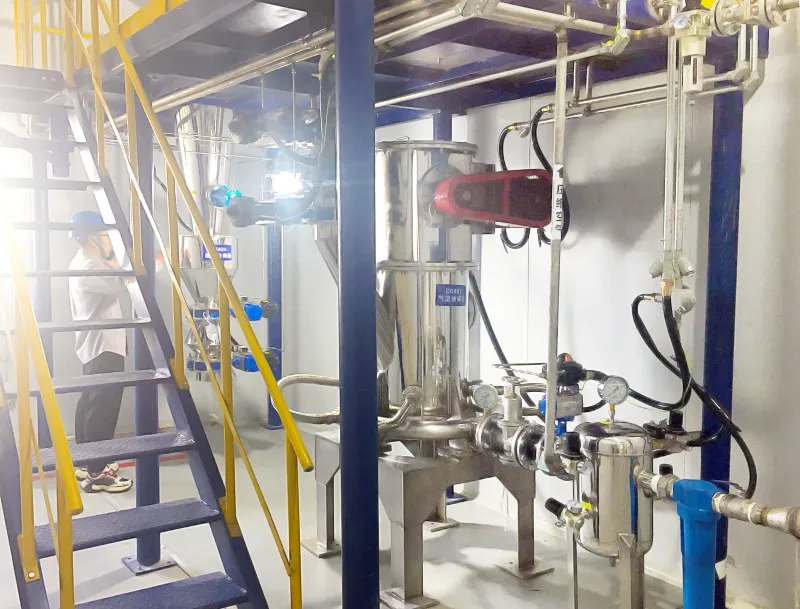
This is the most decisive step determining the final particle size distribution and product purity. When considering how to grind quartz to a target finer than D50: 3μm, two mainstream paths are globally recognized: Dry Fluidized Bed Jet Mill Systems and Ball Mill + Air Classifier Closed-Circuit Production Lines.
Route A: High-Purity Fluidized Bed Jet Mill System (For Extreme Purity & Finesses)
Jet mills utilize compressed air (or superheated steam) accelerated through specialized nozzles into supersonic air streams, driving quartz particles to collide with one another at high speeds.
- Self-grinding mechanism: Quartz particles are crushed by colliding with one another, without undergoing intense mechanical impact against the inner walls of the equipment. This fundamentally eliminates contamination caused by mechanical wear.
- Full Ceramic Protection: All material-contacting surfaces, nozzles, and the embedded high-speed classification wheel inside the air jet mill are lined with engineering ceramics such as alumina, silicon carbide, or zirconia for protection.
- Dynamic Classification: As the airflow carries the fine powder into the upper ceramic classification wheel, qualified ultrafine powder (e.g., D50: 3.2 μm) passes through the classification wheel into the collection system. Coarse particles that do not meet specifications are returned to the grinding zone by centrifugal force for further collision.
Option B: Ball Mill + Ultrafine Air Classifier Closed-Circuit System (For High-Volume, Low-Cost Production)
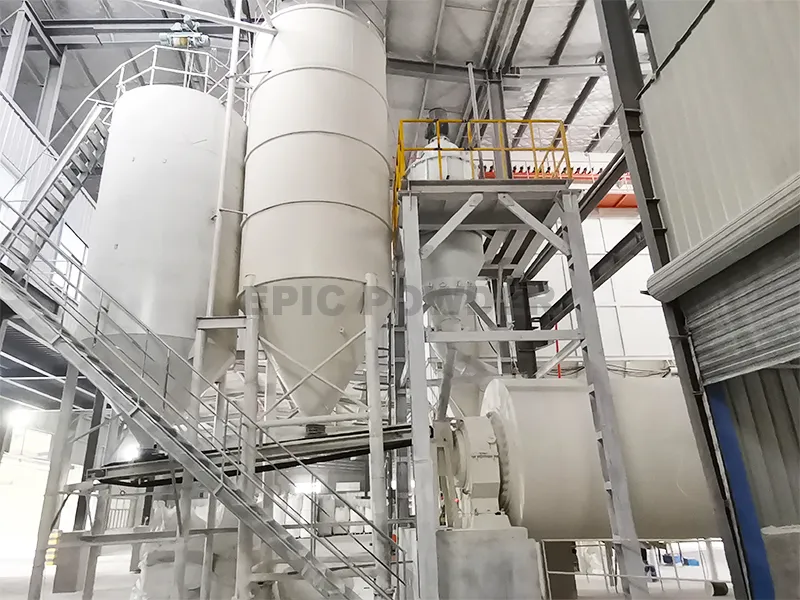
For quartz powder production lines with an annual output of over 10,000 tons, air mills consume relatively high amounts of energy. In such cases, the “ultrafine ball mill + vertical multi-vortex classifier” combination forms the most economical and efficient closed-circuit system.
Closed-Circuit Operation: The ball mill continuously discharges material, which enters a high-precision air classifier directly. The classifier separates the qualified fine powder for packaging as the final product. Coarse powder is automatically recirculated via piping back to the ball mill’s feed inlet for re-grinding.
Multi-head classification technology: Utilizes multiple miniature ceramic classification wheels operating in parallel. This enables extremely precise cut-off points (e.g., consistent production of D97 < 10 μm material) and ensures the final product contains no oversized particles.
Step 5: Finished Product Collection and Multi-Stage High-Strength Magnetic Iron Removal
High-Efficiency Collection: Use an anti-static, high-precision membrane-coated filter bag pulse-jet magnetic separator, or a cyclone separator combined with a dust collector. This ensures complete recovery of ultrafine powders and prevents dust leakage.
Final Iron Removal (Quality Control Barrier): Before the finished product enters the packaging machine, the ultra-fine powder must pass through one or more pipeline-type permanent magnet or electromagnetic automatic iron removers (recommended magnetic field strength: 12,000–15,000 Gauss or higher). This captures any trace amounts of magnetic material that may have been inadvertently introduced into the production line.
Comparison of Mainstream Quartz Ultrafine Processing Solutions
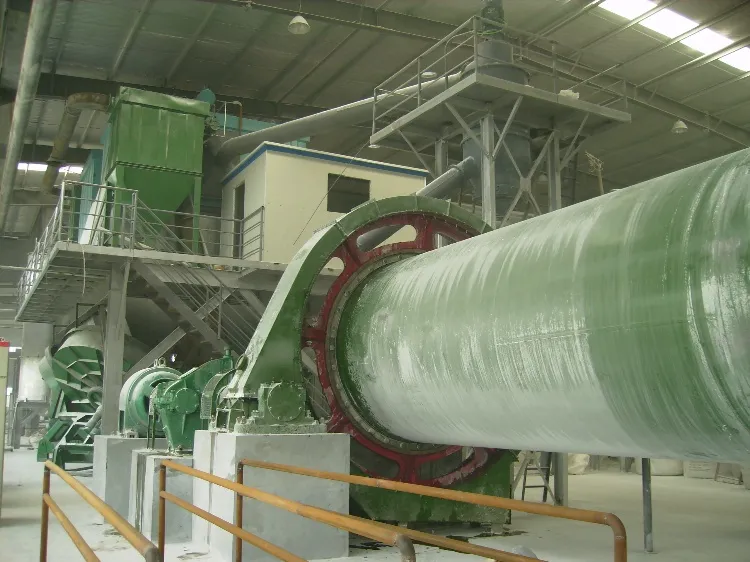
When factory engineers decide how to grind quartz, they must weigh the pros and cons of the two mainstream technical routes based on their specific investment budget and capacity goals:
| Evaluation Dimension | Jet Mill System | Ball Mill + Classifier Production Line |
| Primary Applications | Electronic-grade high-purity silica powder, optical glass, semiconductors, High-Purity Quartz (HPQ) processing | Photovoltaic silica sand byproduct utilization, engineered quartz stone powder, general ceramics and glass industries |
| Product Purity | Extremely High (Inter-particle milling, full ceramic protection, zero metal contact) | High (Requires strict configuration of high-alumina/zirconia liners and grinding balls) |
| Particle Size Distribution (PSD) | Extremely Narrow, high classification precision | Narrow, fully dependent on classifier wheel performance |
| Typical Target Fineness | D50: 2~ 4.5μm easily adjusted | D97: 10~ 45μm (efficiency drops when grinding finer) |
| Production Capacity | Medium capacity per unit, ideal for flexible, multi-grade production | Continuous massive scale, single-line annual capacity can reach tens of thousands of tons |
| Investment & Energy Cost | Simpler system structure, but high electricity consumption due to the air compressor | Large initial capital investment, but significantly lower comprehensive energy consumption per ton of powder |
Conclusion
Processing highly abrasive and purity-sensitive quartz into micron-grade ultrafine powder is an industrial art. It requires a careful balance of purity, particle size, and cost.
By following a systematic, multi-stage reduction method, manufacturers can achieve stable results. This includes rigorous ceramic anti-wear protection and high-precision air classification. Using these approaches, producing top-tier quartz powder for global premium markets is entirely achievable. It also presents significant commercial value.
When planning your next project, carefully consider your target buyer’s exact specifications. Focus specifically on D50, D97, and Fe limits. These parameters will help you configure the ideal jet mill or ball mill production line. This ensures the best possible return on investment.

“Thanks for reading. I hope my article helps. Please leave a comment down below. You may also contact Zelda online customer representative for any further inquiries.“
— Posted by Emily Chen