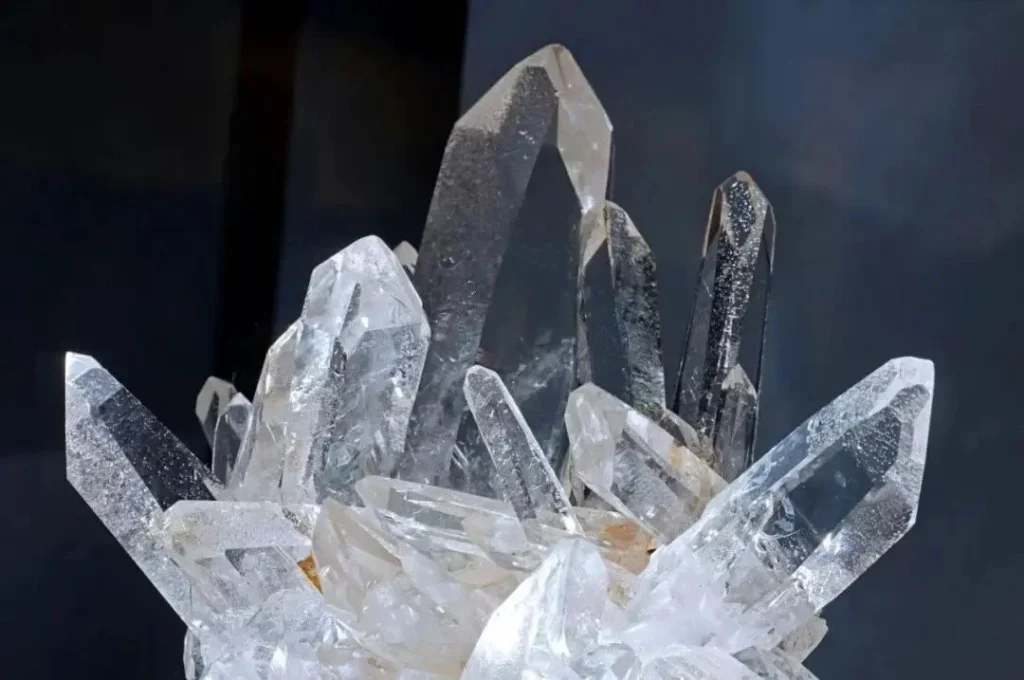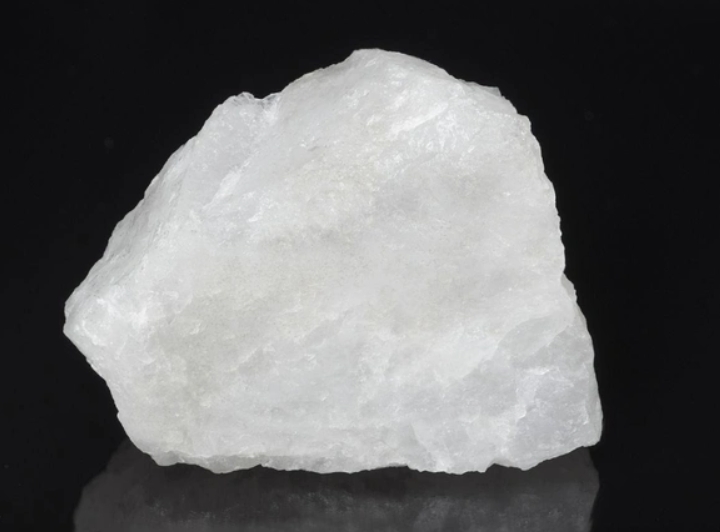
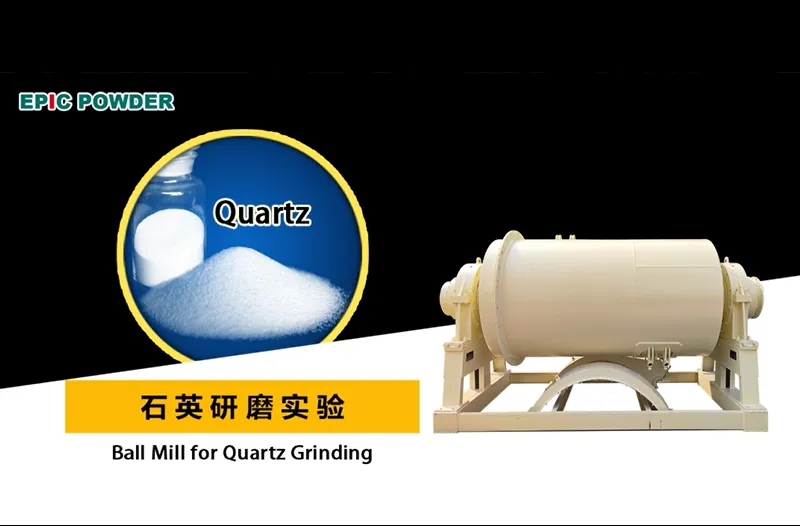
As an important industrial mineral raw material, quartz is widely used in both traditional industrial sectors (such as glass, ceramics, and refractory materials) and high-tech industries (such as military, electronics, and telecommunications). The purity of quartz—that is, its SiO₂ content—directly affects the performance and applications of the final products. Traditional industries, such as ordinary glass and building materials, have relatively low requirements for raw material purity. However, precision, high-performance products—such as telecommunications materials and quartz crucibles—require high-purity or even ultra-high-purity quartz raw materials. Furthermore, these applications require controlled levels of certain trace elements in the quartz raw materials.
| Product Name | Specification (Mesh) | Mass Fraction w(SiO2)% | Mass Fraction w(Fe2O3)×10−6 | Main Applications |
| Ultra-high Purity Quartz Sand | 40~70 70~140 | 99.99 | <2 | High-grade quartz glass |
| High Purity Quartz Sand | 40~70 70~140 | 99.98 | 2 | 1. Insulating materials for electronic components 2. Encapsulation for large-scale integrated circuits (silica powder) |
| High Purity Quartz Sand | 40~70 70~140 | 99.96 | <5 | 3. Opaque quartz glass, etc. 4. High-grade optical glass |
| High Purity Quartz Sand | 40~70 70~140 | 99.90 | <10 | 5. Chemical materials such as potassium silicate, sodium silicate, etc. |
| Refined Quartz Sand | Complete / All sizes | 99.6 | <200 | Optical glass, instrument glass, etc. |
| Ordinary Quartz Sand | Complete / All sizes | >96 | <500 | Ordinary glass, foundry, refractory materials |
Quartz sand products and specifications
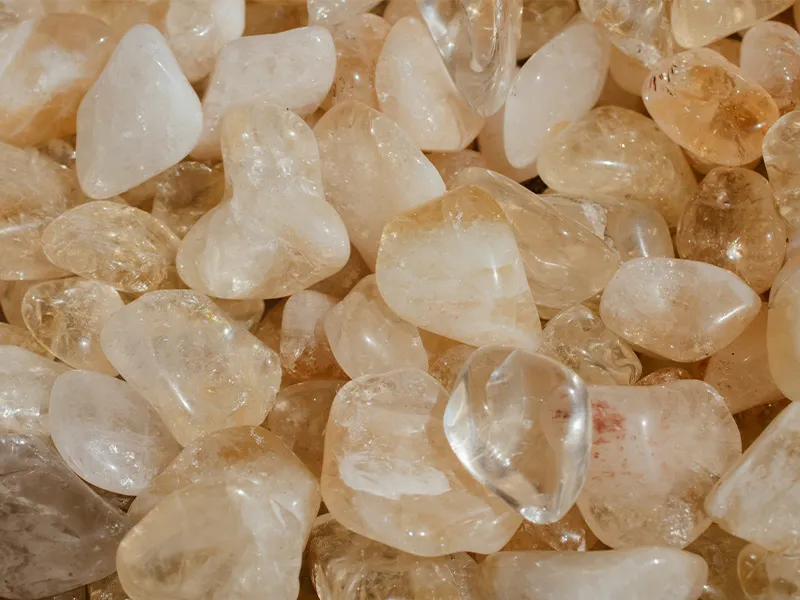
Glass Industry
The glass industry is a major user of quartz raw materials. Quartz imparts many excellent properties to silicate glass and its products, such as transparency, mechanical strength, and chemical stability. The SiO2 content in the raw material has a significant impact on the performance of silicate glass products. In the composition of ordinary silicate glass, SiO2 typically accounts for about 65% to 75%. Modern float glass generally requires that the quartz raw material contain more than 96% SiO2, less than 2% Al2O3, between 0.01% and 0.1% Fe2O3, and a particle size of about 0.4 mm. Particles larger than 0.5 mm and smaller than 0.1 mm must not exceed 5%.
High-end glass, such as specialty glass, high-quality flat glass, and precision optical glass, has stricter requirements for the chemical composition of quartz raw materials. The SiO2 content must be above 99%, the Fe2O3 content must be below 0.05%–0.1%, and the Al2O3 and TiO2 contents must be below 0.5%–2.0% and below 0.05%, respectively.
The purity requirements for quartz raw materials used in different glass products vary from country to country, and even between different companies within the same country.
Purity requirements of quartz raw materials for glassmaking in major countries around the world:
| Country | Glass Type | SiO2 | Fe2O3 | Cr2O3 | TiO2 | Al2O3 |
| USA | Optical | 99.8 | 0.02 | <0.1 | ||
| Flat | >98.5 | <0.35 | <0.2 | <0.5 | ||
| Japan | Grade-1 Optical | 99.8 | 0.02 | 0.1 | ||
| Flat | >97 | <0.06 | >0.1 | |||
| UK | Premium Optical | 99.5 | 0.008 | 0.0001 | 0.03 | |
| Flat | >98.5 | <0.03 | <0.0005 | <0.5 | <0.5 | |
| China | Special Glass | >99.5 | >0.05 | <0.001 | <0.05 | <0.5 |
| Flat | >98.5 | <0.1 |
The quartz glass used in the semiconductor industry is high-purity and transparent. The raw material is extremely pure silicon dioxide. The main type is large-format quartz glass bell jars, which are mainly used to manufacture the outer casing of polycrystalline silicon furnaces.
Mechanical Foundry Industry
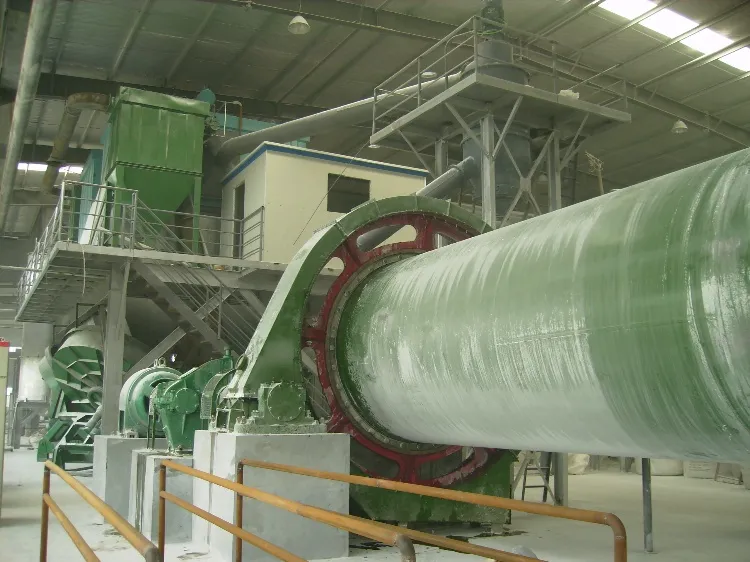
In the mechanical foundry industry, quartz is widely used as molding sand, casting cores, and casting molds. This is because, in addition to its high melting point, quartz sand also plays a role in heating, desulfurization, and deoxidation during the smelting process. The amount of quartz sand used in the foundry industry is relatively large. Generally, producing one ton of casting requires one ton of molding sand and clay. With the increasing precision of castings, higher requirements are placed on the purity of quartz raw materials. For example, the more advanced resin sand process in casting requires quartz sand with a SiO2 content higher than 97% and a particle size between 40 and 320 mesh. The mechanical foundry industry uses approximately 33% of the world’s total quartz sand production.
Quality requirements for quartz sand in the foundry industry:
| Application | Category / Grade | Mineral Content | ||
| SiO₂ (%) | Fe₂O₃ (%) | Al₂O₃ (%) | ||
| Foundry Industry | Grade I | >97 | <0.75 | |
| Grade II | >97.5 | <1.0 | ||
| Grade III | >94 | <1.5 | ||
| Grade IV | >90 |
Ceramic Industry
As a feldspathic raw material, quartz can adjust the plasticity and cohesion of ceramic bodies. During firing, it counteracts body shrinkage and reacts with alumina to form the structural framework of the ceramic material. It enhances the mechanical strength of ceramic products while also increasing their translucency and whiteness.
| Mineral Content | |||
| Type | SiO2 (%) | Fe2O3 (<%) | Al2O3 (%) |
| Building & Sanitary Ceramics | 98.5 | <0.02 | <0.5 |
| Radio Ceramics | 98.5 | <0.05 | <2.0 |
Quality requirements for quartz sand in ceramic products:
Quartz is the primary component responsible for the vitreous nature of ceramic glazes. It imparts a range of excellent physical and chemical properties to the ceramic glaze surface (such as strength, luster, wear resistance, hardness, and resistance to chemical corrosion). Additionally, increasing the SiO₂ content in the glaze can raise its melting temperature and viscosity.
Fused quartz ceramics are sintered bodies produced from fused quartz or quartz glass as raw materials. The process involves crushing the raw materials, followed by grading, ball milling to form a slurry, and shaping via slip casting or slurry casting, culminating in a sintering process. Fused quartz ceramics possess numerous outstanding properties, including a low coefficient of thermal expansion, excellent thermal shock resistance, good electrical insulation, and resistance to acid and alkali corrosion. Since its invention, it has been rapidly promoted and applied worldwide.
Initially, fused quartz ceramics were used only as a low-grade refractory material in traditional industries such as metallurgy and glass manufacturing. Thanks to the tireless efforts of scientists, the performance of fused quartz ceramics has rapidly improved, and they are now widely used in high-tech fields such as nuclear energy, aerospace, and defense.
In the solar industry, fused quartz ceramic crucibles are indispensable, high-consumption key containers used in the casting of polycrystalline silicon ingots. Because they must be used for extended periods at temperatures exceeding 1,500°C in a single operation, they are subject to extremely stringent requirements regarding purity, strength, and dimensional accuracy. Therefore, key parameters such as the purity, particle size, and impurity content of the quartz raw material must be strictly controlled.
Refractory Materials Industry
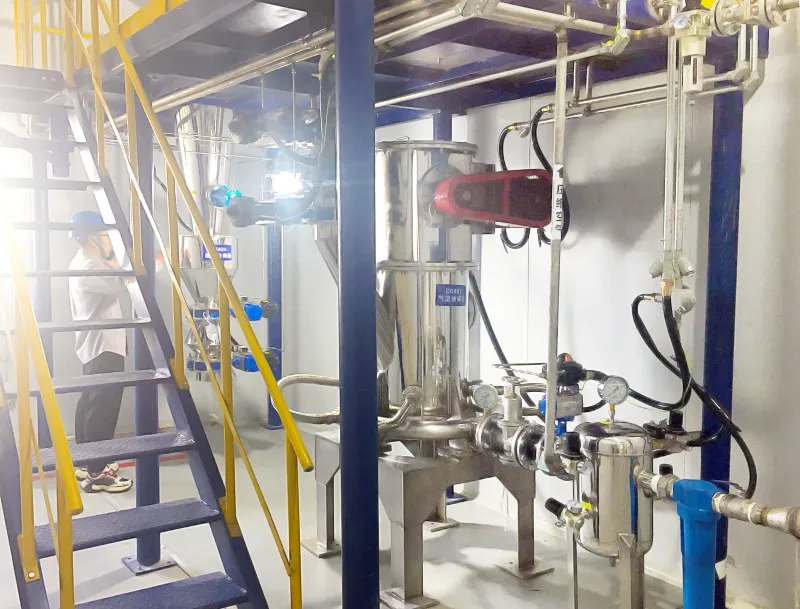
The primary use of quartz raw materials in the refractory industry is in the production of siliceous refractory bricks, including silica bricks, lightweight silica bricks, and fused quartz products. Silica bricks are primarily used in the construction of thermal equipment such as glass furnaces, and their main mineral composition consists of phosphoquartz and orthoquartz. Fused quartz products are primarily produced using fused quartz as the raw material, and their main mineral composition is quartz glass. Because quartz glass has characteristics such as a low coefficient of thermal expansion, fused quartz products exhibit excellent thermal shock resistance.
Quality requirements of quartz sand for different refractory materials:
| Application | Category / Grade | Mineral Content | ||
| SiO2(%) | Fe2O3 (%) | Al2O3(%) | ||
| Refractory Materials | Special Grade | >98 | <0.5 | <0.5 |
| Grade I | >97.5 | <1.0 | <1.0 | |
| Grade II | >96 | <1.5 | <1.5 |
To ensure that siliceous refractory materials have a refractoriness exceeding 1650–1700°C, a load-bearing softening temperature above 1650°C, and exhibit good thermal stability, good chemical stability, a low coefficient of thermal expansion, and high mechanical properties, the SiO₂ content in the quartz raw material and the particle size distribution of the quartz must be strictly controlled. Failure to do so will severely compromise the performance of the refractory material. Generally, the SiO₂ content in quartz raw materials is required to be 93% or higher; for quartz raw materials with poor crystallinity, coarse particles should be limited to less than 2 mm.
Furthermore, the crystallinity of quartz raw materials also has a significant impact on the performance of refractory materials (especially their refractoriness). The higher the crystallinity of the quartz raw material, the higher the refractoriness of the resulting refractory material.
Semiconductor Industry
Quartz products used in the semiconductor industry are primarily employed as encapsulation materials. When combined with curing agents, epoxy resins, and various additives, they can reduce the cost of encapsulation materials. The requirements for quartz raw materials are also very high: silicon dioxide purity must reach 99.9% or higher, with iron (Fe) content below 5 ppm and total impurity content not exceeding 300 ppm. In the past, these products were primarily imported from abroad. In recent years, however, with in-depth research into quartz materials, production technology has improved significantly. Currently, domestic production not only meets domestic market demand but also results in substantial exports to foreign markets.
Chemical Industry
Compared to applications in ordinary glass, ceramics, and refractory materials, the use of quartz sand in the chemical industry imposes slightly higher quality requirements. It is commonly found in products such as water glass, silica gel, and sodium silicate. Taking sodium silicate as an example, it can be divided into solid and liquid forms depending on its intended use. Liquid sodium silicate, used in detergents and as an adhesive for cardboard boxes, requires a SiO₂ content of over 98%, a Fe₂O₃ content of less than 0.2%, and a particle size between 0.2 and 2 mm. In contrast, solid sodium silicate used as a catalyst in petroleum refining has stricter requirements: a SiO₂ content exceeding 99% and a Fe₂O₃ content below 0.03%.
Industrial Fillers
Quartz sand is another important application area as an industrial filler and has received widespread attention. It is primarily used in organic polymer materials, such as plastics and plastic films, rubber, coatings, paints, and adhesives, to improve their physical and chemical properties or enhance specific characteristics. For example, adding quartz sand can increase the compressive and tensile strength of plastics. Generally, the quality requirements for quartz sand are quite high, with a SiO₂ content of 99% or higher and a Fe₂O₃ content of less than 0.05%. In some cases, the quality requirements for quartz sand may meet those of high-purity quartz.

“Thanks for reading. I hope my article helps. Please leave a comment down below. You may also contact Zelda online customer representative for any further inquiries.”
— Posted by Emily Chen