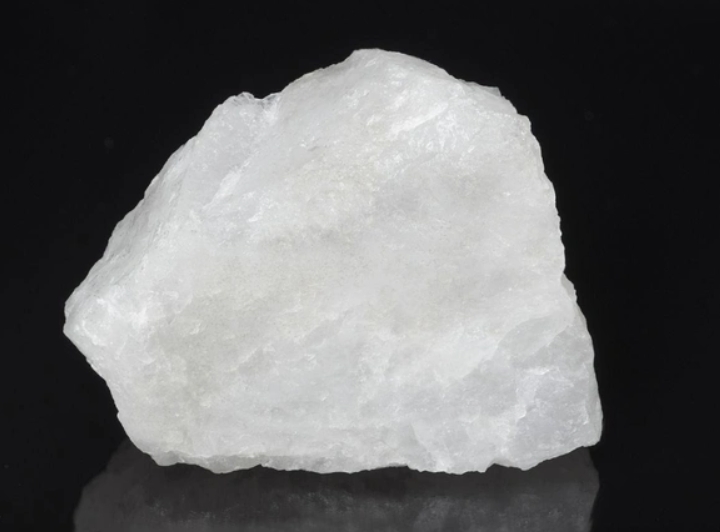
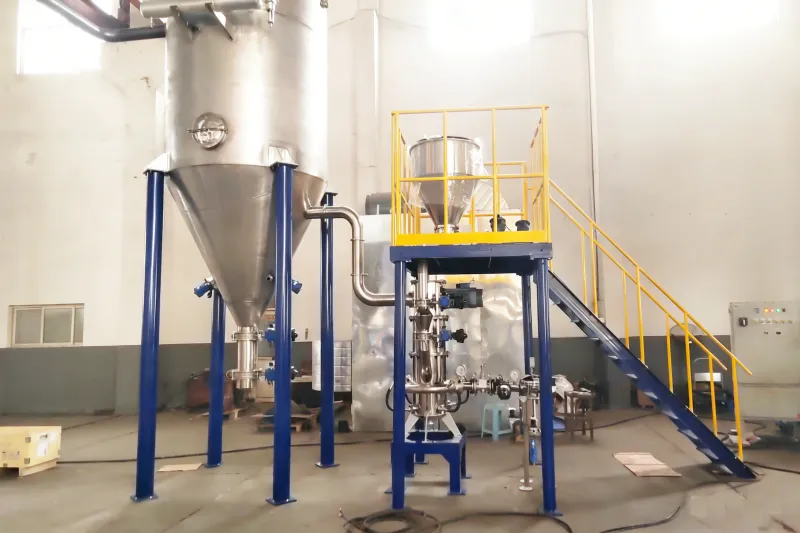
While adding silica powder can be beneficial, some people experience improved results: smoother adhesive, better leveling, stronger bonding, and less shrinkage. Others encounter disastrous consequences: a dramatic increase in viscosity, a false thickening effect, dough-like dispersion, and difficulty in eliminating air bubbles. Ultimately, it can lead to sedimentation, cracking, and a drop in strength. The difference often lies not in whether silica powder is added, but in how it is added.
One of the real technical aspects of silica powder in adhesives is particle size distribution. It determines how the particles are packed, how the pores are filled, whether the resin is forced to “do more work,” and ultimately, whether you achieve a “dense, controllable, and stable” system or a mixture that “appears to be filled in but actually has more problems.” Let’s delve into this: why particle size distribution is necessary, how to do it, and the specific focuses of different adhesive systems. We’ll also discuss how to avoid common mistakes and how to implement it in industrial and DIY scenarios.
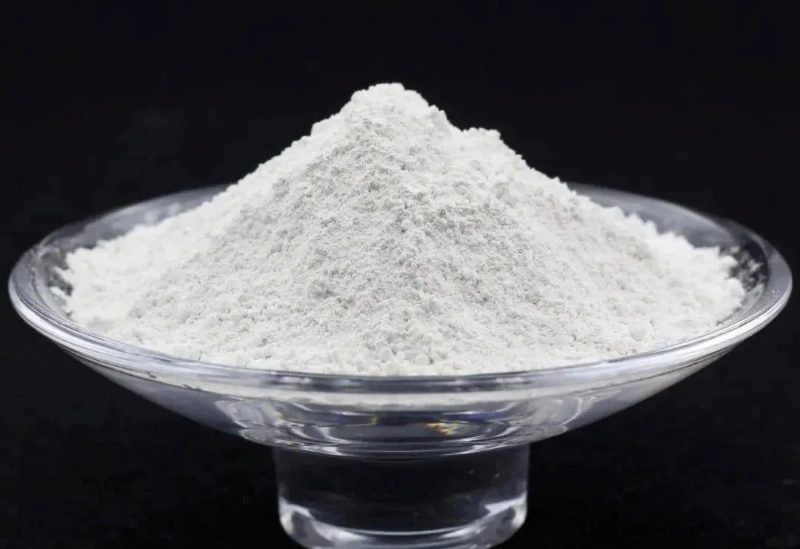
Why Does Silica Powder Need “Gradation,” not “the Finer the Better”?
Many people’s first reaction is: finer particles fill a denser gap, which must be better. This sounds reasonable, but in adhesives, fine powder is often the type that “most easily causes the system to go out of control.” The reason is simple: the smaller the particle size, the larger the specific surface area. A larger specific surface area means a dramatic increase in the area the resin needs to wet and the interfaces it needs to “encapsulate.” The result is increased viscosity, more difficult dispersion, more difficulty in escaping air, and a greater likelihood of false thickening and thixotropic anomalies. The core of gradation is not pursuing “extreme fineness,” but rather a combination of “higher bulk density + lower resin burden”:
- Large particles are responsible for “building the framework”: supporting volume, reducing resin usage and shrinkage risk;
- Medium particles are responsible for “filling the gaps”: filling the pores between large particles;
- Small particles are responsible for “filling the micropores”: further densifying, improving surface and local properties, but their usage must be controlled.
In short: let the particles fill the space themselves, rather than forcing the resin to do so.
The Most Commonly Used and Stable “Three-Stage Gradation”: Coarse + Medium + Fine
Reference particle size segmentation approach:
- Coarse powder: 20–50 μm Function: Forms the skeleton, reduces resin consumption, reduces shrinkage and thermal expansion fluctuations (making the system more stable). It also often helps reduce costs.
- Medium powder: 5–20 μm Function: Fills gaps between coarse powder particles, increases bulk density, making the system denser and with more continuous strength.
- Fine powder: 1–5 μm or even finer Function: Fills micropores, improves surface and local structure, helping to achieve a finer appearance and better mechanical consistency. However, excessive amounts will cause the system viscosity to skyrocket. A frequently verified empirical ratio range:
- Coarse: Medium: Fine ≈ 5:3:2- or 6:3:1 (more workable, less viscosity pressure). If you are pursuing higher filler and lower resin content, you will often move towards a more “continuous” multi-peak distribution (bimodal, trimodal, or even wider), allowing particles to nest together at more scales to increase the filling rate. However, note that gradation is not a game of proportions. The core goal is to ensure that “small particles just fill the pores of large particles, but not excessively.” Once the fine powder exceeds the “needs for filling the pores,” it will not continue to significantly increase density; instead, it will amplify viscosity, dispersion, and bubble problems.
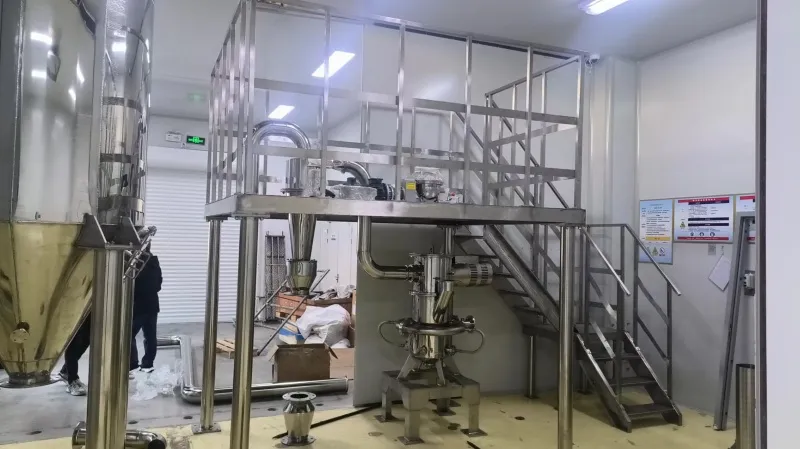
Different Adhesive Systems Have Different Particle Size Distribution Goals: First, Determine “What You Want.”
Epoxy Structural Adhesives:
Stability, low shrinkage, and continuous strength are paramount. A common approach leans towards medium particle size. A small amount of ultrafine powder is added to fill micropores and finely adjust thixotropy. Many structural adhesives commonly use a d50 within the 5–20 μm range. The goal is often to achieve a better balance between strength, shrinkage, and workability. If you start with a high concentration of fine powder, it might indeed be “harder,” but it’s also more likely to result in: excessively high viscosity leading to insufficient wetting, air bubbles, and increased interface defects. Ultimately, the strength may become unstable.
Thermal Conductive Adhesives/Potting Compounds:
High filler content is essential, and a “wide” gradation is crucial. Thermal conductive systems often aim to pack more filler at workable viscosities, making a wide gradation and multi-peak distribution critical. Larger particles increase the filler volume fraction, while smaller particles fill gaps and reduce porosity, resulting in a denser and more controllable system. Experience with many thermal conductive systems shows that using only fine powder is insufficient for full packing; viscosity will spike first. Using appropriately sized large particles as the base allows for pushing the filler volume within the process window.
UV Adhesives and Electronic Adhesives:
Finer, more stable, avoiding graininess and sedimentation. These adhesives often prioritize surface graininess, sedimentation risk, and detailed coating. Particle sizes are typically finer, with d50 commonly found in the 1–5 μm range. However, finer particles require greater attention to dispersion and bubble control. Otherwise, while the surface may appear smooth, internal defects may be more pronounced.
Particle Morphology and Surface Treatment:
Many people only focus on particle size, neglecting two factors that significantly impact the user experience: morphology and surface condition.
Spherical vs. Angular:
Determining “Flowability” and “Viscosity Ceiling”
- Spherical silica powder: Generally better flowability and lower system viscosity, with a significant advantage at high filler levels.
- Angular silica powder: Often more cost-effective and offers more pronounced reinforcing effects in certain formulations, but its viscosity tends to be higher, resulting in a narrower application window.
If you’re looking for “high filler but still flowable,” spherical or near-spherical particles are often more convenient. If you’re prioritizing “reinforcing and cost control,” angular particles are usable, but they are more dependent on gradation and dispersion processes.
Silane Coupling Agent Treatment:
Surface treatment of silica powder, which determines “compatibility” and “moisture absorption/interfacial defects” (commonly KH550, KH560, etc.), usually brings several direct benefits:
- Better compatibility with resins and smoother dispersion;
- Reduced moisture absorption risk and more stable system;
- More controllable strength and toughness, and the interface is less likely to become a bottleneck.
Many problems of “strength deterioration after adding powder” are not due to inferior powder, but rather to poor interface treatment: the filler and resin are “forced together” rather than “bound into a whole.”
The Most Common Pitfall: The Four-Fold Impact of Excessive Fine Powder
If you only remember one thing, it’s this: fine powder is for “filling pores,” not for “building up performance.” Too much fine powder typically results in a four-fold impact:
- Sudden viscosity increase: making application more difficult and narrowing the coating/filling window.
- Difficulty dispersing: increasing agglomeration and localized defects.
- False thickening and thixotropic abnormalities: appearing thin during stirring but solidifying again after stopping.
- Increased and difficult-to-remove air bubbles: ultimately forming internal pores, affecting strength and stability.
Therefore, gradation is not about making it “fineer,” but about pushing up density and performance while ensuring the system is “workable, easy to work with, and stable.”
Make the particle size distribution workable
Whether it’s a factory formulation or small-batch DIY, the recommended approach to implementing particle size distribution is to follow these three steps:
Step 1: What is your core objective?
- Low viscosity, easy application
- High filling capacity, low shrinkage
- Higher strength/rigidity
- Finer appearance, less graininess
Different objectives will require different proportions of coarse, medium, and fine particles.
Step 2: What is the upper limit of viscosity your system allows?
The upper limit of viscosity determines how much fine powder you can add. Often, it’s not the “performance limit,” but the “processing limit” that holds you back.
Step 3: Adjust using the order of “coarse for the framework, medium for filling gaps, fine for filling pores.” The recommended parameter adjustment direction is usually:
- First, use coarse + medium to build the filling rate and basic rheological framework;
Then gradually add fine powder to fill pores and finely adjust leveling/thixotropy;
Once abnormal viscosity jumps, significantly increased dispersion difficulty, or increased bubbles appear, it means the fine powder has approached or exceeded the “effective pore-filling amount.”
A key difference between industrial and DIY processes:
In the industrial sector, there are more advanced mixing and degassing equipment capable of producing highly filled and viscous systems. However, in the DIY sector, equipment and processing capabilities are limited, necessitating a more “mild” formulation.
If you are doing small-batch manual mixing, simple stirring, and limited degassing conditions:
- It’s recommended to use a more application-oriented ratio like 6:3:1;
- It’s better to use less fine powder than to push the system to the point of being “unmixable and unable to be properly dissolved”;
- Focus more on “success on the first try” rather than “pretty-looking specifications on paper.” Many DIY failures aren’t due to inferior materials, but rather because the formulation mistakenly equates processing capabilities with industrial standards.
Conclusion
Silica powder in adhesives isn’t just an added bonus; it often plays a role in “making the system more controllable.” This means making shrinkage, flow, strength, and appearance more controllable. The value of particle size distribution lies in using a smarter particle packing method to achieve a lower resin load and fewer internal defects.

“Thanks for reading. I hope my article helps. Please leave a comment down below. You may also contact Zelda online customer representative for any further inquiries.”
— Posted by Emily Chen