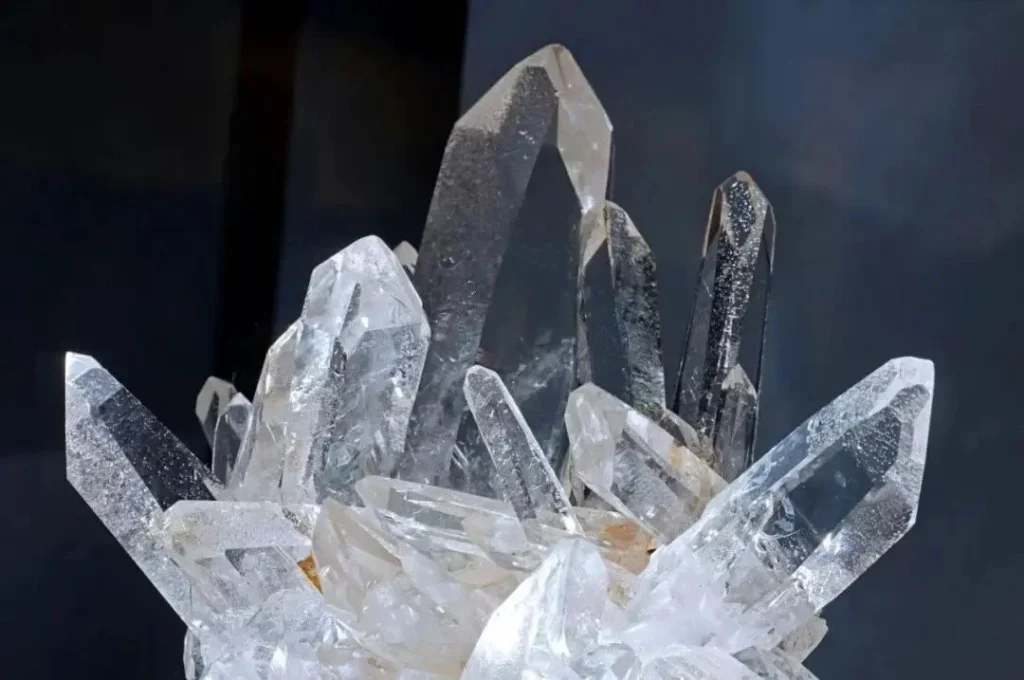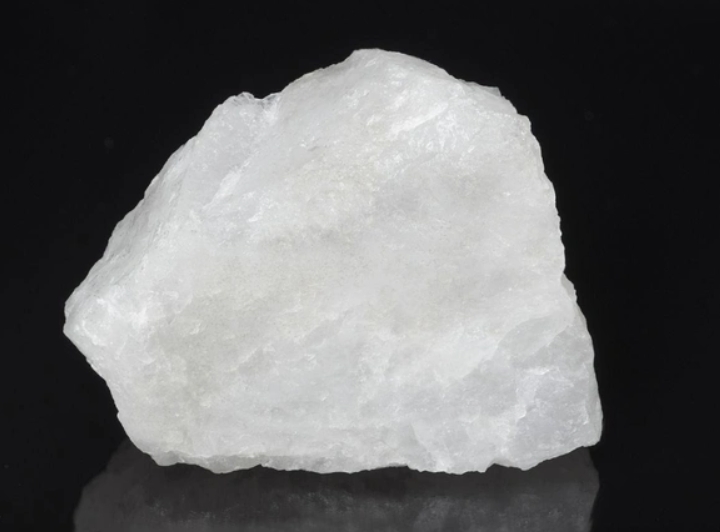
With the increasingly prominent role of high-purity quartz sand in strategic emerging industries such as new energy and next-generation information technology, its deep purification technology system has ushered in a leapfrog development.
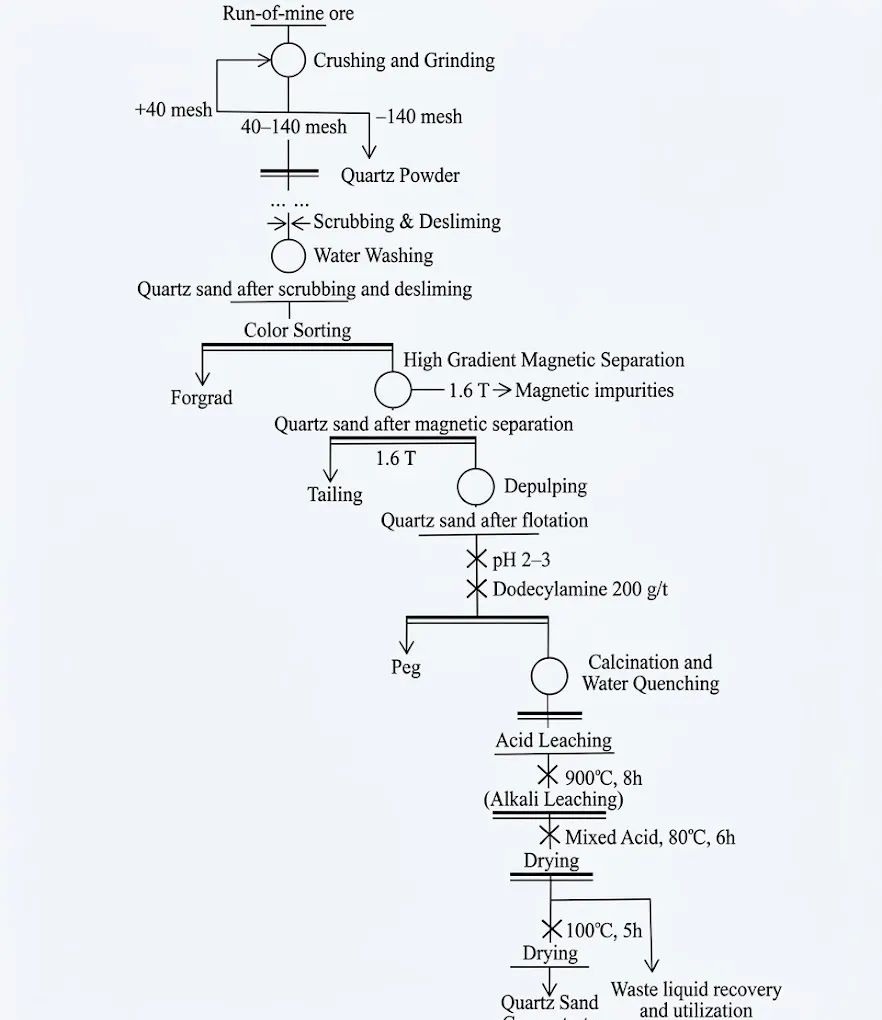
Crushing and Grinding
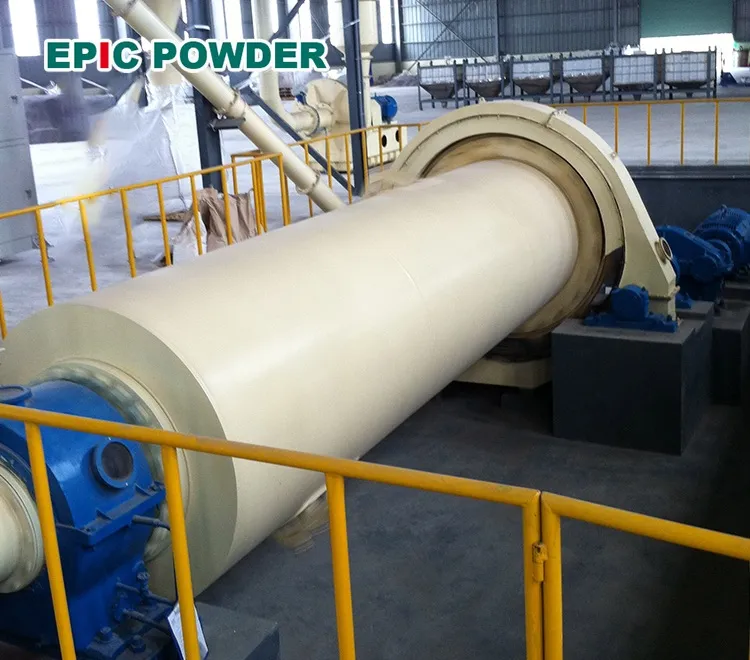
Common crushing equipment for quartz includes jaw crushers, cone crushers, and ball mills. Jaw crushers are coarse crushers with a high processing capacity, typically 10–100 t/h. Using jaw crushers, quartz ore is crushed from larger particles to 10–100 mm. Cone crushers are mainly used for medium crushing, further crushing materials to 5–20 mm. Ball mills are used for fine crushing, grinding quartz sand to a particle size of 0.1–1 mm.
During the crushing process, by adjusting parameters such as feed particle size and grinding time, quartz sand products with suitable particle sizes can be obtained. For example, the ball-to-feed ratio in a ball mill is usually controlled at 2–5:1, and the grinding time needs to be determined based on the product particle size requirements, generally 2–8 hours.
In recent years, selective crushing technologies that enhance impurity exposure and reduce over-crushing have received considerable attention. Among them, high-voltage pulsed electric crushing (HVP/EPF) has shown significant application potential. This technology is based on discharge impact and electrical breakdown effects, which drive cracks to preferentially propagate along grain boundaries, phase boundaries and inclusion interfaces, thereby significantly improving the monomer dissociation efficiency of quartz sand and impurities.
Scrubbing
Scrubbing can reduce the iron content in quartz sand from 0.1%–0.3% to 0.05%–0.15%. The latter can more quickly and effectively damage the thin film of impurities adhering to the surface of the quartz sand. The scrubbing time is usually controlled at around 30–60 minutes. This can further reduce the impurity content and improve the purity of the quartz sand.
Screening and Grading
The most frequently used classification methods for quartz are screening, hydraulic grading, and air classifying. Commonly used grading equipment includes vibrating screens, hydrocyclones, and air classifiers. Vibrating screens achieve a screening efficiency of 80%–90%, while hydrocyclones offer excellent classification accuracy, separating particles from 0.01–0.1 mm. Air classifiers can achieve even more precise classification, meeting the particle uniformity requirements of high-purity quartz sand. In actual production, the particle size of the feed material is often strictly controlled within the optimal range of 0.074–4.75 mm.
Color Sorting (Photoelectric Sorting)
Color sorting technology is mostly deployed in the dry section after crushing and screening. It is used for raw material pre-selection or finished product finishing to improve whiteness and appearance consistency and reduce batch fluctuations. Color sorting is effective at removing discretely distributed high-impurity particles. However, its effect on iron impurities existing in the form of fine films or inclusions is limited. It usually needs to be combined with processes such as scrubbing and desliming and magnetic separation to achieve deep impurity removal.
Magnetic Separation
Magnetic separation has become one of the most widely used techniques in the purification of quartz sand. Wet high-intensity magnetic separation and high-gradient magnetic separation are particularly advantageous in removing fine-grained weakly magnetic impurities. Therefore, they are often used in the deep iron removal process of quartz sand. In practical applications, high-gradient magnetic separation typically requires controlling the appropriate magnetic field strength when treating weakly magnetic impurities. The optimal magnetic induction intensity is mostly concentrated in the range of 1.0–2.0T. This range is beneficial for improving the collection capacity of weakly magnetic minerals and can also, to some extent, maintain the recovery rate of quartz sand products.
Furthermore, the magnetic separation effect is closely related to factors such as feed particle size, slurry concentration, and flow rate, and is not solely determined by magnetic field strength. Improper particle size control or a high content of fine mud can exacerbate mechanical entrainment, thus affecting the final separation effect. Therefore, operating parameters should be optimized in conjunction with the properties of the raw materials during the magnetic separation process to improve impurity removal efficiency.
Flotation
Flotation is widely used to remove weakly magnetic/non-magnetic gangue such as feldspar, mica, and limonite. Based on differences in mineral surface wettability, it achieves efficient removal of elements such as Al, K, Na, and Fe. Currently, industrially applied high-purity quartz flotation processes mainly include three types: “fluorine-containing and acid-containing,” “fluorine-free and acid-containing,” and “fluorine-free and acid-free.” The core difference lies in the control strategy of the slurry environment and the different activation/inhibition mechanisms on the surface of impurities such as feldspar and mica.
Among them, the green and advanced fluorine-free and acid-free process aims to complete the separation in neutral or alkaline slurries. This further reduces environmental protection and equipment costs. Its core lies in its high dependence on the synergistic effect of anionic/cationic mixed collectors, inhibitors, and activators.
Heat Treatment Process
In a high-temperature environment, several gaseous and liquid inclusions within quartz will gradually expand and rupture. High temperatures can also cause a crystal transformation in quartz, enhancing its chemical activity. This facilitates reactions between impurities and purification reagents. In addition to the above effects, calcination removes organic matter and some volatile impurities from the quartz surface. This ensures the purity of the quartz sand, laying the foundation for producing high-quality, high-purity quartz sand.
Common calcination equipment for quartz purification includes muffle furnaces and rotary kilns. The former is suitable for small-scale experiments and production, allowing for precise control of temperature and atmosphere. The latter is more suitable for large-scale industrial production, offering greater continuity and efficiency. Calcination process parameters mainly include temperature, time, and atmosphere. Calcination temperatures are typically between 800 and 1200℃.
However, for structural boron and trace impurities such as K and Na, which are tightly bound to the Si-O framework, high-temperature chlorination roasting is required. During the chlorination roasting process, quartz undergoes a crystal transformation from α-quartz to α-trichiolite and then to α-cristobalite. This allows metal ions in the quartz lattice to migrate and diffuse directionally to the quartz surface. They then react with the chlorinating agent to form low-melting-boiling-point chlorides, thus removing lattice impurities. Simultaneously, under a highly concentrated chlorination atmosphere, a chemical potential gradient exists between the surface and interior of the quartz particles, promoting the outward diffusion of fluid inclusions. This further removes gas-liquid inclusions and hydroxyl groups from the quartz.
Alkali leaching
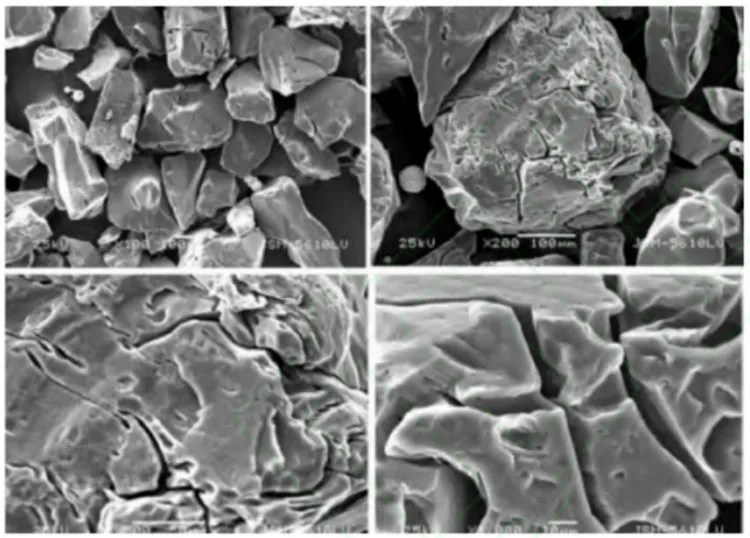
Alkali leaching primarily utilizes strong alkaline solutions such as NaOH and KOH at high temperatures to react with acidic oxide impurities and silicate gangue minerals in quartz sand. This produces soluble silicates and aluminates, which are then removed by washing. Alkali leaching exhibits excellent selective dissolution of amphoteric metal oxide impurities such as Al₂O₃ and TiO₂. Especially effective for aluminum and titanium impurities existing on the surface of quartz particles and in microcracks as oxide films or fine inclusions.
Currently, high-temperature alkaline leaching is one of the commonly used methods for enhanced impurity removal in the deep purification of quartz sand. The purification effect of this process is mainly affected by factors such as the concentration of the alkali solution and the reaction temperature. Appropriately increasing the leaching intensity helps enhance the impurity removal effect. However, if the conditions are too harsh, it may lead to increased dissolution of the quartz matrix and increase the risk of Na⁺ residue. Therefore, after alkaline leaching, thorough water washing is usually required, and acid washing and neutralization are necessary if needed. This is to reduce secondary pollution caused by the deposition of soluble salts.
Acid Leaching
Acid leaching is a crucial step in the deep purification of quartz sand, essentially a solid-liquid interface chemical reaction. Under the dissolving and complexing effects of strong acids, metal oxides such as Fe, Al, and Ti, as well as some silicate impurities, are transferred from the solid phase to the liquid phase and removed. To enhance the impurity removal effect, a mixed acid system is often used industrially. HF is mainly used to dissolve silicates and lattice inclusions. Inorganic acids (HCl, HNO3, H2SO4, etc.) are used to dissolve metal oxides. Organic acids (such as oxalic acid and citric acid) can promote the complexation and leaching of metal ions.
Current Status of Industrial Application of Quartz Purification Technology
With the increasing demands for quartz purity and quality from downstream industries such as photovoltaics and semiconductors, the industrial application of various purification technologies has shown a clear stratification. Each purification process differs significantly in its target impurity removal, mechanism of action, and technical limitations. This also determines its current status of industrial application in practice.
Conclusion
The evolution of high-purity quartz purification technology and equipment reveals a profound influence from three driving forces: industrial demand, environmental policies, and basic research.
Among these, the iterative upgrading of industrial demands serves as the fundamental driver. This is evidenced by:
- The electronics industry’s demand for high purity;
- The new energy industry’s urgent need for low-cost, high-efficiency processes;
- The push for green manufacturing and resource recycling under the “carbon neutrality” framework.
Looking to the future, high-purity quartz purification technology is developing in a coordinated manner towards intelligence (AI-assisted process optimization), greening (fully biodegradable reagent systems), and precision (atomic-level separation control).

“Thanks for reading. I hope my article helps. Please leave a comment down below. You may also contact Zelda online customer representative for any further inquiries.”
— Posted by Emily Chen