Q: What is silica powder? What is it used for?
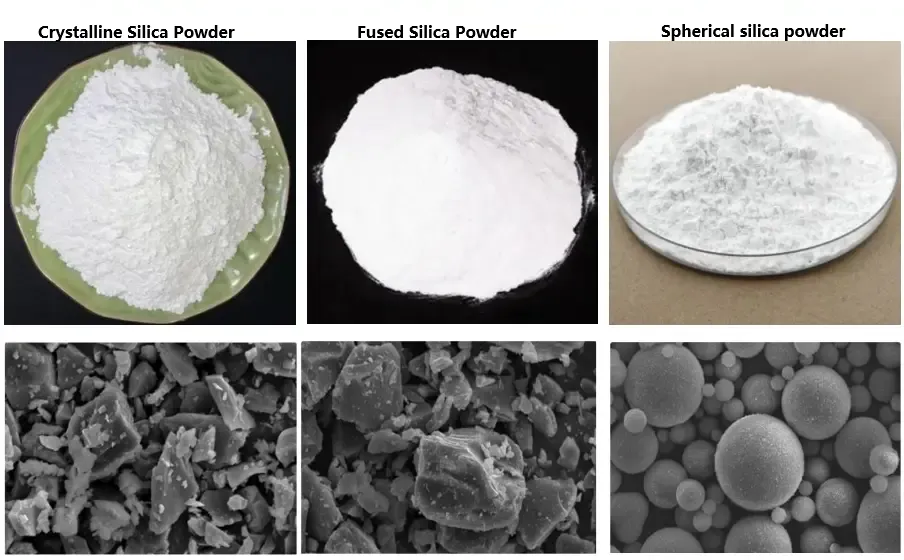
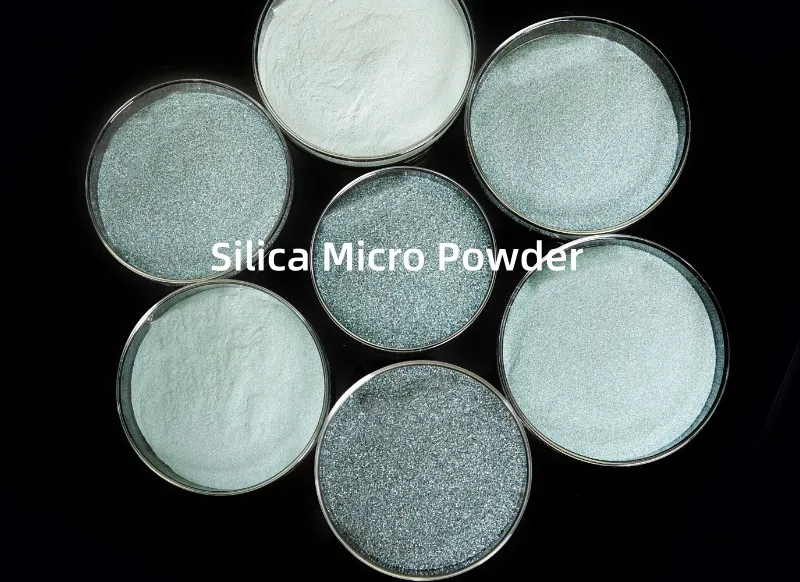
Silica powder (silica micro powder) is produced from natural quartz (SiO₂ > 99.5%) or fused silica through ultrafine grinding, classification, and purification.
Its main applications include:
- Electronics: 5G substrates, copper clad laminates (EMC fillers)
- Coatings: high-end self-cleaning coatings, matte powder
- Rubber & Plastics: reinforcement for silicone rubber; transparent shoe soles
- Artificial Quartz Stone: >90% filler content
- Pharmaceutical & Food Industry: toothpaste abrasive, anti-caking agent
- Ceramics, paints, foundry, and other traditional sectors
Q: What are the key properties of silica powder?
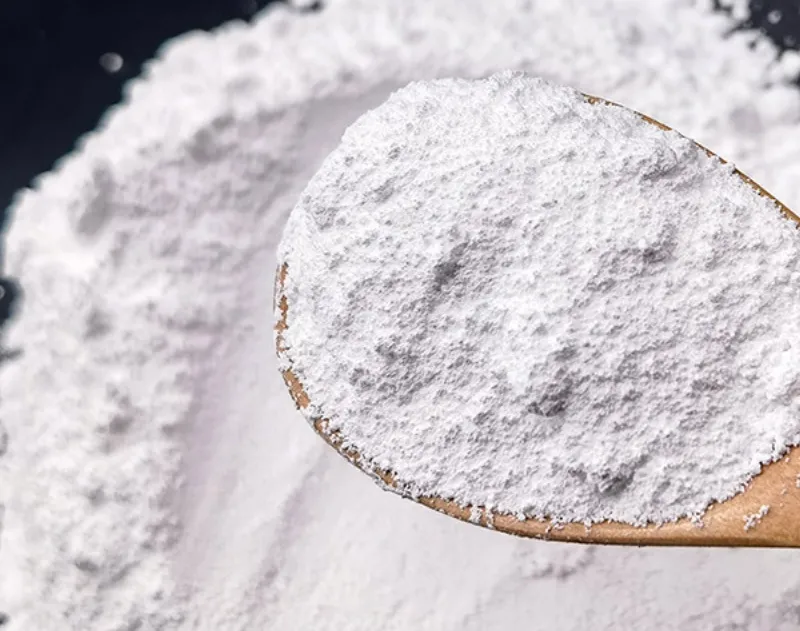
Silica powder offers the following characteristics:
- High purity
- High hardness (Mohs 7)
- Excellent thermal stability
- Superior electrical insulation
- Chemically inert
- Low thermal expansion (especially fused silica)
These properties make it suitable for high-performance industrial applications.
Q: What particle sizes do customers care about most? What D50 range is typical?
Different industries require different particle sizes:
- Electronics (EMC): D50 2–5 μm, D97 < 15–20 μm
- High-end coatings / matte powder: D50 3–8 μm
- Artificial quartz stone: D50 8–15 μm (325–1250 mesh)
- General rubber / coatings: D50 10–25 μm
Modern mainstream equipment can reliably achieve D50 1.5–30 μm with very narrow particle distribution.
Q: What is the best equipment to produce silica powder?
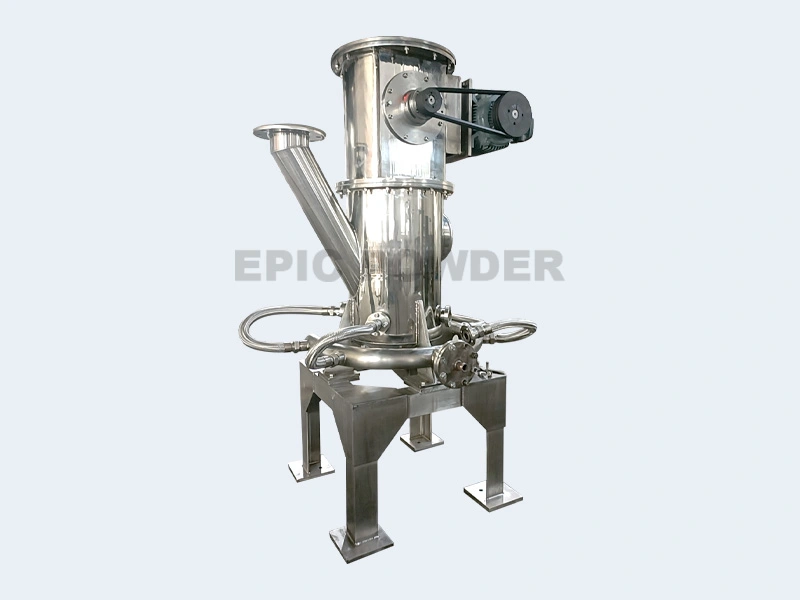
The most mainstream and mature solution, such as the Epic Powder MQW Series Jet Mill.
Advantages: narrow PSD, no iron contamination, continuous production, high yield.
Vertical Roller Mill + Classifier
Best for D50 > 10 μm and high-capacity production lines.
Low cost but wider particle size distribution.
Raymond Mill
Only suitable for silica powder below 325 mesh; not acceptable for high-end applications.
Q: What capacity can be achieved? What about power consumption?
Based on Epic Powder’s real cases (2024–2025):
- MJW-500: D50 3–5 μm, capacity 300–600 kg/h
- MJW-920: D50 3–5 μm, capacity 1.2–2 t/h
- MQW-1680 Large Jet Mill: D50 4–8 μm, capacity 4–6 t/h per line
Overall power consumption: 90–180 kWh/ton, depending on fineness—significantly lower than ball mill systems.
Q: How to ensure zero iron contamination? High-end customers fear metal impurities.
Solutions include:
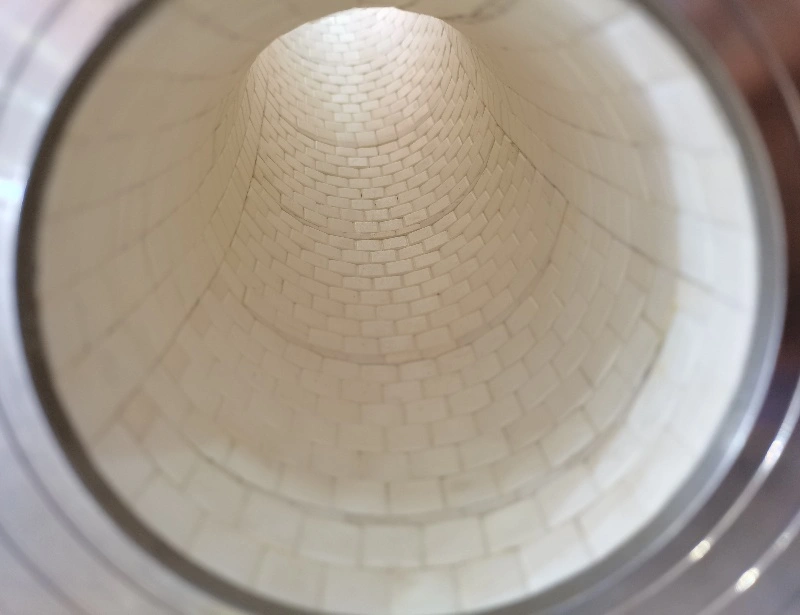
- Full ceramic lining (zirconia or alumina) in grinding chambers and classifier wheels
- Ceramic or polyurethane-protected classifiers
- Pneumatic conveying + magnetic separation + acid-washing purification
Actual test results: Fe₂O₃ controlled below 30 ppm, even down to <10 ppm, fully meeting 5G CCL requirements.
Q: How to control whiteness and transparency?
- Use high-grade crystal or fused quartz (whiteness >95)
- High-temperature calcination + multi-stage acid washing
- Optimized classification to remove flakes and black spots
High-end fused silica can reach >92% transparency.
Q: How to choose the right equipment manufacturer for silica powder production?
Key factors to evaluate:
- Whether the supplier has long-term D50 < 3 μm successful cases
- Classifier precision (independent VFD control, D97 < 15 μm capability)
- Ceramic liner wear life (should be >15,000 hours)
- Whether they provide complete turnkey systems: grinding, classification, iron removal, and packaging
Epic Powder has served 100+ silica powder customers worldwide.
Conclusion
Silica micro powder is an essential functional material across multiple industries. Understanding its characteristics, processing technology, and equipment selection standards enables manufacturers to improve product quality and competitiveness.
With advanced grinding and classification technology, Epic Powder delivers high-quality, customizable silica powder processing solutions, helping global clients achieve stable powder performance and higher production efficiency.

“Thanks for reading. I hope my article helps. Please leave a comment down below. You may also contact Zelda online customer representative for any further inquiries.”
— Posted by Jason Wang