Ultrafine powder grinding

Ultrafine quartz powder

How Quartz Powder Grinding Creates the ‘Skeleton’ of High-Strength Ceramics

When we touch the smooth and delicate ceramic teaware or marvel at the lifelike textures on tile surfaces, few people realize that behind these beautiful and durable ceramic products lies an seemingly ordinary yet crucial raw material—quartz powder. Unlike kaolin, which is regarded as the “skin” of ceramics, quartz powder acts as the “skeleton,” determining […]

How Quartz Powder Grinding Creates the ‘Skeleton’ of High-Strength Ceramics Read More »

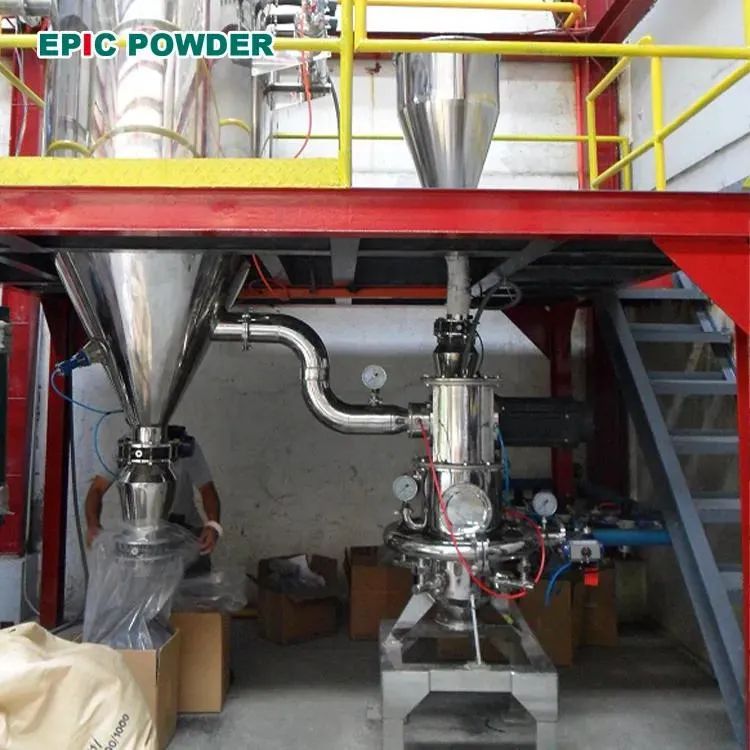
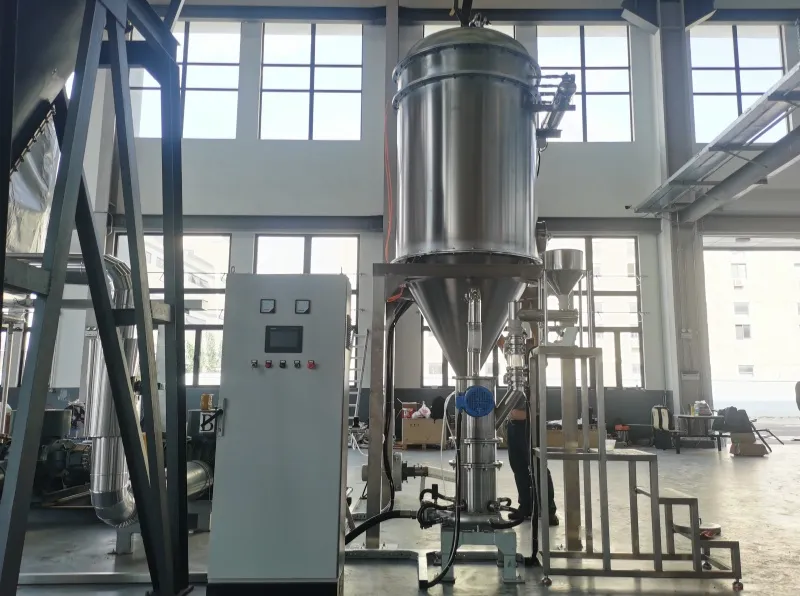
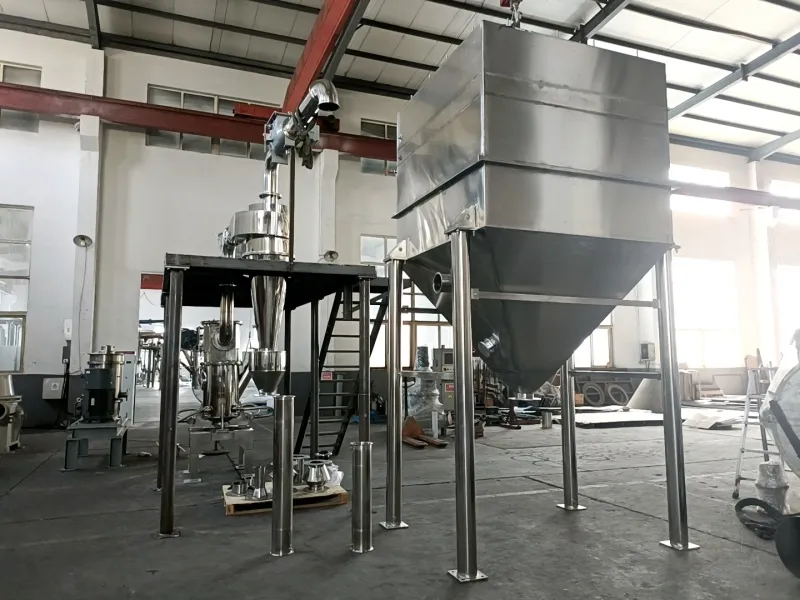
Quartz Air Jet Mill Grinding and Classification Production Line

Jet Mill vs. Ball Mill: Why Jet Mill is the Best Choice for High-Quality Quartz Powder ?

With the rapid expansion of photovoltaics (solar silicon wafers), semiconductors, optical fibers, high-end ceramics, electronic packaging, and advanced coatings, the requirements for quartz powder have escalated dramatically. These applications demand ultra-fine particle sizes. In many cases, D50 must be below 5 μm or even reach the sub-micron range. They also require an extremely narrow particle

Jet Mill vs. Ball Mill: Why Jet Mill is the Best Choice for High-Quality Quartz Powder ? Read More »

glass powder grinding machine

Why Use Glass Powder as a Filler, and How Is It Produced Efficiently?

Glass powder, as an inorganic filler, is widely used in coatings, plastics, rubber, adhesives, and many other industrial fields. Its advantages are reflected in performance enhancement, cost optimization, process compatibility, and environmental sustainability. The following is a comprehensive analysis of the advantages of glass powder as a filler. Core Performance Advantages 1. Significant Improvement in

Why Use Glass Powder as a Filler, and How Is It Produced Efficiently? Read More »

White Carbon Black Grinding and Modification

How Can White Carbon Black Grinding and Modification Processes Achieve a Breakthrough in Ultrafine Performance?

What exactly is white carbon black, and why is it so important in modern industries? White carbon black—also known as precipitated silica, hydrated silica, or amorphous SiO₂—is a fine, white powder made from silicon dioxide. Through White Carbon Black Grinding and Modification, its particle size distribution, specific surface area, and surface activity can be precisely

How Can White Carbon Black Grinding and Modification Processes Achieve a Breakthrough in Ultrafine Performance? Read More »

Ceramic lining

Is Your Quartz Powder Whiteness Insufficient? Could the Wrong Grinding Liner Be the Real Cause?

Quartz powder is an important industrial raw material. It is widely used in glass, ceramics, engineered quartz stone slabs, coatings, electronic packaging, and other fields. One of its key quality indicators is whiteness, including blue-light whiteness and fired whiteness. High-whiteness quartz powder usually requires a value above 95, or even higher. Whiteness directly affects the

Is Your Quartz Powder Whiteness Insufficient? Could the Wrong Grinding Liner Be the Real Cause? Read More »

white carbon black

Which Process Is More Suitable for Silica Ultrafine Grinding (White Carbon Black): Jet Mill or Mechanical Mill?

Silica (white carbon black), including precipitated silica and fumed silica, is a high-performance inorganic filler widely used in rubber reinforcement, coating rheology control, and transparent reinforcement of silicone rubber. Silica ultrafine grinding (typically D50 < 10 μm, and even submicron level) directly affects specific surface area, dispersibility, purity, and reinforcing performance. The most common ultrafine

Which Process Is More Suitable for Silica Ultrafine Grinding (White Carbon Black): Jet Mill or Mechanical Mill? Read More »

Silica micropowder

What Are the Characteristics of the Three Common Types of Silicon Micropowder and Their Application Areas?

Silicon micropowder is a silicon dioxide (SiO₂) powder material produced from crystalline quartz, fused quartz, and related raw materials through processes such as crushing, grinding, precision classification, and impurity removal. Classification and Characteristics of Silicon Micropowder Based on differences in particle morphology and physical structure, silica micropowder is commonly classified into crystalline silica micropowder, fused

What Are the Characteristics of the Three Common Types of Silicon Micropowder and Their Application Areas? Read More »

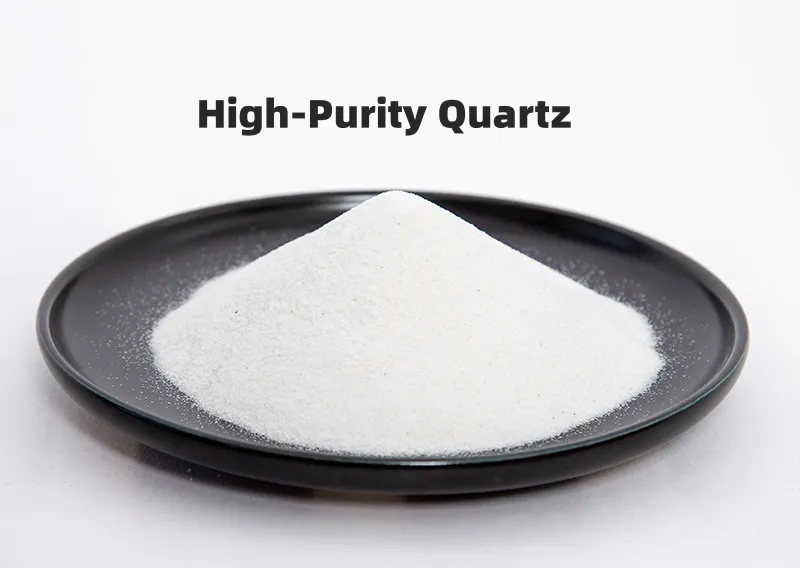
High purity quartz sand

What Is High Purity Quartz Sand Used for and How to Get It?

High purity quartz sand (HPQ), typically containing SiO₂ ≥99.99% (commonly 99.997%–99.999%, or even higher), is characterized by extremely low impurity levels (especially Al, Fe, Ti, B, P, etc.), typically controlled at ppb or even sub-ppb levels. Even trace contamination can render the end products completely ineffective. Due to these characteristics, it has become one of

What Is High Purity Quartz Sand Used for and How to Get It? Read More »

ultrafine quartz powder solution-jet mill

How to Prepare High-Sphericity Silica Micro-powder from Quartz Powder?

High-sphericity silica micro-powder (sphericity ≥ 0.95, often called spherical SiO₂) is an essential functional powder in advanced fields such as 5G substrates, copper-clad laminates (CCL), EMC epoxy molding compounds, silicone adhesives, and thermal interface materials. Traditional quartz powder produced by mechanical crushing has irregular angular shapes. Direct use leads to high system viscosity, low filling

How to Prepare High-Sphericity Silica Micro-powder from Quartz Powder? Read More »